Delhi AQI Today Improves to 371, Yet 47 Stations Report Severe Pollution Post Diwali: Check 5 Worst AQI in Delhi NCR of All Time
Delhi recorded an Air Quality Index of 371 today, improving 12 points from yesterday under Graded Response Action Plan Stage Two curbs. However, official Central Pollution Control Board data confirms that fine particulate matter remains the leading pollutant across 47 reporting stations.
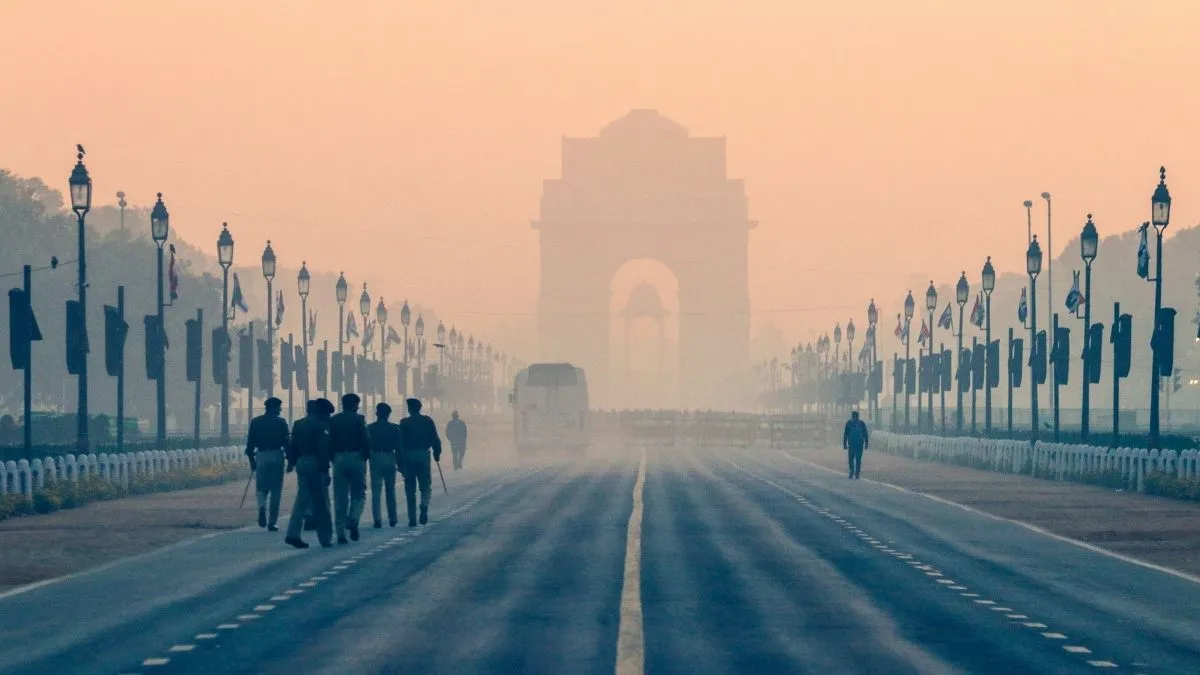
AQI Today: Delhi registered a marginal breather in air quality this morning. The citywide Air Quality Index in Delhi after Diwali 2026 is standing at 371 in the very poor category. The real-time Central Pollution Control Board monitoring reports that AQI index dropped 12 points compared to yesterday, November 8th.
Despite the slight drop toxic particulate matter remains high. 47 out of 49 active stations as of today is identifying fine particles as the primary pollutant.
Graded Response Action Plan Stage Two restrictions remain in full force across the Indian capital city. Read more about the latest AQI today and yesterday along with other recorded highs hereon.
What is the Live Air Quality Index (AQI) in Delhi Recorded Today?
The latest official monitoring update shows mixed conditions across Delhi. The broader average improved slightly but regional concentration levels remain hazardous.
-
Overall Air Quality Index: 371, classified as very poor.
-
Change from Yesterday: A net reduction of 12 index points.
-
Station Coverage: 49 out of 71 monitoring stations are actively reporting and 22 remain offline.
-
Lead Pollutant: Fine particulate matter PM2.5 dominates 47 active locations.
-
Active Regulatory Stage: GRAP Stage Two measures enforced to restrict local emissions.
Which are Top 10 Stations Recording the Highest AQI in Delhi Today?
Fourteen out of seventy one active stations breached the critical 400 AQI threshold today. All the tabulated stations are reporting severe air quality and a prominent pollutant of PM2.5
| Rank | Station | AQI after Diwali 2026 Celebration |
| 1 | DTU | 439 |
| 2 | Burari Crossing | 433 |
| 3 | Mundka | 425 |
| 4 | Vivek Vihar | 421 |
| 5 | Sonia Vihar | 419 |
| 6 | North Campus | 419 |
| 7 | Bawana | 418 |
| 8 | Rohini | 417 |
| 9 | Jahangirpuri | 415 |
| 10 | ITO | 414 |
#WATCH | Delhi: The Air Quality Index (AQI) in the area around Mayur Vihar is at 337, categorised as 'Very Poor', as per the CPCB (Central Pollution Control Board).
— ANI (@ANI) November 9, 2026
(Visuals shot at 08.00 am) pic.twitter.com/B0OUPuEo3U
What was Delhi AQI Yesterday, on Diwali 2026?
Delhi recorded an unimaginable environmental spike yesterday on Diwali night, November 8, 2026.
The real-time sensor networks logged Delhi's midnight Air Quality Index to a peak of 1331 at 1:31 AM. The reading set one of the highest recorded real time pollution spikes worldwide.
Fine particulate concentrations in hotspots like Anand Vihar exceeded World Health Organisation limits by over 50 times. And briefly it made Delhi the most polluted megacity in the world before settling at a 24-hour average of 376.
5 Highest Recorded Diwali AQI Levels in Delhi History
To put current AQI readings in context Delhi has witnessed far more intense post celebration air emergencies since official index tracking began. Historical Central Pollution Control Board bulletins record the five highest citywide twenty four hour average AQI readings on the day after Diwali:
#1. 2021 (November 5)
462 (Severe): Dense farm smoke merged with firecracker emissions which marked the worst post festival air on record.
#2. 2016 (October 31)
445 (Severe): The historic smog crisis that triggered Delhi's first comprehensive emergency interventions.
#3. 2020 (November 15)
435 (Severe): Cold weather and calm boundary layer winds locked thick smog across the entire plains.
#4. 2017 (October 20)
403 (Severe): Widespread crop residue burning upstream pushed the entire national capital past the severe baseline.
#5. 2018 (November 8)
390 (Very Poor to Severe border): Persistent stagnation kept particulate loads trapped at ground level for days.
Why Fine Particles Keep Smog Trapped Over the Plains
Even with a 12-point overall decline in AQI PM2.5 particles remain suspended at critical thresholds. These microscopic specks measure less than 2 micrometres in diameter. This allows them to penetrate deep into the lungs and enter the bloodstream.
Winter temperature inversions create an invisible lid over North India.
As cooler air stays pinned beneath warmer layers, vehicular exhaust, industrial fumes, and post-harvest biomass smoke cannot escape upward. And without sustained surface wind speeds above ten kilometers per hour the capital remains an enclosed basin for accumulated smoke.
What is Public Advisory and Active Enforcement Un
Under Stage Two curbs, municipal teams are operating mechanical road sweepers, applying anti-smog water misting, and inspecting diesel generator operations.
Health experts urge morning walkers, runners, and school children to limit prolonged outdoor exposure during early hours. High-efficiency filtration masks provide personal defense, while residents should keep indoor air purifiers running until wind patterns shift later this week.

Harshita Singh is an education and general knowledge journalist with over 5 years of experience in educational writing. Specializing in US affairs and GK, Harshita has a track record of breaking down intricate geopolitical and historical subjects into clear, digestible insights for learners. Her strong background in text analysis, coupled with a Bachelor of Arts (Hons) in English from the University of Delhi, helps her produce authoritative, thoroughly researched content that empowers readers to engage confidently with global current affairs. For inquiries or academic insights, you can reach out to her directly at harshita.singh@jagrannewmedia.com.