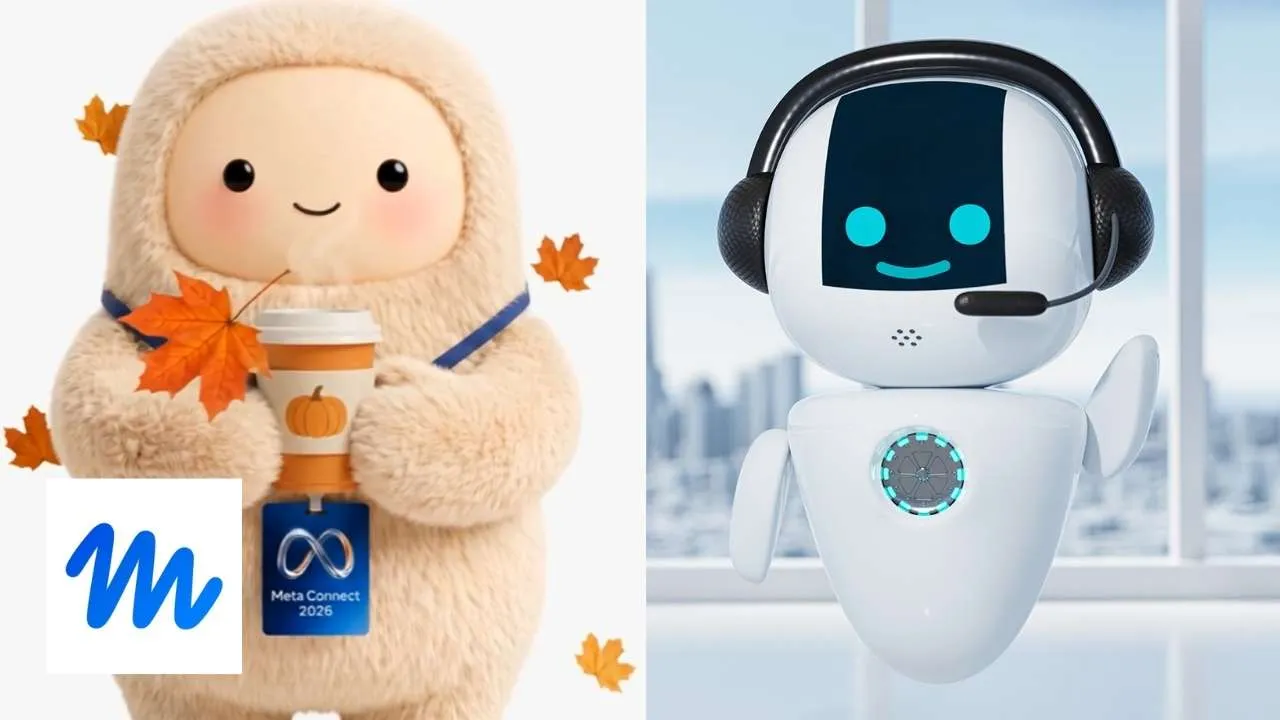
There are a few fine lines that we sometimes don’t understand, and it is the same with AI agents and chatbots. The Artificial Intelligence game is high in the markets now. Every tech giant is running to have a part in the play. Meta is now in the field with an update, Meta Muse AI, a new generation tech update.
The basic difference between an AI agent and chatbot makes a major shift in Artificial Intelligence. The difference could be as big as from answering a question to completing a real-world task.
As we all know, chatbots are designed to respond to users’ prompts with text-based replies. Surprisingly, AI agents are designed to act autonomously, break down tasks, and execute multi-step workflows across apps and other platforms.
What Is Meta’s Muse AI Agent?
The new Meta Muse AI is the newly launched AI venture, an autonomous “agentic” AI. It is designed to go beyond just simple chat and robotic responses.
The Meta Muse AI is different from your basic AI chatbot. Released in September 2026, it is designed to manage many tasks on your behalf. It is designed to break down multi-step processes and do them itself rather than the user manually doing them. It can perform multi-step tasks such as browsing the web, managing emails, booking services, and interacting with apps on behalf of users.
Not like the usual generic chatbots, Muse will not wait for a prompt to be created and introduced. It does not need a prompt at every step, like others, it can plan, execute, and complete tasks in the background.
You might have a question: how does it work? Let me break down the feature. It has its own memory. It works through a secure virtual machine with its own memory, allowing it to safely access digital tools.
With its launch, Muse shifts the basic dynamic of AI. The Meta Muse shifts AI from being a conversational assistant to an active digital worker handling real-world actions.
Chatbots vs AI Agents: What Are The Key Differences?
What Are AI Agents?
The basic main difference is, an advanced system goes beyond mainstream chatting between user and bot. It is made to perform tasks and not just talk. AI agents can plan, reason, and execute multi-step actions such as booking tickets, filling forms, or managing apps.
It is not like the basic mobile assistant either. They operate with goals, using tools, APIs, and external systems to complete real-world objectives efficiently.
What Are Chatbots?
On the other hand, chatbots are conversational AI tools designed to respond to users and their queries only in real time. They respond in generated text based answers, give or assist them with information. Chatbots can also simulate human-like conversation with the user.
The basics about a chatbot is, they remain reactive, requiring the user to send the prompts any typical action. These chatbots can not independently perform tasks or interact deeply with external applications or systems.
Chatbots vs AI Agents: Key Comparison
|
Feature
|
Traditional Chatbots
|
AI Agents (e.g., Meta’s Muse)
|
|
Core Function
|
Answer questions and generate text
|
Execute tasks and achieve goals
|
|
Workflow
|
Reactive, one prompt at a time
|
Autonomous, multi-step planning
|
|
Action Ability
|
Limited to conversation output
|
Can browse web, use apps, perform actions
|
|
Tool Access
|
Minimal or plugin-based
|
Deep system and app integration
|
|
Decision Making
|
No independent planning
|
Can plan, decide, and execute workflows
|
|
Real-World Use
|
Information and chat support
|
Booking, shopping, scheduling, automation
|