Earthquakes happen when parts of the Earth’s outer shell move suddenly along a crack in the ground. This movement sends vibrations through the land and the ground shakes.
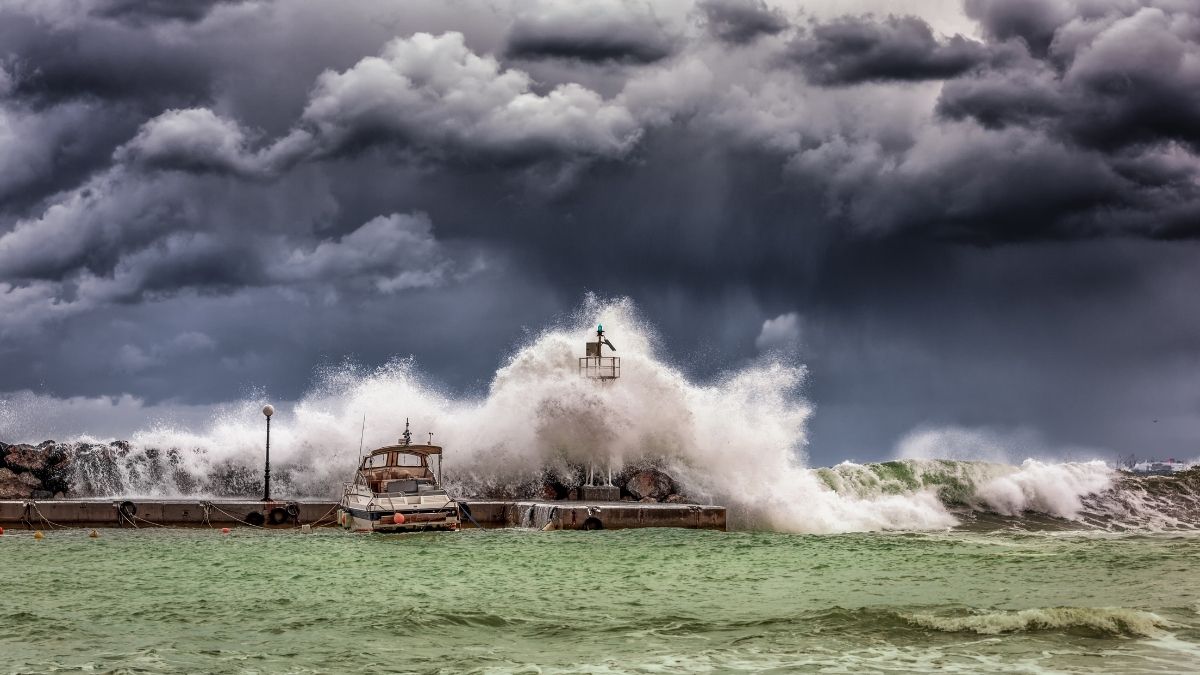
When these quakes happen deep underwater they push huge amounts of ocean water around which create fast moving waves scientifically known as tsunamis.
Questions about how earthquakes and tsunamis work regularly show up in general knowledge tests and school exams. Here is a quiz about natural disasters like earthquakes and tsunamis to help you test what you know about how quakes start, how waves move, and how to stay safe.
GK Questions and Answers on Earthquakes and Tsunamis
Q1. What do scientists call the exact spot underground where an earthquake starts?
A) Epicentre
B) Focus (or Hypocenter)
C) Fault Line
D) Seismic Ridge
Answer: B) Focus (or Hypocenter)
Why: The focus is the deep underground point where the rock breaks. The epicentre is simply the spot on the ground surface directly above it.
Q2. What usually causes a tsunami in the ocean?
A) Strong wind storms
B) Pull from the Moon's gravity
C) An underwater earthquake that lifts or drops the seafloor
D) Melting sea ice
Answer: C) An underwater earthquake that lifts or drops the seafloor
Why: When an underwater quake forces a section of the ocean floor up or down it displaces a giant wall of water which create a tsunami.
Q3. What instrument do scientists use to measure ground shaking?
A) Barometer
B) Seismograph
C) Anemometer
D) Thermometer
Answer: B) Seismograph
Why: A seismograph (or seismometer) senses ground movement and records how strong the shaking is on a graph.
Q4. Where do most of the world's major earthquakes and tsunamis happen?
A) The Atlantic Ocean
B) The Pacific Ring of Fire
C) The Himalayas
D) The Great Rift Valley
Answer: B) The Pacific Ring of Fire
Why: The Pacific Ring of Fire is an area around the rim of the Pacific Ocean where several moving tectonic plates bump into each other. Most quakes happen here.
Q5. Which earthquake wave moves the fastest and reaches recording stations first?
A) Surface Wave
B) S-Wave (Secondary Wave)
C) P-Wave (Primary Wave)
D) Ocean Wave
Answer: C) P-Wave (Primary Wave)
Why: P-waves travel through rock faster than any other seismic wave. They push and pull the ground and arrive first.
Q6. Which scale measures the amount of energy released by an earthquake?
A) Mercalli Scale
B) Richter Scale
C) Beaufort Scale
D) Celsius Scale
Answer: B) Richter Scale
Why: The Richter scale measures the physical size or energy of a quake. The Mercalli scale on the other hand measures how much damage the quake caused on the surface.
Q7. How fast can a tsunami wave move across deep ocean water?
A) As fast as a bicycle (20 km/h)
B) As fast as a car (100 km/h)
C) As fast as a passenger jet (800 km/h)
D) As fast as a bullet train (1500 km/h)
Answer: C) As fast as a passenger jet (800 km/h)
Why: In deep water, tsunami waves travel at high speeds around 800 km/h. They slow down only when they reach shallow water near the shore.
Q8. What are the smaller earthquakes that happen after a big earthquake called?
A) Foreshocks
B) Aftershocks
C) Mainshocks
D) Side-shocks
Answer: B) Aftershocks
Why: Aftershocks are smaller quakes that happen in the same area as ground rocks adjust and settle into new positions over days or weeks.
Q9. Where did the largest earthquake ever recorded happen?
A) Japan (2011)
B) Indonesia (2004)
C) Chile (1960)
D) Alaska (1964)
Answer: C) Chile (1960)
Why: The 1960 earthquake in Valdivia, Chile measured 9.5 on the magnitude scale. It is the strongest quake ever picked up by scientific instruments.
Q10. What is the best basic action to take if you are indoors during an earthquake?
A) Run outside as fast as you can
B) Stand next to a window
C) Drop to the floor, take cover under a desk, and hold on
D) Take an elevator down to the main exit
Answer: C) Drop to the floor, take cover under a desk, and hold on
Why: Safety experts agree that getting under sturdy furniture protects your head and body from falling ceiling tiles, light fixtures, and debris.
How many of these questions about earthquakes and tsunamis have you guessed correctly? Let us know in the comments and stay tuned for more interesting questions and answers from General Knowledge.