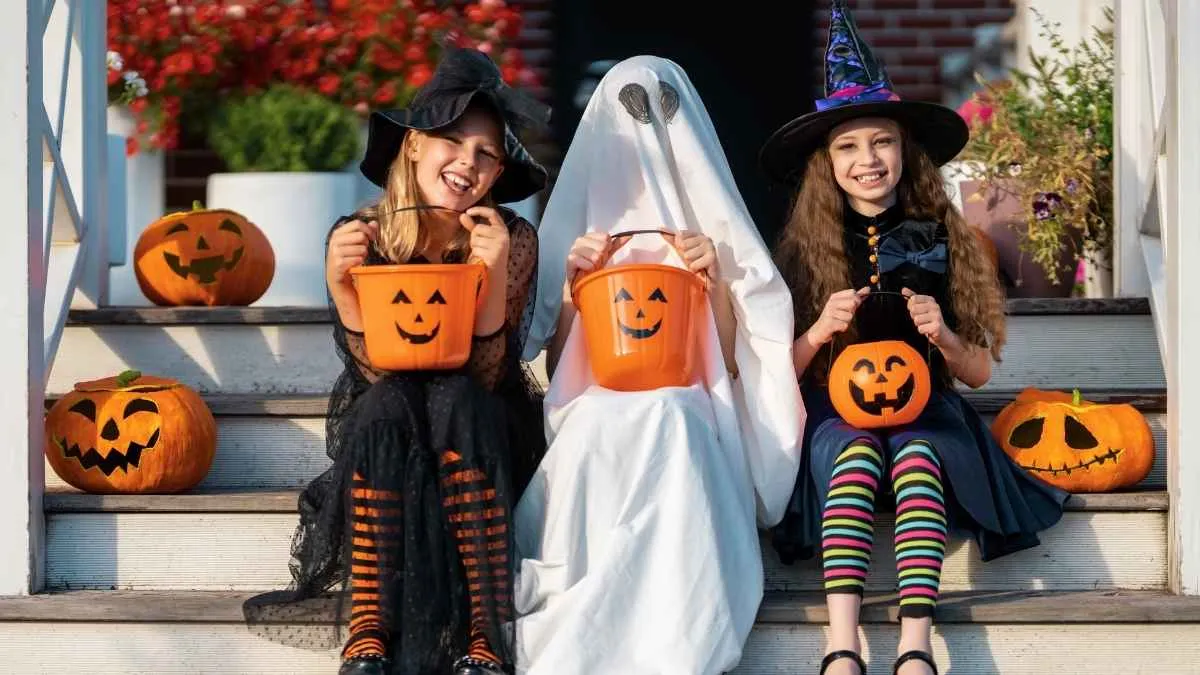
Halloween 2026 falls on Saturday October 31st. It gives kids and adults a full weekend to celebrate without worrying about an early school run or work morning. The Halloween evening has an unusual perk this year: the daylight saving time halloween coincidence.
In the US and Canada clocks fall back one hour at 2:00 a.m. on Sunday November 1 which is handing everyone an extra hour of rest right after trick-or-treating.
As confirmed by Time and Date Halloween occurs annually on October 31 as an observance right before All Saints' Day. To understand what is Halloween and why halloween is celebrated globally, we have to look back 2,000 years.
What is Daylight Saving Time and Halloween 2026 Date Coincidence?
Halloween in 2026 takes place on the last Saturday October 31st for the very first time in five years. Even better, that same night marks the end of Daylight Saving Time across most of North America.
When the clock strikes 2:00 a.m. on Sunday November 1 the time resets back to 1:00 a.m. That means anyone out late at a party or sorting candy gets an entire extra hour in bed.
Official records from the National Institute of Standards and Technology (NIST) show that daylight saving time always ends on the first Sunday of November. And the Halloween 2026 is on a last Saturday. So the clock change hits that exact night. An alignment like this will not happen again until 2037.
Related Stories
What is Halloween Date for Next 5 Years?
The next occurrence of the holiday of Halloween falling on a Saturday in the years following 2026 is not set to take place until the year of 2031 according to the calendar schedule.
|
Year
|
Halloween Date
|
Day of the Week
|
Event Impact
|
|
2026
|
October 31
|
Saturday
|
Full weekend celebration
|
|
2027
|
October 31
|
Sunday
|
Next-day work/school night
|
|
2028
|
October 31
|
Tuesday
|
Mid-week trick-or-treating
|
|
2029
|
October 31
|
Wednesday
|
Mid-week trick-or-treating
|
|
2030
|
October 31
|
Thursday
|
Pre-weekend evening
|
What is Halloween and Why is It Celebrated?
Halloween is said to have its origins from more than 2000 years ago from the festival called Samhain celebrated by Celts. The Celts were the people who lived in Ireland, the United Kingdom, and France.
The Celts had their New Year on the 1st of November which was considered the end of summer season.
On the eve of New Year it was believed that the barrier between the worlds of the living and the dead disappeared and on 31st October, they used to light bonfires and put on costumes of animal skins.
|
Historical Trace
|
Popular Halloween Tradition
|
Modern Influence of Halloween
|
|
Ancient Celtic (Samhain)
|
Bonfires and animal-skin attire
|
Costumes and outdoor gatherings
|
|
Middle Ages (Souling)
|
Baking Soul Cakes for the poor
|
Foundation of Trick-or-Treating
|
|
19th Century Immigrants
|
Carving turnips into lanterns
|
Pumpkin Jack-o'-lanterns
|
How Ancient Customs Shaped Modern Halloween Trends
The Halloween traditions were influenced by Christianity in the 8th and 11th centuries. Pope Gregory III made November 1st a holiday dedicated to martyrs. Therefore October 31st was called All Hallows Eve, and later the Catholic Church introduced All Souls Day in November 2nd. These three days came to be known as Allhallowtide.
All Hallow Eve painted by Daniel Maclise in 1833, shows people celebrating Halloween in Ireland (Photo: Wikimedia)
With the migration of Europeans to North America, traditions such as "guising" and "souling" were transferred here. Children would ask for food in return for singing or reciting prayers at each house.
Statistics provided by the Farmers' Almanac show how folklore of the Irish population, particularly a legend about Stingy Jack, contributed to the invention of pumpkin carving.
Global Observance and Contemporary Trends
Despite being of Western European origin, Halloween has become a globally celebrated event. In different parts of the world such as Asia, Latin America, and Europe, urban cities celebrate through themed parades.
It operates in conjunction with the local customs of reverence for ancestors. It is the blend of these ancient harvest festivals and modern-day fun that keeps people celebrating every Halloween.