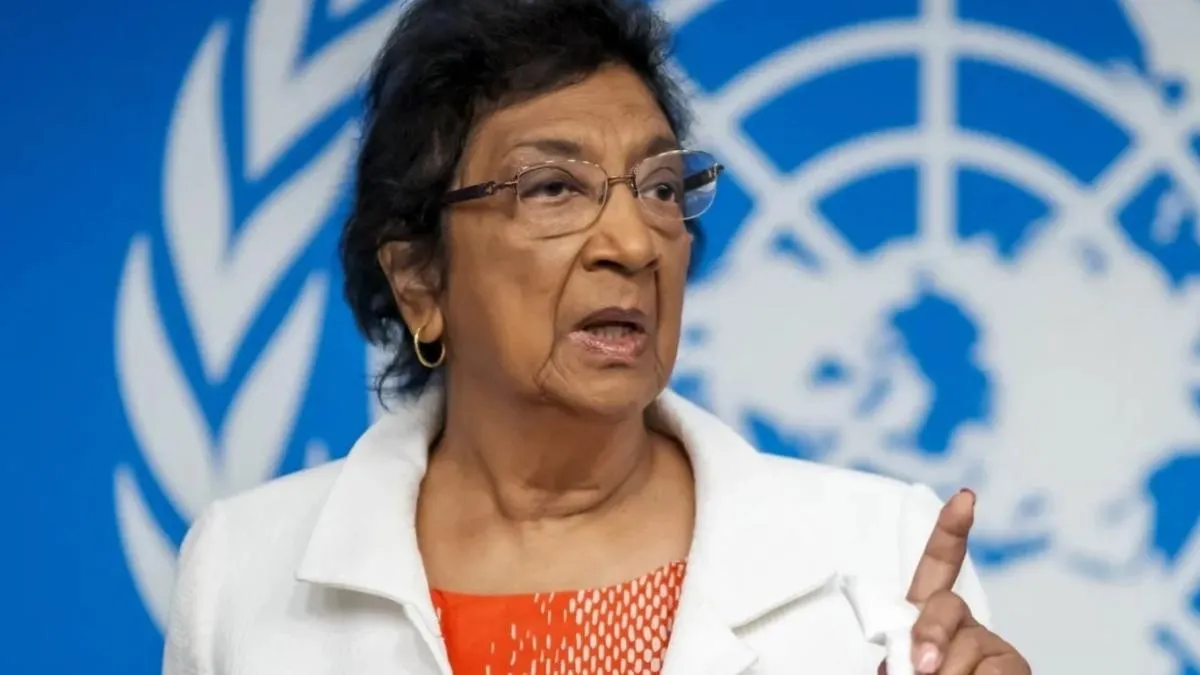
Indian-origin South African human rights lawyer Navanethem Pillay has been awarded the Nobel Peace Prize 2026 for her efforts to promote human rights and international law.
The Norwegian Nobel Committee recognised her contributions to promoting international justice, protecting human rights and upholding the rule of law.
Every year, the Nobel Peace Prize is awarded by the Norwegian Nobel Committee in recognition of individuals and organisations that have made significant contributions to promoting peace.
In this article, we will look at the key details of the Nobel Peace Prize 2026 winner Navi Pillay, her major achievements and her contributions to promoting human rights and international law.
Who is Navi Pillay?
South African human rights lawyer Navanethem “Navi” Pillay was born in 1941 into an Indian-origin family in Durban, South Africa. She grew up under apartheid and became one of South Africa’s first women of Indian descent to practise law. She defended anti-apartheid activists and fought against discriminatory prison conditions in the country.
After the end of apartheid, Pillay became a judge at the International Criminal Tribunal for Rwanda, where she helped establish landmark legal precedents recognising rape as an act of genocide. She later served as a judge at the International Criminal Court and as the United Nations High Commissioner for Human Rights from 2008 to 2014.
More recently, she also chaired a United Nations commission investigating human rights violations in Israel and the Palestinian territories.
Related Stories
|
Particulars
|
Details
|
|
Full Name
|
Navanethem "Navi" Pillay
|
|
Nationality
|
South African
|
|
Origin
|
Indian-origin
|
|
Profession
|
Human Rights Lawyer & International Judge
|
|
Award
|
Nobel Peace Prize 2026
|
|
Awarding Body
|
Norwegian Nobel Committee
|
|
Key Contributions
|
Promoting human rights, international justice, and the rule of law
|
Key Contributions of Navanethem Pillay to World Peace and Human Rights
1. Played a Crucial Role in Rwanda Genocide Trials
Navanethem Pillay served as a judge in the International Criminal Tribunal for Rwanda (ICTR), where she played a crucial role in what is widely known as the Akayesu case. In 1998, the international tribunal issued its landmark judgment, which declared that rape and sexual violence could constitute acts of genocide under certain circumstances.
2. Promoted Human Rights Globally
Pillay served as the UN High Commissioner for Human Rights from 2008 to 2014. During this period, she advocated for the protection of fundamental rights, the establishment of greater accountability for violations of those rights, and equal treatment of all individuals. She consistently emphasized the significance of protecting vulnerable groups and keeping human rights issues on the international agenda.
3. Contributed to International Criminal Justice
Prior to being appointed as the UN High Commissioner for Human Rights, Navanethem Pillay served as a judge in the International Criminal Court (ICC) from 2003 to 2008. Pillay's service in these international tribunals contributed greatly to the establishment of the rule of law and international criminal justice.
4. Defended Equality and Elimination of Discrimination
Throughout her career, Pillay was an active fighter for equality and elimination of any forms of discrimination. In her position of UN High Commissioner for Human Rights, Pillay condemned any form of discrimination due to sexual orientation and gender identity and maintained that human rights are universal regardless of the person's background. Such advocacy stressed the importance of equality and dignity for peaceful coexistence in society.
5. Highlighted the Connection between Human Rights and World Peace
Throughout her career, Pillay constantly highlighted the importance of respecting human rights. Her advocacy has shown that violations of human rights, abuse and impunity lead to instability and conflict. Thus, throughout the period when Pillay served as a judge and then as the head of the United Nations she supported accountability, protection of vulnerable groups and respect for international law.