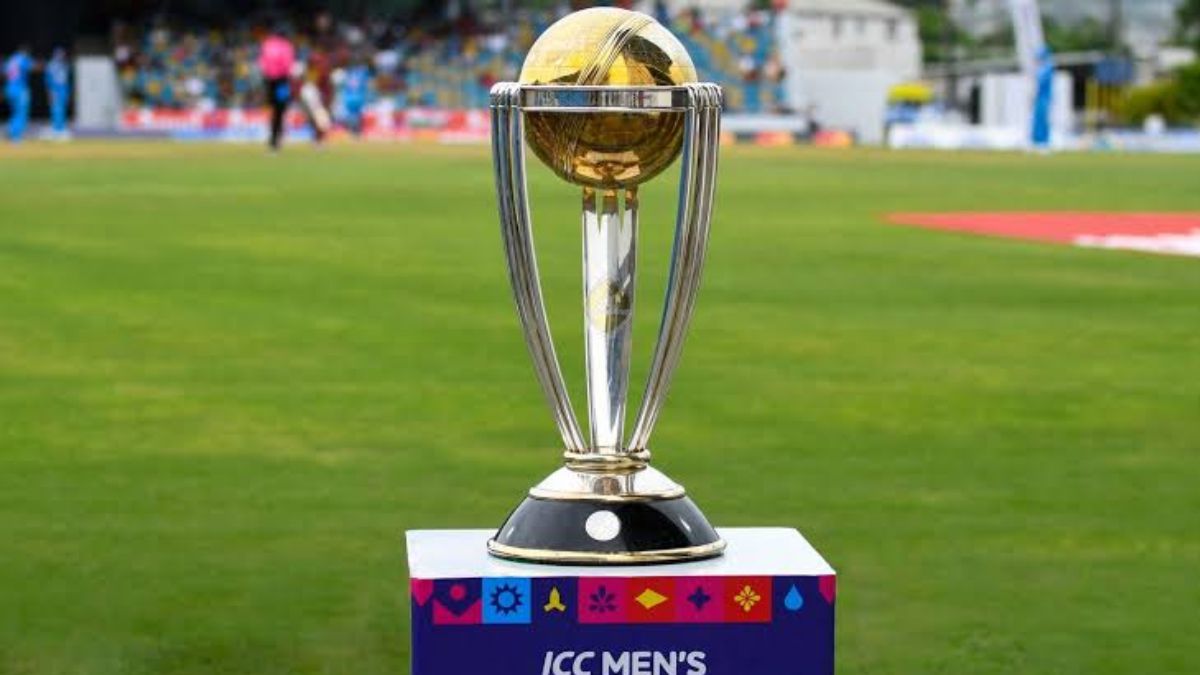
The International Cricket Council (ICC) has come up with new formats for the Men’s ODI World Cup. This decision was taken at the ICC Annual Conference that was held in Edinburgh. The changes were approved by the ICC Board based on the recommendations that were sent by the Chief Executives' Committee.
The changes made by ICC will come into effect from the 2027 Men’s ODI World Cup which will be co-hosted by South Africa, Zimbabwe and Namibia.
To put it simply, the ICC just wants to make the matches more meaningful and increase the competition and give better chances to nations so that they can perform deeper into these tournaments.
Here is everything you need to know about these new rules and what changes it will bring.
What Has ICC Changed?
Here is a quick summary of the changes that are introduced by ICC for the ODI format:
Related Stories
|
Feature
|
Details
|
|
Teams
|
14 teams
|
|
Stages
|
3 stages before knockouts: Super Series, Group Stage, Super 7
|
|
Groups
|
12 teams split into 2 groups of 6, round robin format
|
|
Knockouts
|
Top 4 from Super 7 go to semi-finals (1st vs 4th, 2nd vs 3rd)
|
|
Final
|
Winners of both semi-finals play the final
|
New ODI World Cup Format Explained
Number of Teams
The 2027 ODI World Cup will have 14 teams and this is after the decision made by the ICC in 2021 which was to expand the tournament from 10 to 14 teams.
Stage 1: Super Series
The game will begin with a Super Series where the three of the lowest ranked of the 14 qualified teams will play against each other in a format known as round robin. Under this format there will be no elimination and all three teams will play against each other one by one. The top team from this round will progress to the next stage.
Stage 2: Group Stage
This stage will feature 12 teams which includes the 11 already qualified teams and the 1 team that has won the Super Series round. These teams will compete in 30 matches and there will be two groups. Similar to the Super Series, these teams will play in round robin format and the top 3 teams from each group will advance to the Super 7 stage. Additionally, one team that is best ranked across both the groups will also qualify for the next round.
Stage 3: Super 7
This is a new middle stage that will decide the semi finalists. The top 7 teams will face each other in a round robin format again and there will be a total of 21 matches. The top 4 teams from this round will move to the semi finals.
Stage 4: Semi Finals
The four teams finishing the Super 7 stage will play against each other in a particular order. The team that finishes first in the Super 7 will play against the team that has finished fourth in that format. Similarly, the team that has finished 2nd in the Super 7 round will face the team which has finished 3rd in the same round.
Stage 5: Finals
The winners of the two semi finals will clash against each other in the finals.
Old vs New ODI World Cup Format
|
Old Format
|
New Format
|
|
10 teams
|
14 teams
|
|
Single round robin, all teams play each other once
|
3 stages: Super Series, Group Stage, Super 7
|
|
No preliminary round
|
Super Series for teams ranked 12th, 13th and 14th, only 1 team advances
|
|
One group of 10 teams
|
Two groups of 6 teams after the Super Series
|
|
No middle stage
|
Super 7 round robin stage among 7 qualified teams
|
|
Top 4 teams from the group qualify for semis
|
Top 4 teams from the Super 7 stage qualify for semi finals
|
Why Did ICC Change the Format?
The ICC has given a few clear reasons as to why it has introduced these changes:
-
More Competitive Matches: The new stages like the Super 7 and the Eliminators will give fair chances to different teams.
-
Better opportunities for Associate nations: Associate teams like the USA, Netherlands, Italy, Nepal, Scotland and Canada performed well in the 2026 T20 World Cup. The ICC wants such teams to get a longer run in future tournaments.
-
Better fan engagement: When more matches carry real stakes, fans stay interested for a longer part of the tournament.