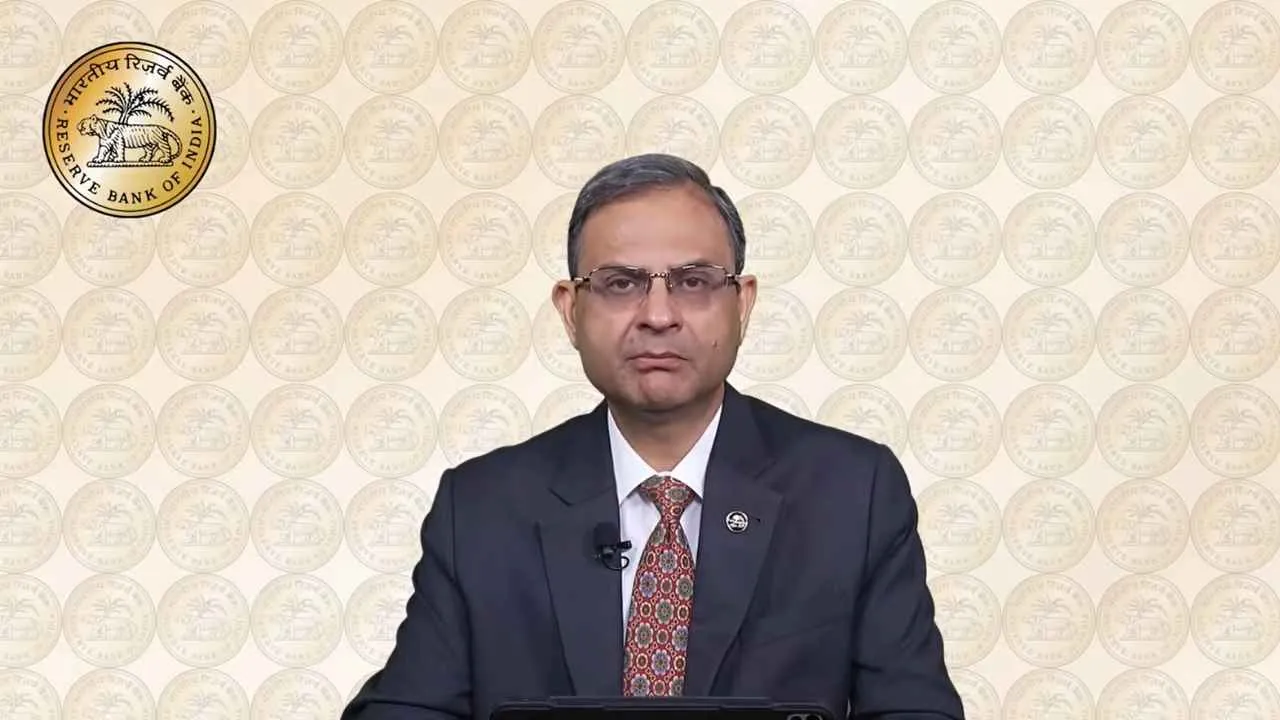
RBI Monetary Policy Committee Meeting 2026: The Reserve Bank of India (RBI) Monetary Policy Committee (MPC) has announced a hike in the repo rate, raising it to 5.50% from the earlier 5.25%. The RBI Governor Sanjay Malhotra announced the decision following the MPC’s latest policy review.
The repo rate is a key policy tool used by the central bank to influence borrowing costs, liquidity and inflation in the economy. The rate hike is expected to have implications for borrowers, depositors, businesses, financial markets and the Indian rupee. The policy decision comes amid evolving domestic economic conditions and global market developments.
The Governor Sanjay Malhotra quoted the heightened geopolitical conflict in West Asia, the increasing risk of global inflation, elevated crude oil prices, volatile stock markets and higher bond yields as the major reasons to raise the repo rate to 5.50%.
This is the first time after 4 consecutive no-change meetings that this time the central bank has increased the rate by 25 points to 5.50% today.
This is going to bring major changes across many sectors in India, especially for the borrowers. The FD rates and EMI are going to affect almost a chunk of the general audience
RBI Monetary Policy Committee Meeting Decision
This decision marks the central bank’s first increase under the current framework. The change has happened in nearly four years.
Alongside the 25-basis-point repo rate hike, the six-member Monetary Policy Committee (MPC), led by Governor Sanjay Malhotra, also changed its policy stance from “neutral” to “calibrated tightening.”
This hints that the latest move by the RBI hints at a stronger focus on addressing inflationary pressures and evolving economic risks.
Summary of October 2026 Key Policy Rates
| Policy Rate / Metric | Current Rate | Previous Rate |
|---|---|---|
| Policy Repo Rate | 5.50% | 5.25% |
| Monetary Stance | Calibrated Tightening | Neutral |
| Standing Deposit Facility (SDF) | 5.25% | 5.00% |
| Marginal Standing Facility (MSF) | 5.75% | 5.50% |
RBI MPC Meeting 2026: What Are the 11 Points Governor Sanjay Malhotra Highlighted?
The RBI’s latest rate decision comes amid rising inflation risks, higher oil prices and global economic uncertainty. At the same time, India’s growth remains strong, giving the central bank room to tighten monetary policy. Here are the key factors and market reactions behind the latest policy decision.
-
Repo Rate Hike: RBI raised the repo rate by 25 basis points to 5.50%.
Unanimous Decision: All six MPC members voted in favour of the rate hike.
Inflation Risks: Higher oil prices linked to the Iran war are adding to inflationary pressures.
Monsoon Impact: Weak monsoon rains associated with El Niño have added to price pressures.
Inflation Outlook: RBI raised its inflation forecast to 5.2%, from the earlier 5%.
Core Inflation: Core inflation is projected at 4.4%, up from 4.3%.
August Inflation: Consumer inflation rose to 4.82%, exceeding the RBI’s 4% medium-term target for the third consecutive month.
Wider Price Pressures: Nearly half of the consumer basket recorded inflation above 4%.
Bond Yield: India’s 10-year benchmark bond yield rose 5 basis points to 7.2655% after the decision.
Rupee: The Indian rupee remained largely unchanged at around ₹96.36 per US dollar.
Stock Market: The Nifty 50 fell 0.6%, while the BSE Sensex declined 0.7%.
GDP Growth Forecast: RBI raised its current financial-year GDP growth forecast to 7.1%, up 40 basis points from its earlier projection.
Q1 Growth: India’s GDP grew 7.8% in the April-June quarter, compared with the RBI’s earlier forecast of 7%.
Economic Growth: Strong economic growth provides the RBI with greater room to raise borrowing costs for consumers and businesses.
Inflation Expectations: Governor Sanjay Malhotra said there was evidence of elevated inflation expectations and broader price pressures.
Also Read: How Does the RBI Control Inflation? Repo Rate, CRR, SLR & Monetary Policy Explained
RBI Repo Rate Hike to 5.50%: Impact On Consumers, Investors And Businesses
|
Area
|
What Changes?
|
Example
|
|
Existing Home Loans
|
Floating-rate home loans linked to external benchmarks may become costlier. Banks may increase EMI or extend the loan tenure.
|
So, if you have a ₹50 lakh loan for 20 years, a rate increase from 8.50% to 8.75% can raise EMI from about ₹43,391 to ₹44,186 if tenure remains unchanged.
|
|
New Home Loans
|
New borrowers may face higher interest rates and reduced borrowing capacity.
|
As a buyer if you are planning a ₹50 lakh home loan may have to pay a higher EMI after the lender reprices its rates. On account of new repo rate.
|
|
Car & Auto Loans
|
Higher borrowing costs can increase EMIs and make vehicle purchases more expensive.
|
A ₹10 lakh car loan for 5 years at 9% has an EMI of about ₹20,758. At 9.25%, it rises to about ₹20,881.
|
|
Personal Loans
|
Unsecured loans may become more expensive as lenders reprice borrowing costs.
|
A ₹3 lakh, 3-year personal loan moving from 13% to 13.50% would increase the total interest burden.
|
|
Credit Cards
|
Outstanding balances could become costlier if lenders increase applicable interest rates.
|
Carrying an unpaid ₹1 lakh credit-card balance for longer could result in a higher interest burden after repricing.
|
|
Fixed Deposits
|
Banks may increase FD rates to attract more deposits, although existing locked-in FDs generally remain unchanged.
|
A ₹10 lakh FD at 7% earns ₹70,000 annually. At 7.25%, the annual interest rises to ₹72,500.
|
|
Savings Accounts
|
Some benchmark-linked savings products may see higher returns.
|
A ₹25 lakh balance earning an additional 0.25% would generate about ₹6,250 more annually, before taxes and subject to the account's terms.
|
|
Real Estate
|
Higher home-loan costs can weaken demand for property and affect developers.
|
A family may postpone buying a flat because its revised home-loan EMI becomes unaffordable.
|
|
Auto Sector
|
Higher vehicle-loan rates can reduce demand for cars and two-wheelers.
|
A buyer may delay purchasing an SUV because the higher EMI pushes the purchase beyond their monthly budget.
|
|
Banking Sector
|
Loan rates may reprice faster than deposit rates, potentially affecting banks' net interest margins.
|
If a bank raises lending rates before increasing FD rates, its interest income may temporarily rise relative to deposit costs.
|
|
Highly Leveraged Companies
|
Companies with floating-rate debt may face higher interest expenses and lower profits.
|
A company with ₹500 crore of floating-rate debt would face an additional ₹1.25 crore annual interest cost from a 0.25% increase.
|
|
Higher interest rates can create volatility, particularly in rate-sensitive sectors.
|
Real estate, auto and highly leveraged companies may face pressure as borrowing costs rise and demand slows.
|
|
|
Government Bonds
|
Rising market yields can reduce the prices of existing bonds.
|
If new government bonds offer higher yields, older lower-yield bonds may become less attractive and lose market value.
|
|
Debt Mutual Funds
|
Long-duration debt funds can see short-term NAV pressure when bond yields rise.
|
A gilt fund holding older, lower-yielding government bonds may see its NAV decline as market yields increase.
|
|
Higher borrowing costs can reduce spending and demand, helping moderate inflation over time.
|
If consumers delay large purchases because loans become expensive, demand may cool and reduce price pressures.
|
|
|
Higher domestic rates can support the rupee by making Indian assets relatively more attractive, though currency movements depend on several factors.
|
A stronger rupee can reduce the rupee cost of imported commodities such as crude oil.
|
|
|
Imported Inflation
|
A relatively stronger rupee can help limit the domestic impact of expensive imports.
|
If crude oil costs $100 per barrel globally, a stronger rupee can help reduce the rupee cost of importing that oil.
|
|
Economic Growth
|
Costlier credit can reduce consumption, investment and business expansion.
|
A company may postpone a new factory because higher borrowing costs make the project less attractive.
|