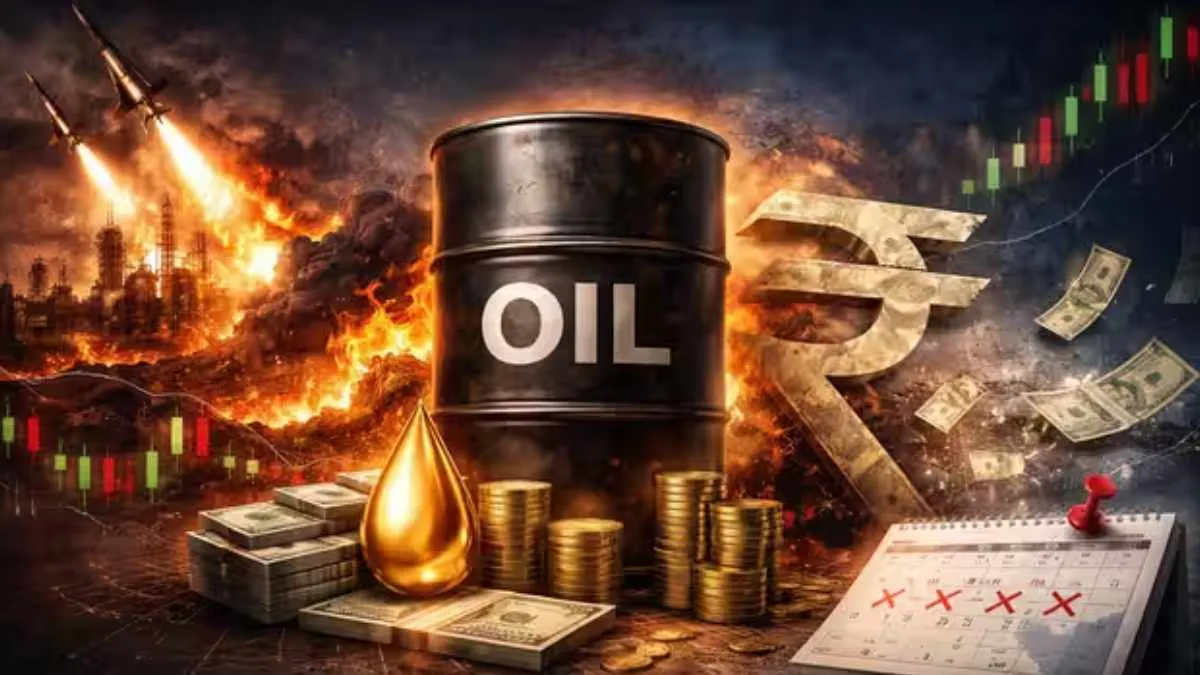
The recent shifting geopolitical situation in West Asia war and the outcome of the US midterm elections have established a new set of scope and uncertainties for India's economy. Hopes of an end to the US-Iran war, combined with US President Donald Trump's political setback after Democrats won control of both chambers of Congress, have impacted global crude oil prices, the US dollar, precious metals and emerging-market currencies.
For India, which relies massively on imported crude oil, the new developments could offer relief to the economy, support the rupee and impact domestic gold and silver prices. However, the potential of renewed conflict means that market volatility cannot be dismissed.
Why are the Iran war and US elections connected?
The Democratic victory in the November 2026 US midterm elections has weakened Trump's political stance. With Democrats controlling both the Senate and the House of Representatives, the government could witness maximum scrutiny over military spending and its foreign policy.
Markets have inferred this political change, along with Trump's statements signalling that he has no immediate plans for latest strikes on Iran, as a sign that the conflict could move towards de-escalation.
However, the war should not be regarded as oficially over. The situation around the strategically critical Strait of Hormuz remains a pressing concern for global energy supplies.
Related Stories
Impact on Crude oil: Why India could benefit
Crude oil is perhaps the biggest channel through which the developments could impact India. The country imports nearly 90% of its oil requirements, making it vulnerable to disturbances in West Asia.
Oil prices rebounded on November 11, 2026, with Brent crude rising above $92 a barrel and West Texas Intermediate (WTI) nearing $87 a barrel, recovering from a two-month low as reignited shipping attacks in the Strait of Hormuz nullified temporary hopes for a U.S.–Iran peace truce.
Earlier, Brent crude declined to around $90.99 per barrel on November 10, extending its decay as Trump hinted at a pause in further military action against Iran. Lower oil prices could reduce India's import bill, ease stress on the present account deficit and resolve inflation.
Big Impact on Indian rupee: Why the currency is recovering
The combination of lower crude prices, a softer US dollar and enhanced investor sentiment has supported the Indian rupee, which bolstered from Rs 95.26 per dollar on October 29 to around Rs 93.85 on November 9, recovering nearly 1.5% after the US Midterm Election Results.
Reduced oil prices combat India's demand for dollars to pay for imports. Moreover, reignited foreign investment in Indian equities and bonds can elevate demand for the rupee.
However, experts warn that the recovery may not prolong if geopolitical conflict return or foreign investment flows weaken.
Gold and silver: Why prices could move higher
Gold and silver have reacted differently from crude oil. Both precious metals rebounded after the US election results endangered the dollar and US Treasury yields.
On November 4, MCX gold grew around 2.5% to an intraday high of Rs 1,42,957 per 10 grams, while silver gained more than 4% to Rs 1,87,422 per kg.
A vulnerable dollar and reduced bond yields commonly promote precious metals because they make non-interest-bearing assets more lucrative.
However, for Indian buyers rupee appreciation could partially trigger global price hikes. Conversely, a vulnerable rupee can make imported gold and silver more costly.
What does this mean for India's economy?
The mixture of lowered oil prices, present recovery and renewed investor confidence could advantage India through reduced imported inflation, elevated corporate margins and minimal pressure on government finances.