India-New Zealand FTA: What Is a Free Trade Agreement And How Will It Affect Apples, Kiwis And Honey?
India–New Zealand FTA opens new trade opportunities from October 20, 2026, boosting exports, reducing tariffs on apples, kiwis, and honey while protecting India’s sensitive sectors through quotas and safeguards.
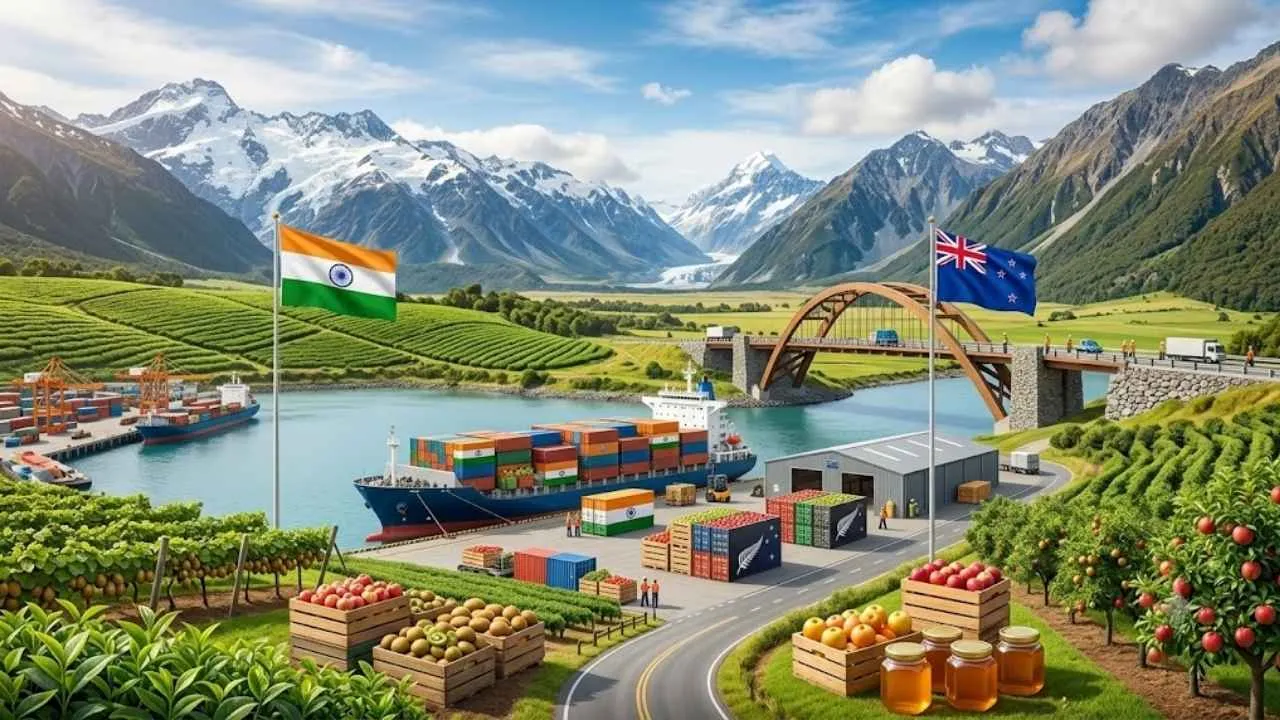
India-New Zealand FTA: A Free Trade Agreement (FTA) is a pact, or agreement, that facilitates conditions and coordination points. It is signed between countries to reduce or remove trade barriers such as tariffs. These also include import duties and quotas, making all cross-border commerce smoother.
In the recent move, India signed the India–New Zealand FTA in April 2026. The pact will officially come into force on October 20, 2026, opening a new chapter in bilateral trade. New Zealand will provide 100% duty-free access to Indian exports from day one of its implementation, Which is October.
Even after this, India has kept its gates carefully guarded, protecting sensitive sectors. The sectors provide the nations and fulfil their needs. If India puts the guards down, dairy and sugar will face sudden import competition. Measures including Tariff-Rate Quotas (TRQs), seasonal controls and minimum import prices will ensure that trade liberalisation does not come at farmers’ expense.
India-New Zealand FTA: What Will Happen to Apples, Kiwis and Honey?
Apples, kiwis and Manuka honey will gain improved access to India under the FTA. These three remain the highlight of the FTA. With tariff cuts subject to specific conditions and quotas.
India–New Zealand FTA: Impact on Apples, Kiwis and Manuka Honey
| Product | Current Tariff | FTA Tariff / Benefit | Quota / Conditions | Impact |
| Apples | 50% | Reduced to 25% from day one | 32,500 tonnes in Year 1, increasing to 45,000 tonnes by Year 6 | New Zealand apples will get cheaper access within the specified quota. |
| Kiwis | - | Duty-free quota plus a 50% tariff reduction for volumes outside the quota | Duty-free quota starts at 6,250 tonnes and rises to 15,000 tonnes over six years | New Zealand kiwifruit exporters will receive improved market access, while imports remain regulated through quotas. |
| Manuka Honey | Around 66% | Tariff falls to 16.5% over five years | MPI-certified honey priced at US$30/kg or above receives preferential treatment. Honey priced between US $20–30/kg is subject to a 200-tonne annual quota. | Provides greater market access while maintaining safeguards for Indian beekeepers. |
Which Products Are Excluded From India's Tariff Concessions?
India has safeguarded several sensitive sectors, The key products excluded from tariff concessions include:
-
Dairy Products: Milk, cream, butter, yogurt and cheese.
-
Sensitive Agricultural Products: Onions, almonds, chickpeas, peas, corn, sugar and artificial honey.
-
Base Metals: Copper cathodes, copper rods, aluminium ingots and aluminium billets.
-
Infant-Formula Inputs: Limited phased concessions have been provided for certain bulk infant-formula inputs.
India-New Zealand FTA: Investment, Trade Goals And Key Benefits
This FTA has one basic aim, and it is to strengthen the economic ties and expand bilateral trade between the two countries. The FTA targets doubling trade to around ₹35,000 crore (NZ $ 7 billion) by 2030. New Zealand has taken it one step ahead by committing to facilitating US $ 20 billion in foreign direct investment into India over the next 15 years. This agreement is expected to positively create greater export opportunities for all the sectors. These sectors are textiles, leather, engineering goods, pharmaceuticals and auto components.
At the same time, with this agreement, New Zealand products, including apples, kiwis, honey, wine and seafood, will gain improved access to India's large consumer market. The India-New Zealand FTA combines tariffs, quotas, investment and mobility provisions.

Aishwarya Samant is a journalist with over 4 years of experience navigating the fast-paced corporate media landscape. She specializes in decoding business news, world economy, personal finance, and stock market trends, often adding a subtle touch of political perspective to keep things interesting.
Having worked with reputed organizations like ZEE, TV9, News24, and NewsX, she is no stranger to the newsroom hustle and the demands of real-time storytelling. Her writing style is fast-paced, engaging, and crafted to connect seamlessly with diverse audiences across platforms. She approaches every story from the reader’s point of view, breaking down complex topics into clear, relatable narratives backed by solid facts and credible sources. While she’s confident in expressing strong viewpoints, she ensures balance with insights. Sharp, fact-driven content that informs, engages, and keeps readers coming back for more.






![[OUT] SSC CGL City Slip 2026 Live Updates: Download Tier 1 Exam City Slip, Direct Link Here](https://img.jagranjosh.com/images/2026/September/2192026/SSC-CGL-City-Slip.jpg)