Will You Pay Extra for UPI Transactions Above ₹2,000? Here’s Who Pays What Under MDR Rule
UPI users will not pay directly under the new MDR framework. Here’s who pays MDR, applicable rates, exemptions, and what changes for merchant transactions above ₹2,000 from October 15.
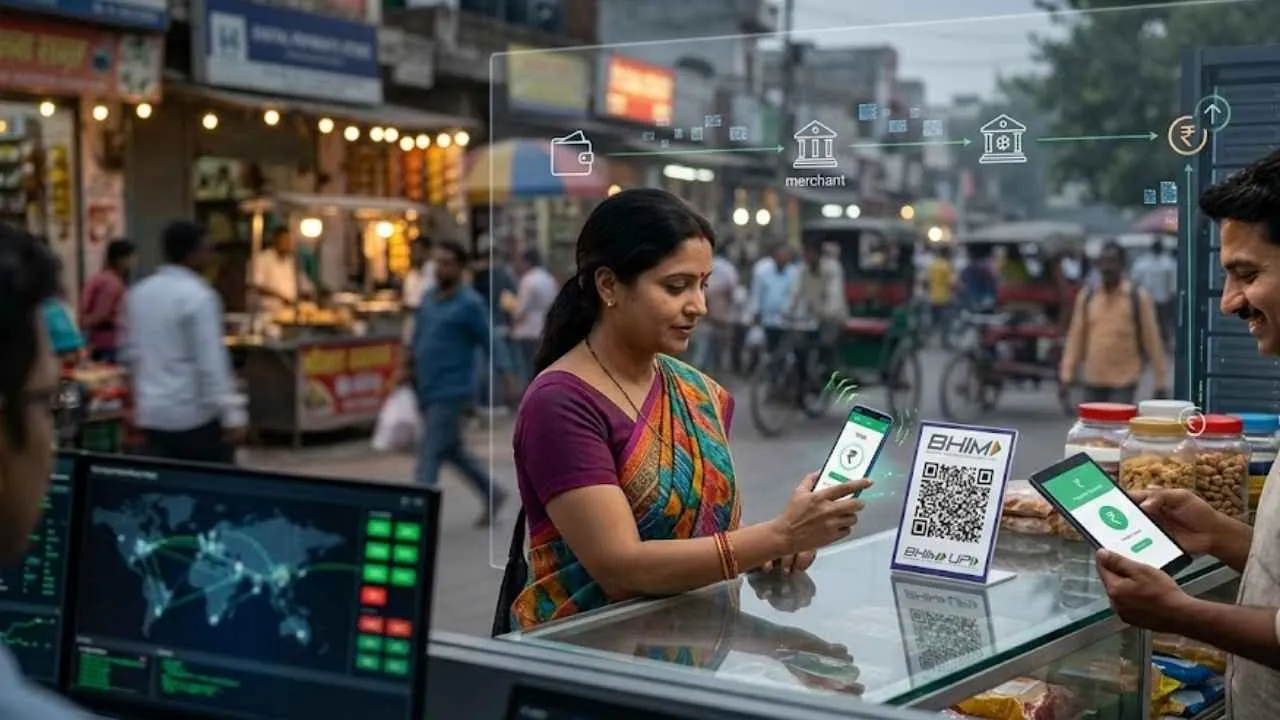
Every customer using UPI can take a breath and stay calm, as their everyday digital payment isn’t getting expensive suddenly. After the rapid chaos growing over the extra charges on ₹2,000 and above payments has settled down.
The government has introduced a new Merchant Discount Rate (MDR), which will now be applied to all eligible merchant transactions above ₹2,000 from October. Now, under this new system, all the merchants will have to bear the MDR that is applicable.
The good news for customers is, these charges are not applicable directly to their transactions. The Person-to-Person (P2P) online UPI money transfer will remain completely free, no matter whatever the amount is. On the other hand, merchant payments up to ₹2,000 will also stay outside the MDR charges framework.
Any merchant payments above ₹2,000 will have a standard 0.4% MDR applied, with certain sectors receiving exemptions or concessional rates.
Did You Know: What Is MDR?
The Merchant Discount Rate (MDR) is basically a small fee charged within the digital payment system. This is applicable when a merchant accepts a payment. Under the new MDR framework, the merchant will pay the applicable charges on eligible transactions.
For a payment of ₹5,000, there will be a 0.4% MDR charge, which is ₹20. For this mandatory step, banks have been advised to ensure that merchants do not pass this cost to customers and ask them to pay extra. Also, as a serious note to all the UPI apps, they are also prohibited from adding hidden platform charges for all these transactions.
Who Pays What Under MDR On UPI?
The new MDR has slabs for everyone, according to their role. The standard MDR of 0.4% will be applied to eligible Person-to-Merchant transactions (P2M) above ₹2,000.
For transactions of ₹75,000 and above, the MDR will be capped at ₹300. So, a ₹1 lakh payment will attract ₹300 instead of ₹400.
Under the MDR framework, certain sectors will have lower rates to be paid.
- Payments above ₹2,000 for railways, telecom, insurance, fuel, agricultural inputs and specified utility and government services will attract a flat ₹5 MDR.
- Capital-market payments will attract 0.02% MDR, capped at ₹300.
- Small merchants receiving up to ₹1 lakh per month through eligible UPI QR payments will remain exempt from MDR.
UPI MDR Framework
| Transaction Type | MDR From October 15, 2026 |
| P2P payment | ₹0 |
| Merchant payment up to ₹2,000 | ₹0 |
| Eligible merchant payment above ₹2,000 | 0.4% |
| Merchant payment ₹75,000 and above | Maximum ₹300 |
| Eligible small merchants (up to ₹1 lakh monthly UPI receipts) | ₹0 |
| Railways, telecom, insurance, fuel, utilities, agricultural inputs | ₹5 |
| Capital-market transactions | 0.02%, capped at ₹300 |
| UPI Mandates / AutoPay | ₹0 |
What Are The Two Types Of Payments Under The New UPI MDR?
A Person-to-Person (P2P) transaction is a UPI payment made directly from one individual to another. For example, sending money to a friend, family member or another person through UPI is a P2P transaction.
Under the new MDR framework, P2P UPI transactions will remain completely free, regardless of the amount being transferred.
A Person-to-Merchant (P2M) transaction is a UPI payment made by an individual to a business or merchant for goods or services. For example, paying at a shop by scanning its UPI QR code is a P2M transaction.
Under the new framework, eligible P2M transactions above ₹2,000 will attract the applicable MDR.

Aishwarya Samant is a journalist with over 4 years of experience navigating the fast-paced corporate media landscape. She specializes in decoding business news, world economy, personal finance, and stock market trends, often adding a subtle touch of political perspective to keep things interesting.
Having worked with reputed organizations like ZEE, TV9, News24, and NewsX, she is no stranger to the newsroom hustle and the demands of real-time storytelling. Her writing style is fast-paced, engaging, and crafted to connect seamlessly with diverse audiences across platforms. She approaches every story from the reader’s point of view, breaking down complex topics into clear, relatable narratives backed by solid facts and credible sources. While she’s confident in expressing strong viewpoints, she ensures balance with insights. Sharp, fact-driven content that informs, engages, and keeps readers coming back for more.


-1789202398688_t.webp)