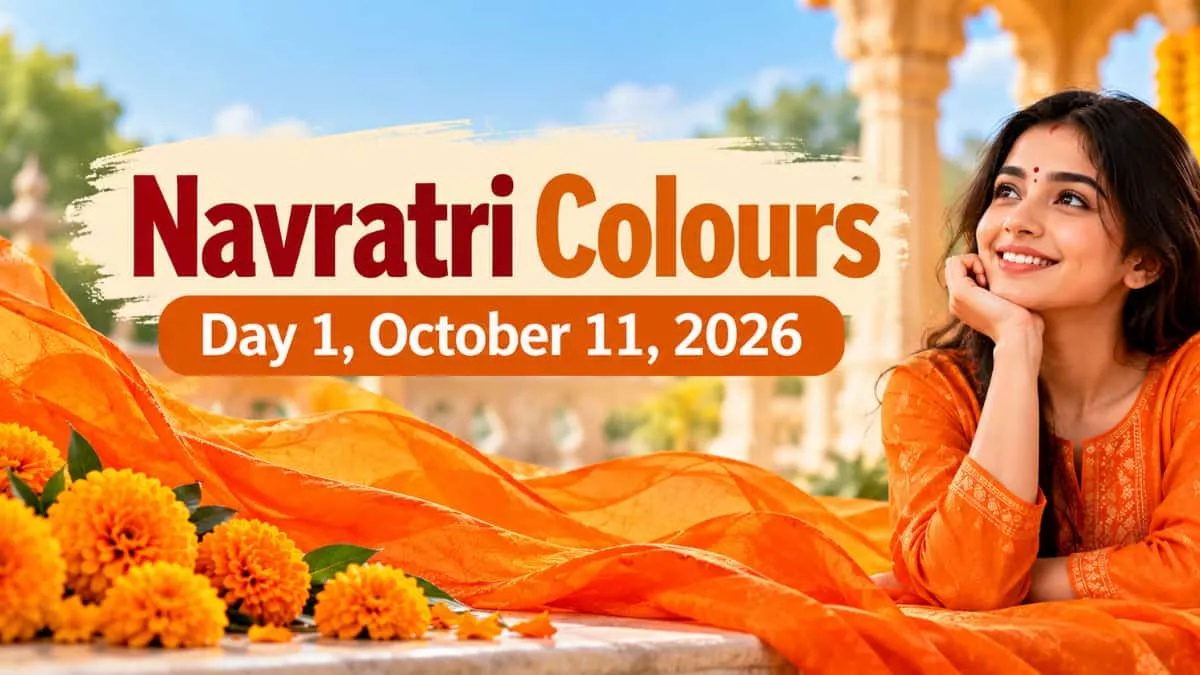
Navratri Colours Day 1, October 11, 2026: The first day of Sharadiya Navratri will be celebrated on 11th of October 2026, which belongs to Sunday.On Sunday, 11th October 2026, the first day of Sharadiya Navratri will be celebrated.
Orange is the colour for the day, symbolising energy, enthusiasm, warmth and positivity. On this day, worship is carried out to Maa Shailputri, the first form of Goddess Durga and also Ghatasthapana or Kalash Sthapana is done to mark the beginning of the nine-day festival.
Navratri is a significant Hindu festival which is celebrated with prayers, fasting, devotional songs and traditional dances. Many devotees also wear the colour of the day they are celebrating, as it is a way of participating in the celebrations.
Read about the first day of Navratri 2026 and its significance, puja customs and outfit suggestions.
Navratri Day 1 2026: Date, Colour and Devi Name
|
Details
|
Information
|
|
Festival
|
Sharadiya Navratri 2026
|
|
Day
|
Day 1
|
|
Date
|
Sunday, October 11, 2026
|
|
Tithi
|
Pratipada
|
|
Navratri colour
|
Orange
|
|
Goddess worshipped
|
Maa Shailputri
|
|
Important ritual
|
Ghatasthapana
|
|
Main significance
|
Strength, positivity and new beginnings
|
What Is the Colour of Navratri Day 1 in 2026?
Orange is the colour of Navratri 2026 first day. It is associated with energy, enthusiasm, warmth and spiritual positivity.
The colour orange is considered to be bright and festive, hence rededicating towards the happy start of Navratri. During the day's celebrations, the devotees can wear orange sarees, suits, lehengas, kurtas etc. of traditional attire.
There are also many families that decorate their house with orange marigold flowers, colourful items and traditional puja items to create a festive atmosphere within the home.
Who Is Worshipped on the First Day of Navratri?
Navratri is the first of nine days dedicated to the worship of the nine forms of Goddess Durga, known as Navadurga, and the first one is dedicated to Maa Shailputri.
Shailpanyaka means ‘daughter of the hill' or ‘daughter of the mountain'. She is called the daughter of the king of the mountains, Himalaya.
Maa Shailputri is usually portrayed in a white bull named Nandi. In her hand she carries a trident and a lotus, and a crescent moon on her forehead.
The people venerate her as a source of strength, stability, peace and spiritual growth. Her worship is the first of the Navratri festival and is a reminder to devotees to embark on a new journey with faith and determination.
Significance of Orange Colour on Navratri Day 1
Orange is an auspicious colour in the Hindu religion. It is considered to be bright and is usually linked to energy, devotion and enthusiasm.
The significance of wearing orange on the first day of Navratri is:
-
Energy and enthusiasm: Orange represents an active and positive approach to the beginning of the festival.
New beginnings: The first day marks the start of nine days of prayer and devotion.
Spiritual devotion: Wearing the day's colour is a way for many devotees to express their participation in Navratri.
Joy and celebration: Orange adds brightness to temple visits, family gatherings and community celebrations.
Devotees may choose different shades, including saffron, marigold, burnt orange and peach-orange. There is no need to buy a new outfit; an orange dupatta, kurta or accessory can also be used.
Navratri Day 1 Outfit Ideas: What to Wear in Orange?
If you are planning your first-day Navratri outfit, orange offers plenty of traditional and modern styling options.
|
Outfit
|
Styling idea
|
|
Orange saree
|
Choose silk, Banarasi or cotton with a golden border.
|
|
Orange Anarkali suit
|
Add traditional earrings and embroidered footwear.
|
|
Orange lehenga
|
Pair it with a contrasting dupatta and simple jewellery.
|
|
Orange kurta
|
Wear it with white, cream or beige bottoms.
|
|
Orange dupatta
|
Add it to a simple white or cream outfit.
|
For temple visits, lightweight cotton outfits can be comfortable during the day. For evening aarti or Garba celebrations, embroidered suits and festive sarees are popular choices.
Why Do Navratri Colours Change Every Year?
The colour list used for Navratri is very popular and varies from year to year as it is often associated with the day of the week on which the Navratri celebrations start.
The first day is Sunday, October 11, in 2026 and orange is the colour assigned to Day 1 in the day-wise list referenced. The remaining colors are in the order of the year's celebration.
It is important to note that the nine colour tradition is not a universal religious rule, but a popular cultural practice. Colours might vary in different communities.
Conclusion
The first day of Navratri festival is on October 11, 2026, and is the beginning of nine days in which Goddess Durga and her nine forms are worshipped. Orange is the colour of energy, positivity and enthusiasm and Maa Shailputri is revered for her strength and stability. Devotees can welcome Navratri with faith and devotion, by celebrating the day with Ghatasthapana, prayers, aarti and traditional orange outfits.