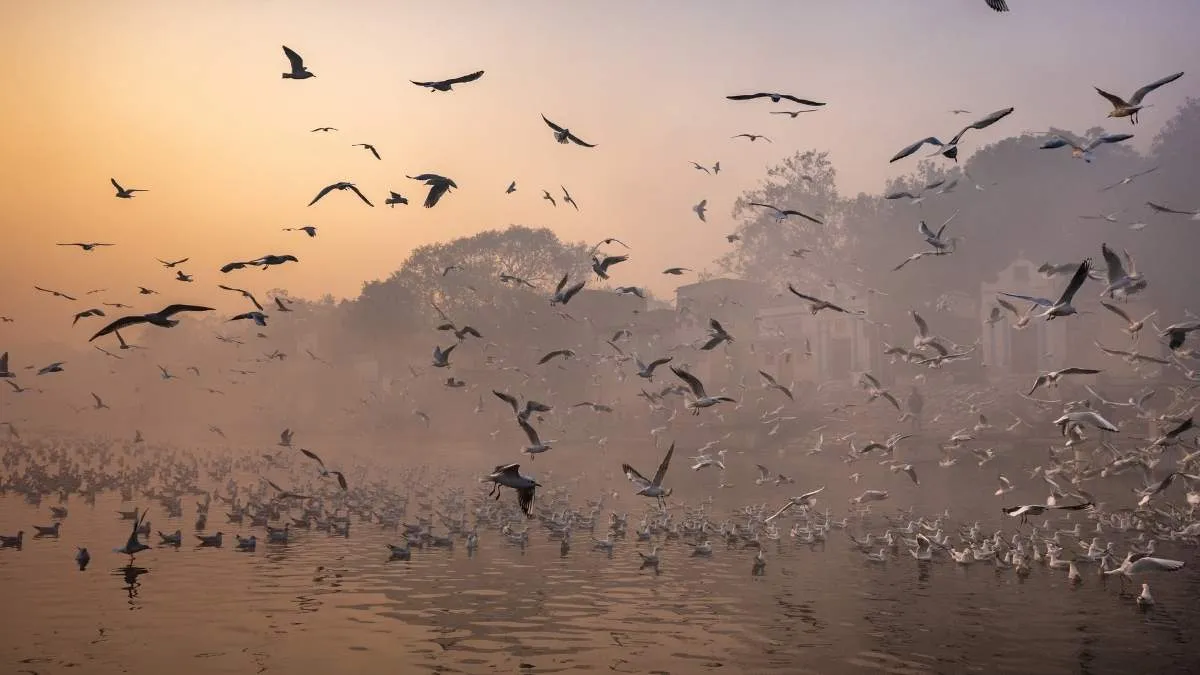
Fireworks light up skies across India during Diwali for decades. But over 900 farming households in Erode district of Tamil Nadu choose not to and have been consistent about celebrating crackers free Diwali for more than 21 years now.
For the 21st consecutive year more than ten rural settlements around the Vellode Bird Sanctuary celebrated their Diwali without burning loud fire crackers to protect birds.
There is an official report from the Tamil Nadu Wetlands Mission and Forest Department which confirms that the 77.185 hectare Periyakulam wetland shelters over 20000 migratory birds each season along the Central Asian Flyway. And to protect these breeding flocks local families celebrate with traditional oil lamps, new garments, and silent sparklers instead.
Which Tamil Nadu Villages Have not Burned Crackers for 21 Years?
The decision of avoiding fireworks was self enforced silence by agrarian settlements in Perundurai taluk and across a five kilometre radius around the sanctuary waters.
List of Cracker-free Tamil Nadu Villages
Related Stories
-
Core Belt: Vadamugam Vellode, V. Mettupalayam, Ellapalayam, and Pungambadi.
Perimeter Hamlets: Chellappampalayam, Semmandampalayam, Karukkankattu Valasu, and Meenakshipuram.
Extended Habitats: Vadagalpudur, Kalarpalayam, and Tachan Karaivali.
|
Settlement
|
Distance to Sanctuary
|
Primary Community Responsibility
|
|
Vadamugam Vellode
|
Immediate perimeter
|
Monitors entry channels and strictly bans aerial burst shells.
|
|
Mettupalayam and Ellapalayam
|
1 to 2 km
|
Bars sound crackers within direct acoustic range of roosting trees.
|
|
Pungambadi and Outer Hamlets
|
3 to 5 km
|
Acts as an acoustic buffer zone against surrounding highway noise.
|
How the Community Enforces the Cracker Ban Without Police Fines
The tradition runs entirely on social consensus rather than government penalties. Ahead of Diwali panchayat elders hold informal meetings to brief youth and newcomers.
-
Children stick strictly to hand held sparklers (kambi mathappu) and flower pots. Loud atom bombs and aerial shells remain banned.
-
If children want to really experience fireworks then parents take them to relatives' homes outside the sanctuary belt.
-
Farmers rely on the lake’s water which is enriched naturally by bird guano to irrigate local turmeric, banana, and sugarcane fields.
Why Sudden Fireworks Threaten Vellode Bird Sanctory Migratory Species
Vellode sits directly along the Central Asian Flyway. Between October and March flocks of birds travel thousands of kilometres from Siberia, Russia, and Australia to breed.
The sanctuary supports 148 documented avian species including Spot-Billed Pelicans, Asian Openbills, Painted Storks, and Bar-Headed Geese.
Sudden sonic blasts above 85 decibels trigger acute panic flights. Nesting parents abandon their roosts. Their eggs left behind get exposed to predatory crows and raptors. Smoke from sulfur and nitrate compounds can also irritate chicks' respiratory tracts.
What are 5 Major Bird Sanctuaries Across Tamil Nadu?
Tamil Nadu holds the highest number of Ramsar wetland sites in India. It is therefore a crucial winter nursery for migratory birds that visits India during winter.
Some of the most important bird sanctuaries across the state are:
|
Tamil Nadu’s Sanctuary Name
|
District
|
Area and
|
Ecological Status
|
Notable Migratory Species
|
|
Vedanthangal
|
Chengalpattu
|
~40 ha
|
Oldest sanctuary in India
|
Painted Stork,
Grey Heron,
Openbill Stork
|
|
Vellode
|
Erode
|
77.18 ha
|
Ramsar Site (2022)
|
Spot-Billed Pelican,
Asian Openbill,
Teals
|
|
Koonthankulam
|
Tirunelveli
|
72 ha
|
Ramsar Site (2022)
|
Bar-Headed Goose,
Painted Stork,
Ibis
|
|
Kazhuveli
|
Villupuram
|
5,151 ha
|
Ramsar Site (2024)
|
Greater Flamingo,
Black-Headed Ibis,
Coots
|
A Proven Grassroots Conservation Model
Similar traditions of not burning cracker during, before, or after Diwali exist at Koonthankulam in Tirunelveli and Vettangudipatti in Sivaganga. The conscensual decision proves that rural communities often drive wildlife conservation without friction. And by putting nesting birds before festive noise Erode sends a message that age old cultural celebrations can thrive alongside vulnerable wildlife.