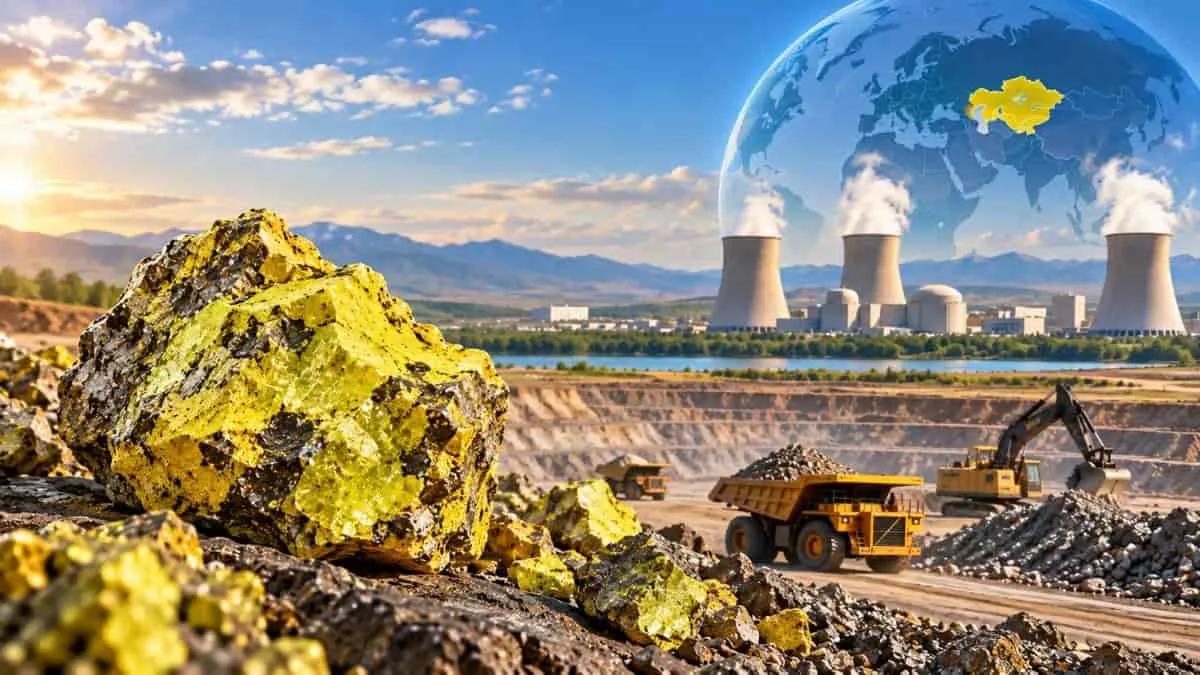
Uranium is the most important and abundant mineral which is used to produce nuclear energy. Many countries around the world have greater deposits, but there are few countries that are the largest producer of Uranium from their mines in the World.
Do you know which country is the largest producer of uranium in the world? The answer is Kazakhstan.
So, let's explore this article in detail and see the top Uranium Producing Countries in the world, why Kazakhstan is on the top in the list.
Also learn about Uranium, and will see which country has the most uranium resources.
What Is Uranium?
First of all, before going into further detail, let's first understand what Uranium is. Uranium is a naturally occurring chemical element found in rocks and soil.
It is important because uranium can be used as a fuel in nuclear power plants. Nuclear power plants use the energy released from uranium to produce heat. That heat is then used to make steam, which turns turbines and produces electricity.
Uranium is also used in small amounts for some medical purposes, including the production of certain medical isotopes.
Which Country Is the Largest Producer of Uranium in the World?
Kazakhstan is the largest producer of Uranium in the World. According to the latest data from World Nuclear Association (WNA), since 2009, the Kazakhstan is known for the largest producing Uranium in the world
In 2025, Kazakhstan produced about 25,839 tonnes of uranium, which was around 40% of the world's total uranium production.
So, 2 out 5 of every tonnes of Uranium which are produced in the world is usually come from Kazakhstan only in 2025.
Top Uranium Producing Countries
Here is a simple look at the leading uranium-producing countries based on the WNA's 2024 mine production data:
|
Rank
|
Country
|
Uranium production in 2024
|
Share of world production
|
|
1
|
Kazakhstan
|
23,270 tonnes
|
39%
|
|
2
|
Canada
|
14,309 tonnes
|
24%
|
|
3
|
Namibia
|
7,333 tonnes
|
12%
|
|
4
|
Australia
|
4,598 tonnes
|
8%
|
|
5
|
Uzbekistan
|
4,000 tonnes*
|
About 7%
|
|
6
|
Russia
|
2,738 tonnes
|
About 5%
|
|
7
|
China
|
1,600 tonnes*
|
About 3%
|
|
8
|
Niger
|
962 tonnes
|
About 2%
|
|
9
|
500 tonnes*
|
About 1%
|
*Some figures are estimates, as marked by the World Nuclear Association.
The world produced about 60,213 tonnes of uranium in 2024. Kazakhstan alone produced more than one-third of this amount.
Why is Kazakhstan the largest producer of Uranium in the World?
The uranium deposits in Kazakhstan are large and the uranium mining industry in Kazakhstan is well developed.
In 2009, the country surpassed its former position as the world's second largest producer of uranium to become the world's biggest producer. Since then it has been in the top position.
There are several projects for extraction of uranium in Kazakhstan. Many of them are using a method called in-situ leaching (ISL) or in-situ recovery.
To put it simply, the procedure enables the extraction of uranium from the rock during its life cycle. The uranium is dissolved in a liquid which is pumped in and the liquid is pumped out from the underground area.
According to the World Nuclear Association, the share of in-situ leaching in the world's uranium production in 2024 was over 50% of the total production.
Kazakhstan vs Canada
Canada is the second-largest producer of uranium.
In 2024:
-
Kazakhstan produced 23,270 tonnes
-
Canada produced 14,309 tonnes
-
Namibia produced 7,333 tonnes
So, Kazakhstan produced much more uranium than Canada.
Canada is also home to some of the world's largest uranium mines. The McArthur River/Key Lake mine and Cigar Lake mine were the two biggest uranium-producing mines in 2024.
Which Country Has the Largest Uranium Resources?
There is an important difference between uranium production and uranium resources. A country may have a large stock of uranium underground but not necessarily produce the most uranium each year.
Based on the data in the Uranium 2024 report released by the OECD Nuclear Energy Agency and the International Atomic Energy Agency (IAEA), Australia was shown as having the world's largest identified recoverable uranium resources, equivalent to 1.67 million tonnes or 28% of the world total.
The second in this list of resources was Kazakhstan with approximately 813,900 tonnes (14%).
Production and Resources Are Not the Same
|
Term
|
Meaning
|
|
Uranium production
|
Uranium taken out of mines during a year
|
|
Uranium resources
|
Uranium that is known to exist and may be recoverable
|
|
Uranium mine
|
A place where uranium-bearing rock is taken from the ground
|
|
Nuclear fuel
|
Fuel made from uranium that can be used in nuclear reactors
|
So, Kazakhstan is the largest producer, while Australia has the largest identified recoverable uranium resources in the WNA data.
How Much Uranium Does Kazakhstan Produce?
Kazakhstan's uranium production has changed over the years. The WNA records show that Kazakhstan produced:
|
Year
|
Uranium production
|
|
2015
|
23,607 tonnes
|
|
2016
|
24,689 tonnes
|
|
2020
|
19,477 tonnes
|
|
2021
|
21,819 tonnes
|
|
2022
|
21,227 tonnes
|
|
2023
|
21,109 tonnes
|
|
2024
|
23,270 tonnes
|
|
2025
|
about 25,839 tonnes
|
The 2025 figure comes from the latest WNA country information for Kazakhstan, while the WNA world production table currently lists country-by-country figures through 2024.
Which Three Countries Produce the Most Uranium?
The top three uranium-producing countries are:
1. Kazakhstan – The world's largest uranium producer.
2. Canada – The second-largest producer and home to some of the world's biggest uranium mines.
3. Namibia – The third-largest producer and an important uranium producer in Africa.
Together, Kazakhstan, Canada and Namibia produced about three-quarters of the world's uranium from mines in 2024.
Where Is Uranium Used?
The main use of uranium is to produce electricity in nuclear power plants. Nuclear fuel is used in nuclear power plants to generate heat. The heat changes the water to steam and the steam uses the turbines to produce electricity.
Uranium is thus an important component of the world's nuclear energy system.
How Is Uranium Mined?
Uranium can be obtained from the ground in different ways.
The main methods include:
-
In-situ leaching: A liquid is used to extract uranium from underground deposits.
-
Underground mining: Diggers work in the ground to extract the uranium-containing rock.
-
Open-pit mining: Removal of large areas of rock from the surface.
-
By-product recovery: Uranium may be mined during the extraction of some other mineral.
The WNA estimated the world production of uranium in 2024 as 52% from in-situ leaching, 44% from underground and open-pit mining (excluding Olympic Dam), and 4% by-product.
Interesting Facts About Uranium Production
-
Since 2009, Kazakhstan has been the biggest uranium producer in the world.
-
In 2025, Kazakhstan had a production of approximately 40% of the world's uranium.
-
Kazakhstan's uranium production in 2024 was 23,270 tonnes.
-
In 2024, Canada was the second largest producer.
-
In 2024, Namibia was the third biggest producer.
-
In 2024, Kazakhstan and Canada were combined to provide roughly three-quarters of the world's mines production.Kazakhstan and Canada combined supplied about three-quarters of the world's mines production in 2024.
-
Australia's identified recoverable uranium resources have the highest volume in the WNA data.
-
The primary application of uranium is for fuel of nuclear power generation.
Kazakhstan is the largest producer of uranium in the world. It has held the top position since 2009. In 2025, Kazakhstan produced about 25,839 tonnes of uranium, equal to around 40% of global production.
Canada and Namibia are the next two major producers. While Kazakhstan leads the world in uranium production, Australia has the largest identified recoverable uranium resources.