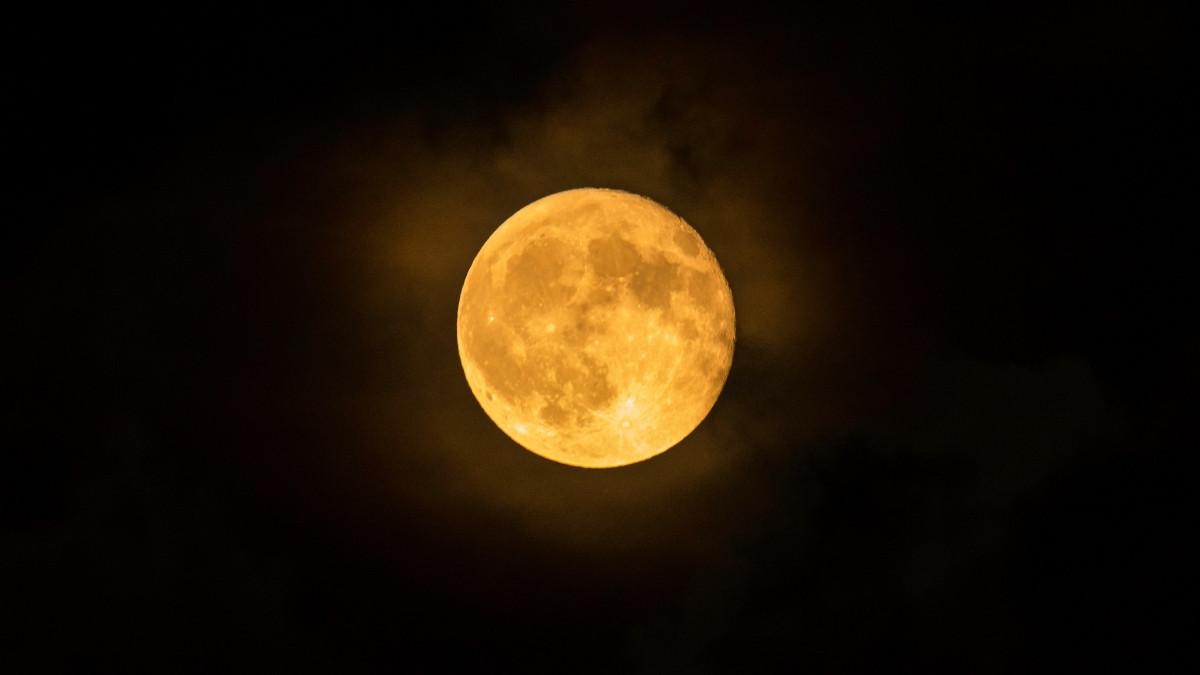
People around the world can look up tonight to see the July Buck Moon 2026. NASA states that the July full moon reaches peak brightness on July 29 2026 at 10:36 a.m. EDT.
But even though the official peak happens during the day for some regions the moon will look full to anyone watching over the next two to three nights.
Hereonwards we will learn how the July full (Buck) moon got its name and its significance for observing it in the sky tonight as a learned skywatcher.
Why is July’s Full Moon Called the Buck Moon?
The name of the July full moon comes from male deer known as bucks. Young bucks in the month of July start growing new antlers covered in soft velvet.
Native American groups including the Algonquin people used such animal habits to mark the time of year instead of using a standard calendar.
Let’s take these nicknames of full moon as examples which are purely based on environmental or ecological occurrences:
- Thunder Moon: It is named for the frequent summer storms this month.
- Hay Moon: Americans used it in traditional European farming to mark the summer hay harvest.
- Salmon Moon: This one is a name specifically used in the Pacific Northwest for the return of swimming fish.
July Full 'Buck' Moon 2026: Timing and Visibility for Tonight
To get a good look at the July full moon you simply need to step outside facing east shortly after the sun sets. The Buck Moon often appears slightly yellow or orange due to Earth's atmosphere filtering the light as the moon rises low on the horizon
| Location and Time Zone | Buck Moon 2026 Visibility Date | Peak Illumination Time |
| Eastern Daylight Time (EDT) | July 29, 2026 | 10:36 AM |
| Coordinated Universal Time (UTC) | July 29, 2026 | 14:36 UTC |
| Indian Standard Time (IST) | July 29, 2026 | 8:06 PM |
You call it the Buck Moon, Thunder Moon, or Hay Moon, July’s moon is an easy excuse to spend a few minutes outside after dark. Make sure to check the sky right after sunset. It gives you the clearest view as it comes up over the horizon.