How Did Himachal Pradesh Get Its Name? Check Its History, Location, and Facts
Discover how Himachal Pradesh got its name, its Sanskrit meaning, history, location, and key facts. Learn why it is called the “Land of Snowy Mountains” in this article.
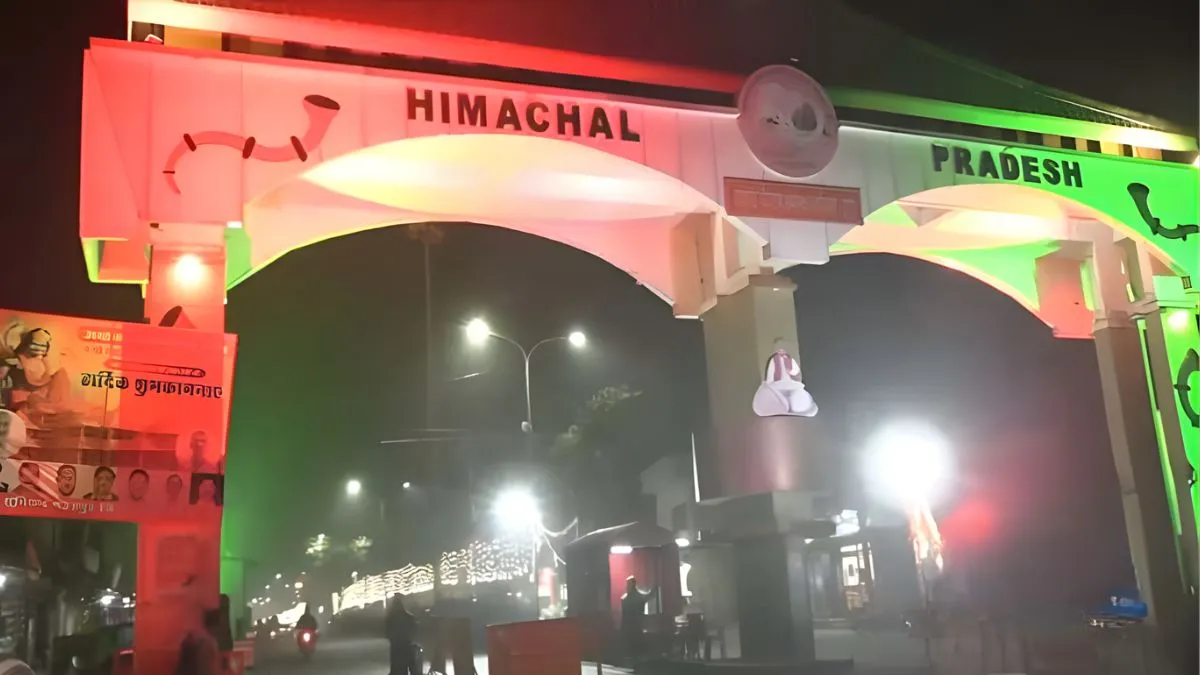
Himachal Pradesh is the 18th State of India, which is located in the Northern Part of India, and it is one of the most popular tourist destinations known for its mountains, valleys, and peaceful environment.
Himachal Pradesh is widely known as the “Land of Snowy Mountains”, due to its beautiful Himalayan ranges and snow-covered peaks.
The state was formed after India’s independence by merging several hill regions, and it finally became a full-fledged state on 25 January 1971.
But, how did Himachal Pradesh get its name?
Do you know the real meaning behind it? If yes, good… if not, let’s explore this article.
Facts About Himachal Pradesh
| Aspects | Details |
| Area | 55,673 sq. km |
| Population | 68,64,602 (Census 2011) |
| Capital | Shimla (Summer), Dharamshala (Winter) |
| Official Language | Hindi |
| Literacy Rate | 82.80% (Census 2011) |
| Districts | 12 |
| Statehood Day | 25 January 1971 |
Source: Government of Himachal Pradesh & Census of India 2011
Also Read: How Jammu & Kashmir Got Its Name? Check its History, Location, and Facts

Source: himachaltourism
How Did Himachal Pradesh Get Its Name?
The name “Himachal Pradesh” is derived from the Sanskrit language.
-
Hima = Snow
-
Achal = Mountain
-
Pradesh = State
So, by combining these words all together, this comes, “Himachal Pradesh”.
What is the meaning of Himachal Pradesh?
So, Himachal Pradesh means “Land of Snowy Mountains” or “Snow-covered region.”
It is named this way because the state lies in the Himalayan mountain region, where many areas remain covered with snow.
So, the meaning of Himachal Pradesh is: “The State of Snowy Mountains”
Who Gave the Name Himachal Pradesh?
The name “Himachal” was suggested by Acharya Diwakar Datt Sharma, a Sanskrit scholar, after India’s independence.
It was officially adopted when the region was reorganised into a political unit.
History of Himachal Pradesh
The history of Himachal Pradesh is very old and rich.
-
Ancient Period: This region finds mention in ancient texts like the Mahabharata and was home to many small kingdoms.
-
Medieval Period: Different rulers governed regions like Kangra, Kullu, and Chamba.
-
British Period: The area became part of the Punjab Hill States under British rule.
After Independence (Government Record Timeline)
-
15 April 1948 → Formation of Himachal Pradesh
-
1950 → Became Part C State
-
1956 → Became Union Territory
-
1966 → Territories added from Punjab
-
25 January 1971 → Became the 18th state of India

Source: incredibleindia
What is the location of Himachal Pradesh?
Himachal Pradesh is located in Northern India in the Western Himalayas.
Borders:
-
North → Jammu & Kashmir and Ladakh
-
East → Tibet (China)
-
South → Haryana
-
West → Punjab
Capitals:
-
Shimla (Summer Capital)
-
Dharamshala (Winter Capital)
Important Facts about Himachal Pradesh
1. Dev Bhoomi (Land of Gods)
Himachal Pradesh is often called “Dev Bhoomi” because of its many temples and religious sites.
2. Formed from Hill States
After independence, around 28 princely hill states were merged to form Himachal Pradesh.
3. Famous for Tourism
-
Popular places: Manali, Shimla, Kullu, Dharamshala
-
Known for snow, trekking, and natural beauty
4. Rivers
5 major rivers flow through the Himachal Pradesh state:
-
Sutlej
-
Beas
-
Ravi
-
Chenab (Chandra-Bhaga)
-
Yamuna
5. Cultural Diversity
Each region has its own language, dress, and festivals, making Himachal culturally rich.

Prabhat Mishra is a Subject Matter Expert and digital journalist with an extensive background in the competitive exam landscape and over 4 years of experience in education, national and international news, and current affairs. Over his tenure with top knowledge platforms like Mentorship India, IAS BABA, IAS SARTHI, and now Jagran Josh, he has a deep understanding of government exams like UPSC and State PCS, including UP and Bihar, as he has already qualified for the UPPCS 2022 Mains and Bihar 68th Mains. With his core expertise in history, polity, geography & current affairs, he specialises in creating well-researched, aspirant-centric content and simplifying complex topics for competitive examinations.

-1790168904752_t.webp)
-1790168511133_t.webp)




![[Out] UGC NET June 2026 Result Live: यूजीसी नेट रिजल्ट ugcnet.nta.nic.in जारी, डायरेक्ट लिंक से करें चेक](https://img.jagranjosh.com/images/2026/August/2782026/UGC-NET-Result-2026-Marksheet-link-pdf.jpg)