Who Is Known as the Father of Indian Cinema?
Who is known as the Father of Indian Cinema? Know why Dadasaheb Phalke earned the title, his real name, Raja Harishchandra, key contributions, and the 2026 Dadasaheb Phalke Award winner.
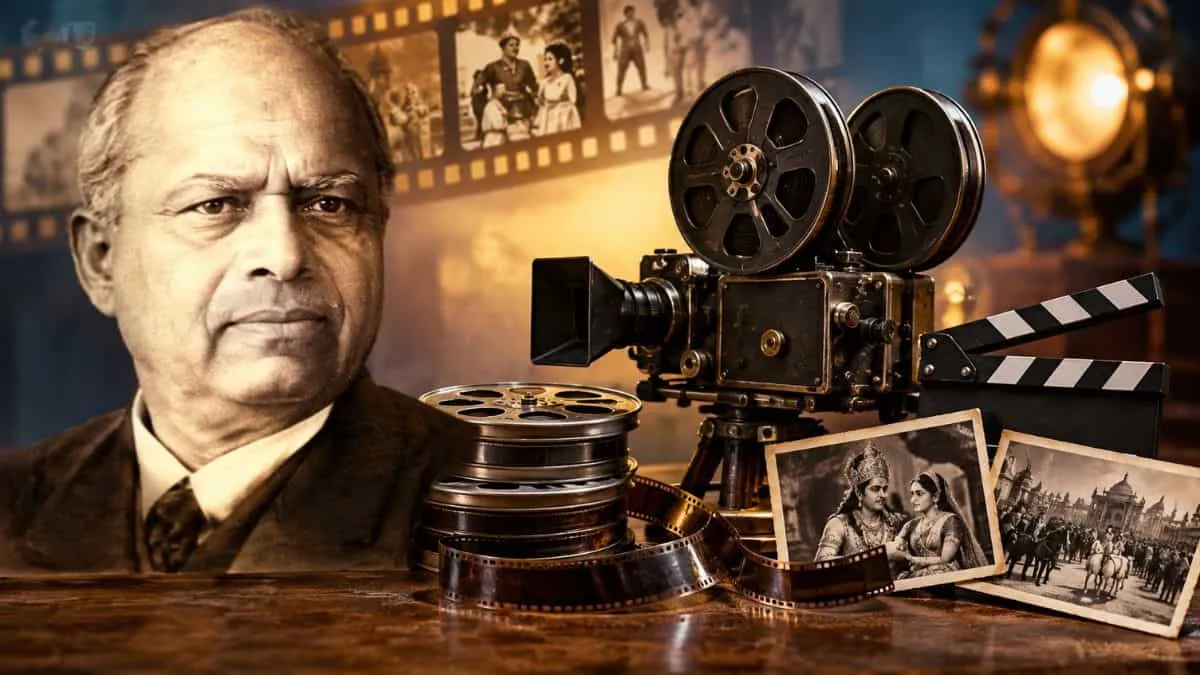
Indian Cinema has grown as a powerful medium of communication in India since 19th century, which becomes a highly recognisable global enterprise that is composed of multilingual and muti-ethnic filmt art.
But, when we talk about the history of Indian cinema, then every one ask: Who Is Known as the Father of Indian Cinema?
It is Dadasaheb Phalke, Who Is Known as the Father of Indian Cinema because of his pioneering works in the early years of making films in India and since 1953 to honour Dadasaheb Phalke, the award has been given as the Dadasaheb Phalke Award in his name.
For the 72nd National Film Awards, which is going to be held on September 22, 2026, Veteran Actor Anant Nag has been named the winner of the prestigious Dadasaheb Phalke Award for his contribution to Indian Cinema.
This question is also important for the students who are preparing for exam, because some time when there is any news, these types of questions are generally asked SSC, Railways types competitions exams.
His real name was Dhundiraj Govind Phalke. At a time when filmmaking was a new idea in India, Phalke took the difficult step of making an Indian feature film with Indian artists and resources.
His most famous film, Raja Harishchandra, was released in 1913. The Government of India describes it as the first Indian feature film and credits Phalke with laying the foundation of Indian cinema.
Who Is the Father of Indian Cinema?
Dadasaheb Phalke is known as the Father of Indian Cinema, and his real name is Dhundiraj Govind Phalke.
He was a filmmaker, producer and director who played a major role in starting India's own filmmaking tradition. His work opened the way for the Indian film industry to grow in the years that followed.
The Government of India's New India Samachar describes Dadasaheb Phalke as the Father of Indian Cinema and notes that he laid the foundation of Indian cinema with Raja Harishchandra.
Dadasaheb Phalke: Quick Facts
| Particular | Details |
| Full Name | Dhundiraj Govind Phalke |
| Popularly Known As | Dadasaheb Phalke |
| Known As | Father of Indian Cinema |
| Born | April 30, 1870 |
| Birthplace | Trimbakeshwar, near Nashik, Maharashtra |
| Famous Film | Raja Harishchandra |
| Release Year | 1913 |
| Type of Film | Silent film |
| Contribution | Pioneered Indian filmmaking |
| Died | February 16, 1944 |
The Government of India records that Phalke was born on April 30, 1870, at Trimbakeshwar near Nashik in Maharashtra. He later established the Phalke Film Company in 1912.
Why Is Dadasaheb Phalke Known as the Father of Indian Cinema?
This is very common query, that why Dadasaheb Phalke is known as Father of Indian Cinema. There is not only one reasons, Let’s explore,
In the early 1900s, filmmaking was still a new form of entertainment, and the Dadasaheb was interested in films making after he watched ”The Life of Christ.” He then decided to learn about filmmaking and make films in India.
His biggest achievement came in 1913, when he made Raja Harishchandra, which was the first film ever made in Indian cinema.
The film was based on the story of King Harishchandra. It was a silent film and was directed and produced by Phalke.
The film was publicly shown on May 3, 1913, at the Coronation Cinema in Bombay, now Mumbai. The Ministry of Culture records Raja Harishchandra as the first full-length Indian feature film.
This was an important moment because it showed that Indians could make their own films instead of only watching films made elsewhere.
Dadasaheb Phalke: Important Facts for GK
-
Dadasaheb Phalke's real name: Dhundiraj Govind Phalke
-
Known as: Father of Indian Cinema
-
Born: April 30, 1870
-
Birthplace: Trimbakeshwar, near Nashik, Maharashtra
-
First major feature film: Raja Harishchandra
-
Year of release: 1913
-
Film type: Silent film
-
Dadasaheb Phalke Award instituted: 1969
-
Latest awardee announced in 2026: Anant Nag
-
Award year for Anant Nag: 2024
-
Award ceremony: 72nd National Film Awards, September 22, 2026
Raja Harishchandra: The Film That Started a New Journey of Indian Cinema
Raja Harishchandra holds a special place in Indian cinema.
The film was based on the story of the truthful King Harishchandra. Since it was a silent film, there was no recorded spoken dialogue.
According to the Ministry of Culture, the film was directed and produced by Dadasaheb Phalke and became a major milestone in the development of India's film industry.
The Government of India has also described Raja Harishchandra as India's first indigenous feature film.
Important Films Made By Dadasaheb Phalke
Phalke did not stop after Raja Harishchandra. He went on to make several films.
Some of his notable films include:
-
Mohini Bhasmasur
-
Satyavan Savitri
-
Lanka Dahan
-
Shri Krishna Janma
-
Kaliya Mardan
The Government of India notes that Phalke's work covered filmmaking, screenwriting and film production.
Dadasaheb Phalke's Contribution to Indian Cinema
Phalke's contribution was not limited to making one film. He helped develop filmmaking in India at a time when the industry was still in its early stage.
The Government of India notes that he encouraged the use of Indian artists, local locations and locally available technical resources. His work therefore became an important part of the early development of an indigenous Indian film industry.
His filmmaking journey also included experimentation. For example, Lanka Dahan, made in 1917, is noted by the Government of India as an early film featuring an actor in a double role.
What Is the Dadasaheb Phalke Award?
Dadasaheb Phalke's name is not only remembered through the history of Indian cinema. The Government of India also named its highest cinema honour after him.
The Dadasaheb Phalke Award is given for outstanding contribution and achievement in Indian cinema. It was instituted in 1969, the birth centenary year of Dadasaheb Phalke.
Over the years, the award has been given to several important personalities from Indian cinema.
Who Won the Dadasaheb Phalke Award in 2026?
Congratulations to the legendary Anant Nag Ji on being conferred the Dadasaheb Phalke Award.
— Narendra Modi (@narendramodi) September 16, 2026
For several decades, his effortless performances, remarkable versatility and brilliance have left a very strong mark on Indian cinema, particularly Kannada cinema. In whichever role he…
On September 16, 2026, the Press Information Bureau announced that actor Anant Nag would receive the s for 2024.
The award is scheduled to be presented at the 72nd National Film Awards ceremony on September 22, 2026, in Kevadia, Gujarat.
| Aspects | Details |
| Latest awardee announced in 2026 | Anant Nag |
| Award year | 2024 |
| Announcement | September 16, 2026 |
| Award presentation | September 22, 2026 |
| Ceremony | 72nd National Film Awards |
| Field | Indian Cinema |
The Government of India described Anant Nag's contribution as spanning several decades, particularly in Kannada cinema.
Conclusion
Dadasaheb Phalke holds a special place in the history of Indian cinema. At a time when filmmaking was still new in India, he took the initiative to create Indian films with Indian stories and talent.
His 1913 film Raja Harishchandra became a landmark in the history of Indian cinema. More than a century later, his contribution is still remembered through the Dadasaheb Phalke Award, one of India's highest honours in cinema.
For this reason, Dadasaheb Phalke is known as the Father of Indian Cinema.
Prabhat Mishra is a Subject Matter Expert and digital journalist with an extensive background in the competitive exam landscape and over 4 years of experience in education, national and international news, and current affairs. Over his tenure with top knowledge platforms like Mentorship India, IAS BABA, IAS SARTHI, and now Jagran Josh, he has a deep understanding of government exams like UPSC and State PCS, including UP and Bihar, as he has already qualified for the UPPCS 2022 Mains and Bihar 68th Mains. With his core expertise in history, polity, geography & current affairs, he specialises in creating well-researched, aspirant-centric content and simplifying complex topics for competitive examinations.