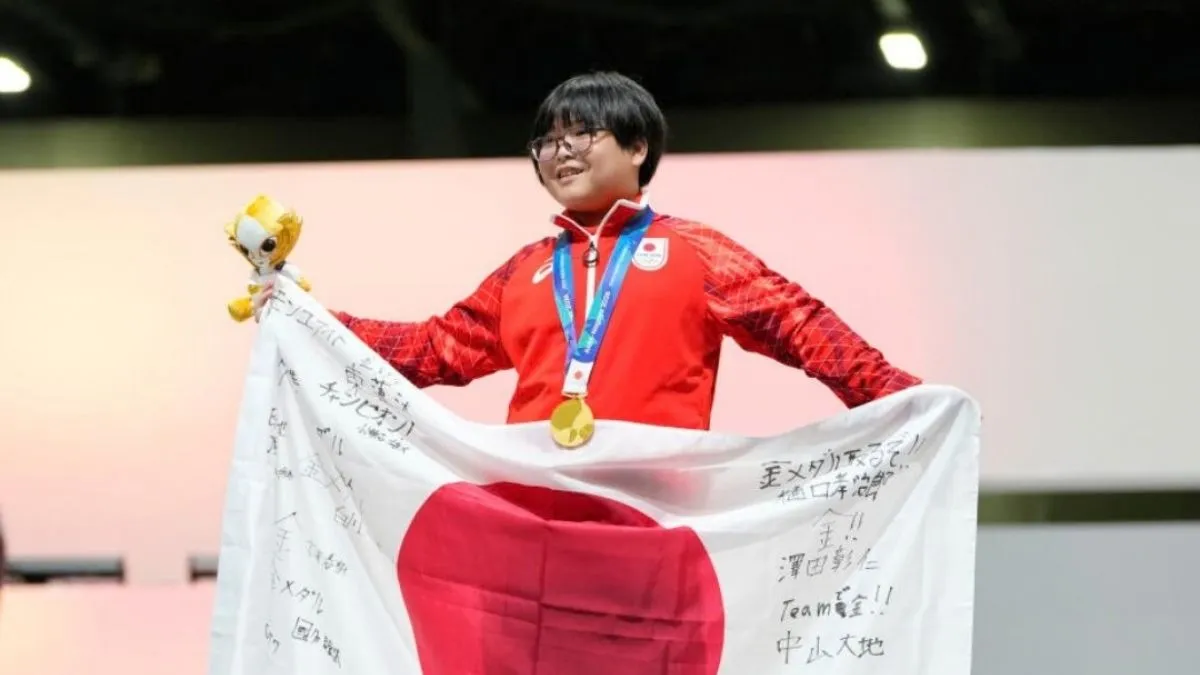
Japan's 11 year old fifth grader Yuki Kurihara created history at the Aichi-Nagoya Asian Games 2026 by winning gold in the Puyo Puyo Champions puzzle tournament. She defeated South Korea's 24 year old Kang Dongshin 10-2 in the final.
Kurihara is now the youngest gold medalist in both the Asian Games, since its inception in 1951, and in the history of major sports events overall.
According to officials from the Japan Esports Union Kurihara showed tactical maturity beyond his years. "I’m really happy. The gold medal is beautiful, shiny, and heavy," Kurihara shared after receiving his medal.
Asian Games 2026 ESports Event Highlight
-
Champion: Yuki Kurihara (Japan, Age 11)
Event: Puyo Puyo Champions (Esports)
Final Score: 10-2 victory over Kang Dongshin (Age 24)
Historical Record: Youngest gold medalist in Asian Games history (1951 - Present)
How Yuki Kurihara Outplayed Competitors Three Times His Age
Kurihara began playing Puyo Puyo at six years old after receiving a console game for Christmas. Over five years of consistent play he developed high speed reflexes and pattern recognition. And his tactical play earned him an official pro license in April.
His Asian Games 2026 tournament run demonstrated notable pro level skill:
-
Semifinal: Defeated 28-year-old Tanarak Wongkitikun of Thailand 10-1.
-
Final: Recovered from an early 0-1 set to score ten straight combo points against 24-year-old Kang Dongshin.
Opponents noted his precision. Kang stated in his post match briefing, "His technical speed and board management were superior."
Kurihara kept his cool and eventually telling the press through the Associated Press that he was a little embarrassed on stage.
Who are Top 10 Youngest Gold Medalists in World Sports History?
The history of records made by Youngest players stretch across both multi sport events and Olympic history. And here is how Kurihara compares with the youngest gold medalists ever in international sports history:
|
S. No.
|
Youngest Athlete
|
Country
|
Sport or Event
|
Age at Gold
|
Sports Competition
|
|
1
|
Yuki Kurihara
|
Japan
|
Puyo Puyo Champions
|
11 years
|
|
|
2
|
Bunga Nyimas
|
Indonesia
|
Skateboarding
|
12 years, 137 days
|
2018 Jakarta Asian Games
|
|
3
|
Cui Chenxi
|
China
|
Street Skateboarding
|
13 years, 283 days
|
2023 Hangzhou Asian Games
|
|
4
|
Kim Yun Mi
|
South Korea
|
3000m Short Track Relay
|
13 years, 85 days
|
1994 Lillehammer Winter Olympics
|
|
5
|
Marjorie Gestring
|
United States
|
3m Springboard Diving
|
13 years, 268 days
|
1936 Berlin Summer Olympics
|
|
6
|
Klaus Zerta
|
Germany
|
Coxed Pairs Rowing
|
13 years, 283 days
|
1960 Rome Summer Olympics
|
|
7
|
Momiji Nishiya
|
Japan
|
Street Skateboarding
|
13 years, 330 days
|
2020 Tokyo Summer Olympics
|
|
8
|
Fu Mingxia
|
China
|
10m Platform Diving
|
13 years, 345 days
|
1992 Barcelona Summer Olympics
|
|
9
|
Tara Lipinski
|
United States
|
Figure Skating
|
14 years, 255 days
|
1998 Nagano Winter Olympics
|
|
10
|
Hend Zaza
|
Syria
|
Table Tennis (Qualified)
|
12 years
|
2020 Tokyo Summer Olympics
|
Note that classical Olympic events are subject to stringent age limits while in case of e-sports and skateboarding events, the sport format does not have any such age limits.
Who are the Youngest Gold Medalist from India and Asia?
Asian countries are consistently coming up with young talents in both classic and modern sports tournaments like Asian Games and Olymics.
You can consider an example of Anahat Singh from India who made history when he became the youngest Asian Games medallist from the country at the age of 15 years. He won a bronze medal in squash for India.
Shardul Vihan is another young prodigy. At the same age of 15 he won an Asian Games silver medal in double trap shooting.
Other important achievements of young champions from India are:
-
Abhinav Bindra represented India at the Commonwealth Games at age 15 before winning Olympic gold at 25.
-
Anahat Singh claimed two Asian Games podium finishes at 15 years old.
-
Vishwanathan Anand became India's youngest International Master at age 14.
With the help of digital accessibility and skills acquired at a younger age, young athletes in Asia can compete at the highest level.