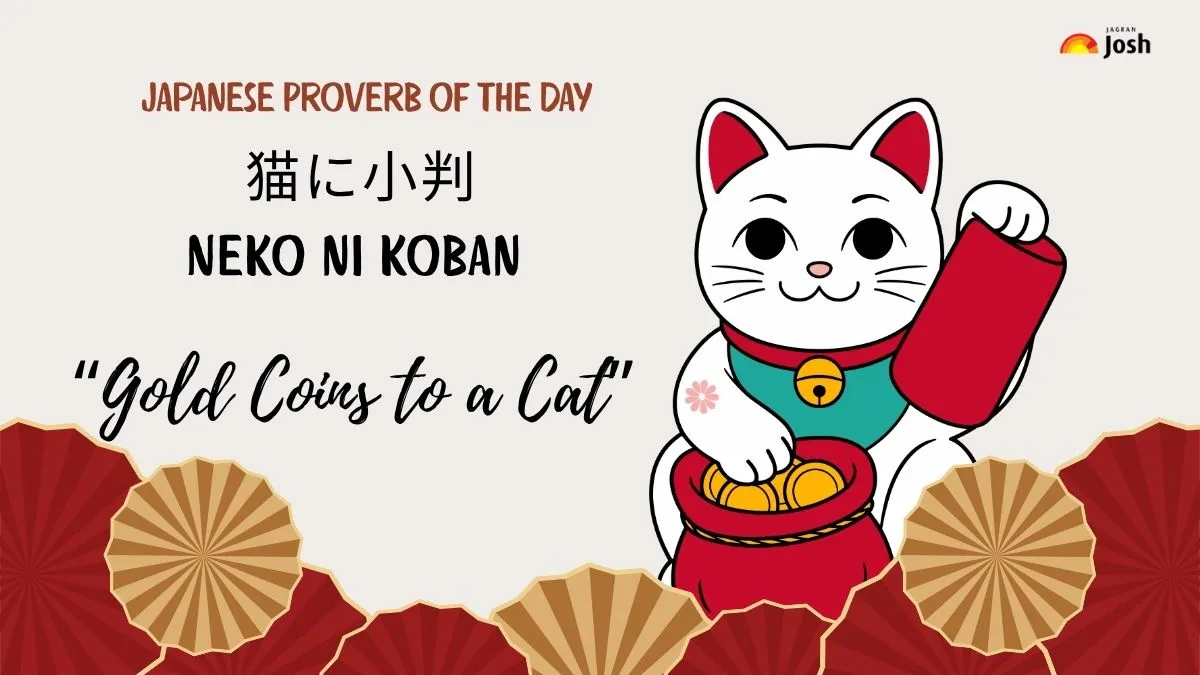
Japanese Proverb of the Day: "Gold Coins to a Cat"
This Japanese proverb of the day highlights the timeless wisdom of Neko ni koban (猫に小判). The idiom cautions against offering high-value resources to those unable to appreciate them, a vital lesson for navigating 2026's hyper-competitive attention economy.
In 2026, when the digital world is changing rapidly, and your attention is your most valuable asset, are you giving away gold coins to people who only see shiny toys? You might be a high-performing professional or a student in pursuit of mastery, but without discernment, your efforts are wasted.
The Japanese proverb of the day, "Neko ni koban" (猫に小判), literally translates to "Gold coins to a cat." While it sounds whimsical, it carries a sophisticated warning about value, perception, and the strategic allocation of your spirit. In an era defined by AI-driven noise, learning who and what deserves your gold coin is the ultimate competitive advantage.
Japanese Proverb of the Day
Japanese Proverb: Neko ni koban (猫に小判)
Literal English Translation: “Gold coin to a cat."
What is the Meaning of the Japanese Proverb "Gold Coins to a Cat"?
At its core, Neko ni koban describes a situation where a gift or piece of wisdom of immense value is given to someone who lacks the capacity to appreciate or use it. It is the Japanese equivalent of the biblical casting pearls before swine, but with a distinctly mercantile and domestic flair.
The philosophical nuance suggests two critical perspectives:
-
The Giver’s Folly: It critiques the lack of discernment in the giver. Providing a high-level solution to someone who hasn't mastered the basics is an inefficient use of resources.
-
The Receiver’s Limitation: It acknowledges that value is subjective. To a cat, a gold coin is merely a cold, hard object; it cannot buy food or provide warmth. Similarly, some opportunities are invisible to those not ready for them.
Everyday Lessons from this Japanese Proverb in Modern-Day?
In 2026, this proverb acts as a filter for your professional and personal life. Here is how you can apply it:
| Scenario | The "Gold Coin" (Resource) | The "Cat" (Recipient) | The Lesson |
| Corporate Leadership | High-level strategic autonomy. | A team lacking foundational discipline. | Don't grant unlimited freedom before building a culture of accountability. |
| Tech & AI | Advanced neural-link tools. | Users seeking basic automation. | Over-engineering a solution for a simple problem is a waste of capital. |
| Personal Growth | Deep, transformative mentorship. | A mentee looking for get-rich-quick hacks. | Reserve your deep wisdom for those who have done the sitting on a stone work. |
| Social Media | Nuanced, researched arguments. | Bad-faith actors or trolls. | Your intellectual energy is too valuable for comments-section debates. |
What is the Origin History of this Japanese Proverb?
The proverb traces its roots back to the Edo Period (1603–1868), a time of significant economic flourishing and the rise of a distinct merchant class. The koban was a specific, oval-shaped gold coin used as currency during this era.
"While a cat may be attracted to a shiny gold coin, it really doesn't understand what money is or how to use it. Therefore, the proverb is a comment about someone possessing something they have no use for." — Cultural Historian Analysis
Unlike Western proverbs that often use animals as symbols of filth or greed, the Japanese use of the cat is more observational. Cats were (and are) beloved in Japanese culture, but they are notoriously indifferent. This indifference illustrates the proverb’s point: value is not inherent in the object, but in the utility recognized by the user.
Neko ni Koban vs. Buta ni Shinju: Which One Should You Use?
While Neko ni koban is the most common, you may also encounter Buta ni shinju (Pearls to a pig). While they share a meaning, the nuance differs.
-
Neko ni koban often refers to wasted utility or practical value.
-
Buta ni shinju leans more toward a lack of aesthetic or spiritual appreciation.
In professional contexts, Neko ni koban is preferred when discussing Resource Allocation or Market Fit.
Read More Japanese Proverbs and Their Meanings Here!
“Fall Seven Times, Stand Up Eight.”
"A Frog in a Well Knows Nothing of the Great Ocean."
“Tomorrow’s Wind will Blow Tomorrow."
"Even monkeys fall from trees."
Stop wasting your koban on those who cannot see its worth. Whether it's your time, your talent, or your heart, ensure your audience is ready for what you offer. Embody this Japanese proverb of the day and spend your energy where it truly builds a legacy. Join us tomorrow for more timeless wisdom!

Harshita Singh is an education and general knowledge journalist with over 5 years of experience in educational writing. Specializing in US affairs and GK, Harshita has a track record of breaking down intricate geopolitical and historical subjects into clear, digestible insights for learners. Her strong background in text analysis, coupled with a Bachelor of Arts (Hons) in English from the University of Delhi, helps her produce authoritative, thoroughly researched content that empowers readers to engage confidently with global current affairs. For inquiries or academic insights, you can reach out to her directly at harshita.singh@jagrannewmedia.com.


-1790915344600_t.webp)