
Students generally choose colleges based on the most visible and measurable factors—cut-offs, campus pictures, placement numbers, and brand image. But these factors mainly determine where you’ll spend your college years.
Knowing a subject and being able to apply it are two different skills.
Think about how we develop practical skills through everyday experiences. Knowledge can be gained through classroom or books, but practical skills are built through experience. You can watch countless videos on swimming and even score really well on a test about swimming techniques Yet, all that knowledge does not prepare you for the experience of being in the water.
College education also works in a similar manner. Studying a subject builds knowledge, but regularly applying that knowledge in practical life with guidance from experts is what develops real skill. Both are essential, but employers give priority to the latter because graduates who have already worked with real tools or projects, data, or customers can contribute from day one instead of having to start from zero. The same idea works for all unique types of students.
Science students get a lot of value when they get to spend time with equipment and field work. You can understand a technique like chromatography or microbial culture perfectly on paper, but the confidence comes from actually doing it yourself. If students have limited access to labs or equipment, practical classes can end up being something they watch rather than something they get to try themselves.
Commerce and management students can benefit from practical experience too, though in a slightly different way. Business is a practical subject. It involves working with customers, handling daily operating and financing activities, taking big decisions. However, much of it is often taught through case studies about companies that students may not have any direct connection with. Students can learn a lot by managing something real, whether it’s a small stall, a project, or a budget. That kind of experience builds judgement that no lecture alone can provide.
Once you understand the value of hands-on experience, the next step is to ask the right set of questions. Instead of looking only at rankings and salary packages, ask yourself these questions:
4 Key Questions to Ask Before College Admission After Class 12
What will I personally get to use? Every college has labs. Ask which specific equipment undergraduate students are allowed to use, because at many places the best instruments are reserved for only research scholars.
Will I work on real projects, or mostly theoretical exercises? A case study is based on someone else’s business, while working on real production or dealing with actual customers gives you direct experience. That kind of hands-on project works helps you understand how things actually work.
Does the learning go beyond the classroom? Fieldwork, internships, apprenticeship with real organisations or start-ups and live projects expose you to the parts textbooks leave out. And that's where genuine skill develops.
Who will I be learning from?Faculty members who have done research work, worked on patents, or been involved in field projects can bring practical experience into the classroom.
These questions matter across different fields. They are just as relevant for a future MBA student as they are for a future microbiologist, because the basic idea is the same: practical skills develop through practice.
Why Practical Learning and Skills Matters More Today
Information can now be obtained with relative ease. Anyone can use AI, watch a lecture or read a textbook. Having only theoretical knowledge and no practical experience can put anyone at a disadvantage. At the same time, employers in all sectors are becoming more selective and searching for graduates who can make an early contribution to the organization. Students may be able to meet both of these expectations by gaining real-world experience while they are in college.
Inside The Hands-On Learning Model of Dolphin Institute, Dehradun
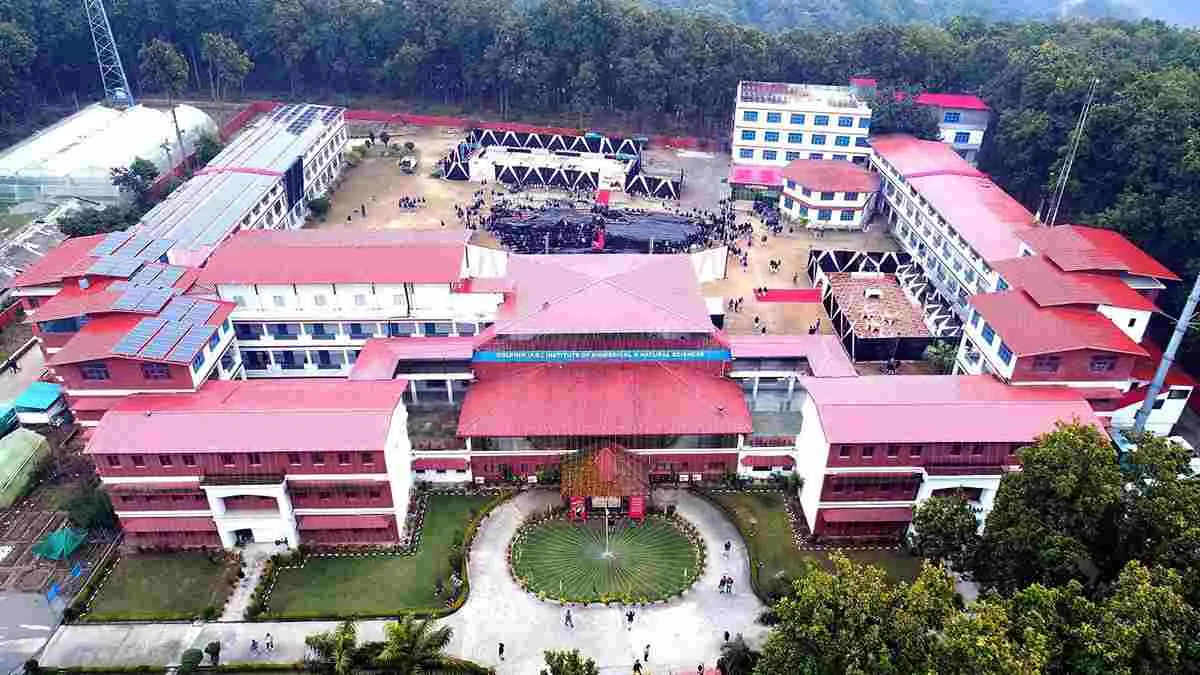
Dolphin (PG) Institute of Biomedical & Natural Sciences, Dehradun is designed around this exact principle. Dolphin is an autonomous institute, NAAC A+ accredited and affiliated with HNB Garhwal Central University. So, students earn a central university degree while following a curriculum built around applied, hands-on learning.
On the science side, this principle is visible through what undergraduates get to use. Chemistry and pharmaceutical chemistry students train on High-Performance Liquid Chromatography (HPLC), rarely available to students at this level, alongside a hydro-distillation unit few institutes have. Agriculture students work across five instructional farms with research fields, mango orchards, polyhouses, a mushroom unit with vermicompost production, and modern drip-irrigation systems. Zoology students work in wetlands, rivers and fish farms; forestry students take state forest-department internships and train on field survey and measurement mensuration instruments. Allied-health students in Medical Lab Technology, Radio-Imaging and Operation Theatre Technology train on the actual clinical equipment they'll use in their careers, from haematology cell counters and biochemistry analysers to X-ray and microtomy units.
Management and commerce students learn in a similar way. Through the Mini Campus Factory, The institute capability-building centre, BBA, MBA and BCA students run the business side of the campus's real operations like handling real production, real customers and real revenue, while still enrolled. A management student here doesn't just study commerce in a lecture hall, they help run a working enterprise. It's the same hands-on principle as the science labs, applied to business.
Supporting all of this is a strong research culture: 39 patents developed on its own campus, a biennial national science conference that has drawn scientists and senior officials from across the country, and active collaborations with government and state bodies.
The One Question That Should Decide Your College
When choosing where to spend the next three years, look beyond the banners and ask a simple question: how much will I actually get to practise the learnings here? The colleges that offer the most values are the ones where science students get to use real instruments and management students get to work on real hands-on projects. That kind of practical experience can stay with you long after college is over.
Disclaimer: The information provided above is for general informational purposes only. Jagran Josh does not independently verify or guarantee the accuracy of the information provided. Readers are advised to verify the details with the institute or official sources before relying on them.
