What is World Space Week 2026 Google Doodle Today? Deep Space Nebulas and Herbig-Haro 46/47 Feature in Global Celebration
Google is celebrating World Space Week 2026 with an artwork series featuring cosmic images from NASA's James Webb Space Telescope. The featured Doodles spotlight the Herbig-Haro 46/47, the Rosebud Nebula, and the Carina Nebula, honoring breakthroughs in modern astrophotography and international space technology.
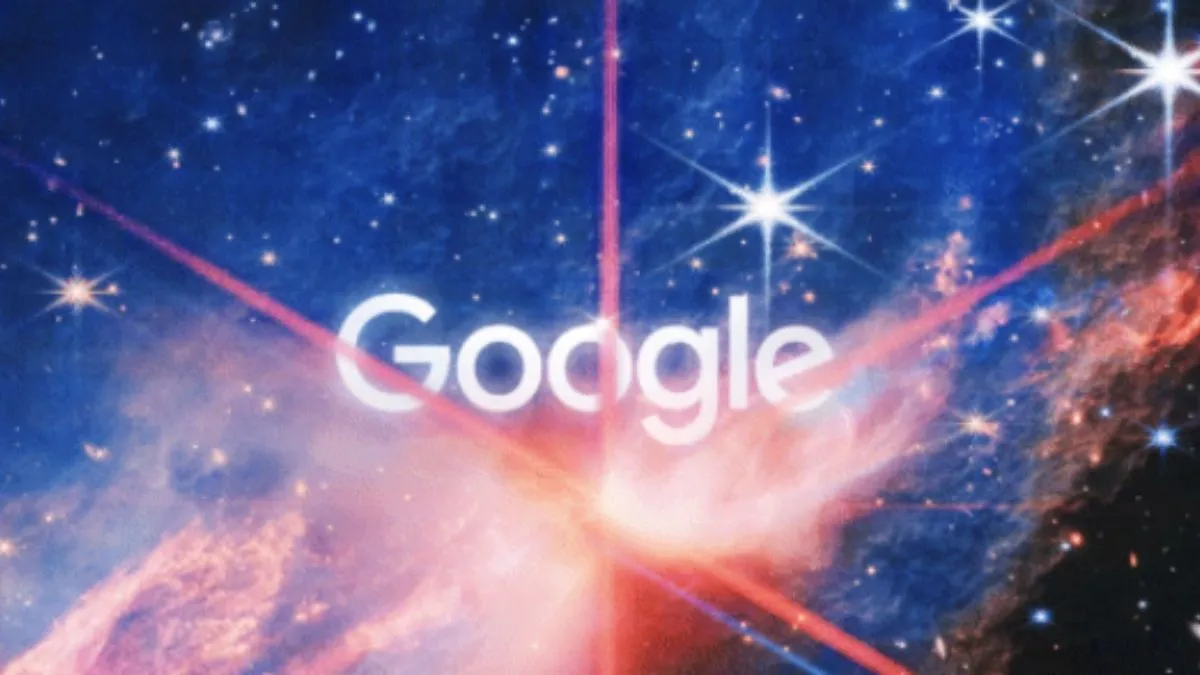
Google commemorate World Space Week 2026 by releasing a series of interactive artworks. The artworks showcase high-resolution cosmic images taken by the NASA James Webb Space Telescope.
They pay homage to innovations in contemporary astrophotography and observational technology through Google's Doodles which focus on deep celestial nurseries such as the Rosebud Nebula, the Carina Nebula, and Herbig-Haro 46/47.
Let's read more about the World Space Week 2026 Google Doodle from October 6th to 9th and the reason behind the feature as space and astronomical trivia enthusiasts.
What is World Space Week 2026?
World Space Week is a global event that runs annually from October 4 to October 10. The official theme for World Space Week 2026 is "Rocket Revolution" designated by the United Nations.
According to official Google Doodles documentation the interactive feature honors the technology behind awe-inspiring astrophotography. It gives billions of web users a clear window into active astronomical research.
Daywise World Space Week 2026 Google Doodle
| Feature Release | World Space Week 2026 Google Doodle | Release Date | Global Reach | Key Astronomical Measurements |
| Day 1 | Oct 06, 2026 | Global Homepage | 3,300 light-years away; 130+ young stars | |
| Day 2 | Oct 08, 2026 | Global Homepage | Spans 300+ light-years; home to O-type stars | |
| Day 3 | Oct 09, 2026 | Global Homepage | Located ~1,470 light-years away; active protostellar jets |
World Space Week 2026 Day 1: The Rosebud Nebula
 On Day 1, which fell on October 6, the spotlight was on the Rosebud Nebula. It is a reflection nebula situated at 3300 light years away from Earth. Interstellar dust clouds block energy from over 130 young stars inside the nebula. And this process heats up the surrounding materials which produces a unique pinkish glow resembling a closed flower bud.
With the help of the near-infrared capabilities of the JWST telescope, scientists were able to go through thick stellar curtains that prevented older telescopes from getting clear pictures. The piece shows how real physical gas structures fall down under gravitational pressure to form new solar systems.
World Space Week 2026 Google Doodle Day 2: The Carina Nebula
 World Space Week 2026 Google Doodle The Day 2 Google Doodle released on October 8 highlights the gigantic Carina Nebula. This highly active star nursery measures more than 300 light-years across and is one of the biggest such formations visible on our planet. The immense walls of gas are illuminated by the ultraviolet rays of newly-born stars.
"More than a dozen O-type stars live inside, and they are the hottest, most massive, and brightest stars in the universe," noted Google in its official release notes. These huge stellar engines give shape to immense gas clouds in the form of pillars that scientists call 'cosmic cliffs.'
World Space Week 2026 Day 3: Herbig-Haro 46/47
 The Day 3 Google Doodle for World Space Week 2026 was released on October 9. And it features Herbig-Haro 46/47 which is a dramatic complex of young actively forming stars.
Herbig-Haro objects form when newborn protostars shoot out high-speed gas jets that slam into surrounding dust clouds which then produce bright infrared shockwaves.
NASA's James Webb Space Telescope using NIRCam cut through obscuring gas clouds to capture two accreting protostars at the core.
The artwork celebrates the groundbreaking infrared optics revealing how stars gather mass and shape their cosmic environment.
Why does Google Use a Day-Wise Release for Space Week?
Multiple days are needed for the logo campaign in order to maintain engagement for the entire observance period. Complex astrophysical ideas can be broken down into segments to make them easier for general audiences to understand.
-
Connects classroom learning with real scientific data from space agencies.
-
Honors the 1957 launch of Sputnik 1 and the 1967 Outer Space Treaty.
-
Highlights how space systems power modern navigation, weather tracking, and orbital research.
The sequential deep space portrait campaign showcases the development of human spaceflight and observational optics technology during the last ten years.

Harshita Singh is an education and general knowledge journalist with over 5 years of experience in educational writing. Specializing in US affairs and GK, Harshita has a track record of breaking down intricate geopolitical and historical subjects into clear, digestible insights for learners. Her strong background in text analysis, coupled with a Bachelor of Arts (Hons) in English from the University of Delhi, helps her produce authoritative, thoroughly researched content that empowers readers to engage confidently with global current affairs. For inquiries or academic insights, you can reach out to her directly at harshita.singh@jagrannewmedia.com.


-1791529252780_t.webp)


![[लाइव] GDS Merit List 2026: इंतजार खत्म! इंडिया पोस्ट GDS 1st मेरिट लिस्ट कल जारी होगी क्या? यहां देखें Circle Wise Result PDF](https://img.jagranjosh.com/images/2026/October/9102026/India-post-merit-list.jpg)
.jpg)