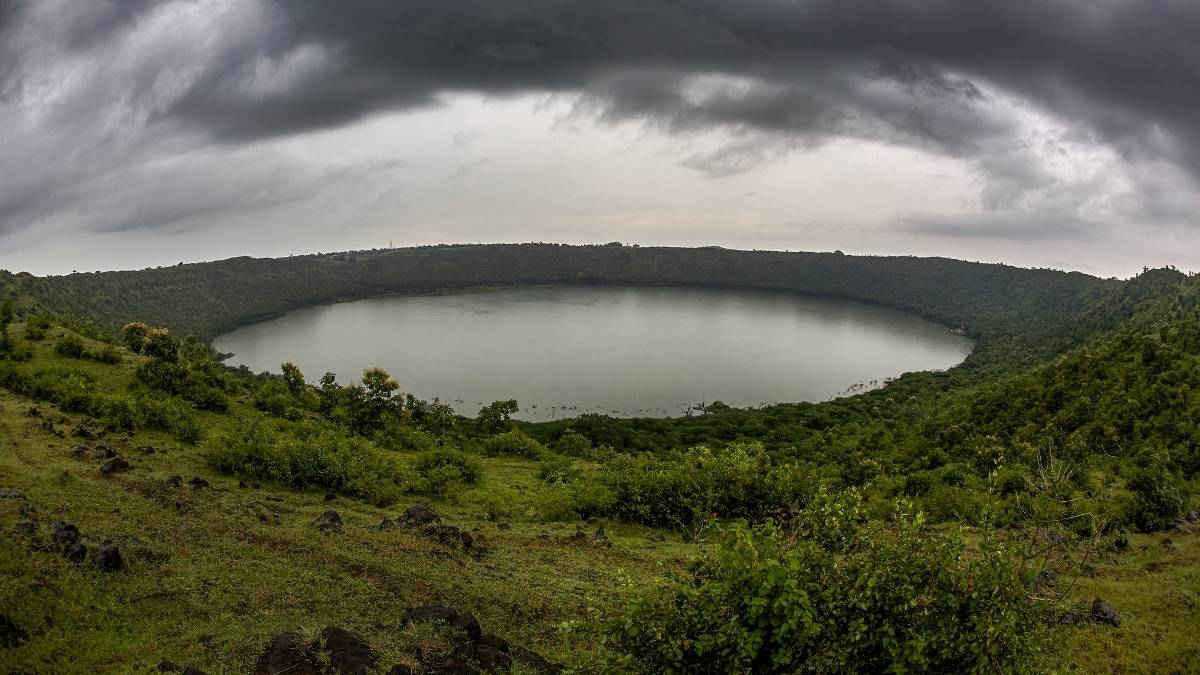
Did you know that when a celestial rock hits our planet its speed can reach up to 90,000 kilometers per hour? Fast forward to centuries later these space rock collisions with Earth have gifted us some of the most beautifully strange landscapes we know as meteor impact craters.
Sometimes, the craters are just a wound on our planet but at other times there are many serene lakes created by meteors that have been carrying the hidden secrets of both early Earth and Martian geology for years.
Fresh scientific observations from official geological bodies however, confirm that the delicate ecosystem within the lakes created by meteor craters is undergoing a rapid change.
Let’s read all about those sudden changes within the lakes created by meteor impact craters across the globe from here on.
Famous Lakes Created by Meteor Craters
While our planet has survived countless asteroid impacts only about 30 craters across the globe hold permanent water bodies. These crater lakes on Earth provide natural laboratories for space agencies like NASA.
For example the Manicouagan Reservoir in Canada is often called the Eye of Quebec. It spans around 60 miles in diameter and features an island which was formed by the rebounding of the Earth's crust after a brutal collision.
Similarly Lake Bosomtwe in Ghana stands out as a sacred natural site tucked inside a well-preserved impact bowl.
What makes these waters unique is their absolute isolation as the very definition of lakes. And their unique ecosystem allows rare microbial life to thrive undisturbed for millennia.
Related Stories
India’s Lonar Crater and its Changing Colour
Closer to home Lonar Lake in Maharashtra remains the crown jewel of India’s extraterrestrial geological formations.
It was formed roughly 52,000 years ago during the Pleistocene Epoch. Note that it is one of only four hyper-velocity impact craters on Earth that is a basaltic rock globally, a rock that is highly rich in iron and magnesium.
The minerals like maskelynite glass beneath the Lonar lake perfectly mirror the rock samples brought back by the Apollo Moon missions.
Take a look at the following table to know about some of the most famous meteor crater lakes along with their significance for a better understanding.
|
Meteor Crater Lake
|
Global Location
|
Primary Significance
|
|
Lonar Lake
|
Maharashtra, India
|
Only saline crater lake in basaltic rock; active Ramsar Site
|
|
Lake Manicouagan
|
Quebec, Canada
|
Visible from space; features a prominent ring-shaped reservoir
|
|
Lake Bosomtwe
|
Ashanti, Ghana
|
Ghana's only natural lake; holds deep cultural and spiritual value
|
Lately, this Ramsar Wetland of India is making headlines for a weird reason. While local groundwater tables are depleting the Lonar crater rising water levels have surged by over 12 feet to the point of submerging the ancient 1,000-year-old Kamalja Devi temple.
Ground reports further confirm that a large freshwater invasion from agricultural borewells has punctured the basalt layer.
This human intervention has diluted the lake's iconic alkaline chemistry and as a consequence its high pH level has dropped from a sharp 11.5 down to 8.5.