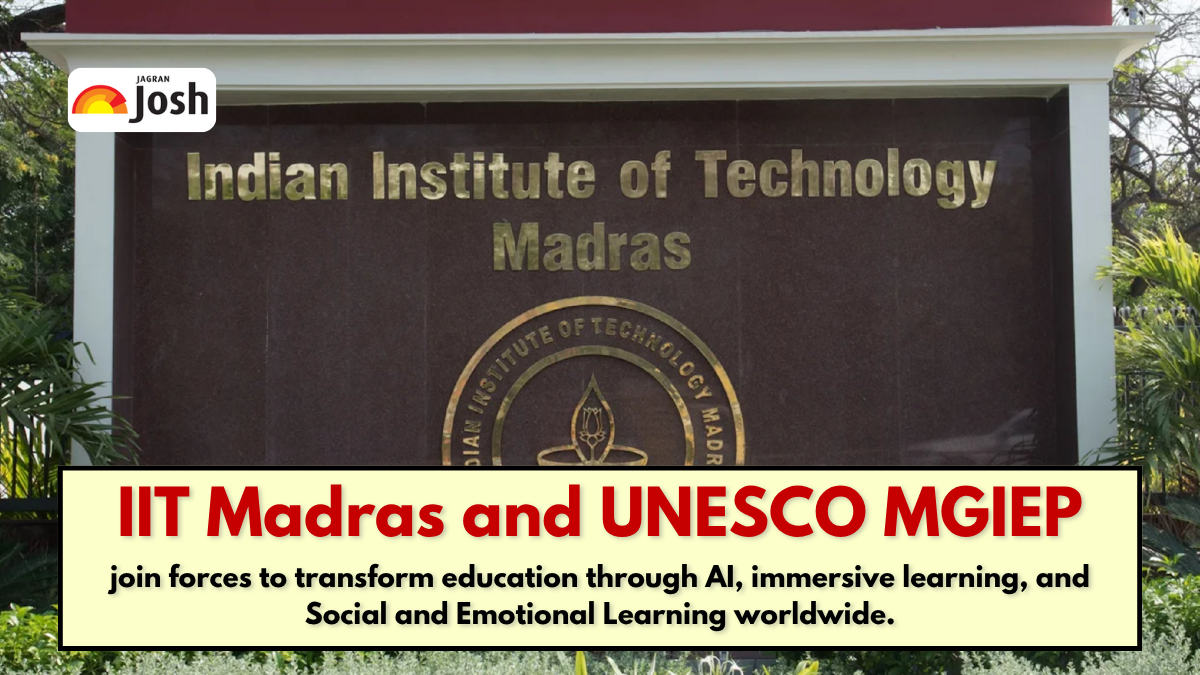
The Indian Institute of Technology (IIT), Madras and UNESCO Mahatma Gandhi Institute of Education for Peace and Sustainable Development (MGIEP) have collaborated to develop next-generation AI-powered immersive learning technologies for global education. The announcement was made live on the official X handle of the Institute at @iitmadras which emphasised on the importance of the partnership to lead the global education ecosystem.
The aim of the collaboration is to bring together UNESCO MGIEP’s expertise in Social and Emotional Learning (SEL) with IIT Madras’ strengths in AI, Extended Reality (XR), game design and immersive technologies. It will develop AI tools that can transform existing curricula into personalised, gamified and immersive learning experiences, seamlessly integrating SEL into everyday academic content. The initiative has been aligned with UN SDG 4.7, which aims to make learning more engaging, inclusive, experiential and learner-centric.
What is UN SDG 4.7?
According to the official website of the UN, the Sustainable Development Goal (SDG) 4.7 states, “By 2030, ensure that all learners acquire the knowledge and skills needed to promote sustainable development, including, among others, through education for sustainable development and sustainable lifestyles, human rights, gender equality, promotion of a culture of peace and non-violence, global citizenship and appreciation of cultural diversity and of culture's contribution to sustainable development.”
What is Social and Emotional Learning (SEL)?
According to the Collaborative for Academic, Social, and Emotional Learning (CASEL), Social and Emotional Learning (SEL) is the educational process of gaining core skills to understand emotions, set positive goals, show empathy, maintain healthy relationships, and make responsible decisions. According to the Collaborative for Academic, Social, and Emotional Learning (CASEL), SEL focuses on five key competencies, including self-awareness, self-management, social awareness, relationship skills, and responsible decision-making.
The SEL allows for academic success of the students through improved grades and attendance. It further helps reduce disruptive behavior and disciplinary actions, building strong social-emotional skills linked to higher graduation rates and career readiness.
The agreement was signed in the presence of Prof. Obijiofor Aginam, Director, UNESCO MGIEP; Prof. Manu Santhanam, Dean, Industrial Consultancy and Sponsored Research, IIT Madras; and Prof. M. Manivannan, Head, Experiential Technology Innovation Centre (XTIC), IIT Madras.