NTA Reforms: Panel Recommends Withholding Permission for Rallies, Processions on Exam Days
NTA reforms: Parliamentary panel recommends withholding permission for rallies and processions on exam days, allowing genuine latecomers and a 15-minute formalities window.
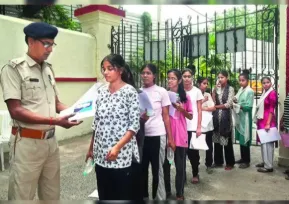
NTA Reforms: District administrations should withhold permission for rallies, processions and large public gatherings on the days of major competitive examinations to prevent traffic disruptions from affecting candidates, a Parliamentary panel has recommended. The recommendation is part of a report on reforms and strengthening of the National Testing Agency (NTA) submitted by the Parliamentary Standing Committee on Education, Women, Children, Youth and Sports.
The panel, headed by Rajya Sabha MP Mukul Wasnik, has proposed changes aimed at improving the conduct of competitive examinations and addressing concerns faced by students at examination centres. The recommendations come amid wider scrutiny of the NTA following the NEET paper leak controversy and concerns over examination administration.
Important: NEET PG 2026 Counselling LIVE
NTA Reform Recommendations: Key Highlights
| Recommendation | Details |
| Rallies on exam days | District administrations should withhold permission for rallies, processions and large gatherings |
| Traffic management | Authorities should make arrangements in advance to ensure candidates reach exam centres on time |
| Late candidates | A mechanism should be developed to allow genuine latecomers to enter the exam hall |
| Late-entry condition | Candidates may have to sign an undertaking recording their late arrival |
| Extra time | No additional time should be provided to candidates arriving late |
| Invigilation formalities | A separate 15-minute window has been recommended for checking and signing formalities |
| Law amendment | Amendments to the Public Examinations (Prevention of Unfair Means) Act, 2024 have been recommended |
NTA Reforms: No Rallies or Processions on Major Exam Days?
The Parliamentary panel has recommended that district administrations withhold permission for rallies, processions and other large public gatherings on examination days.
The committee noted that such events can cause traffic congestion and delays, potentially resulting in candidates reaching examination centres after the reporting time. It has therefore recommended amending the Public Examinations (Prevention of Unfair Means) Act, 2024 to direct district administrations to prevent such gatherings on crucial examination days.
The panel has also called for traffic and law-and-order arrangements to be put in place well in advance so that candidates are not affected by external disruptions.
NTA Panel Recommends Relief for Late Candidates
Another major recommendation concerns students who arrive late at examination centres.
The committee observed that candidates are often denied entry even when they are only a few minutes late. It noted that there can be genuine reasons for a candidate's delay and recommended developing a mechanism to allow such students to enter the examination hall after signing an undertaking recording their late arrival.
However, candidates who enter late would be allowed to attempt the examination only for the remaining duration. The panel specifically recommended that no additional or compensatory time should be granted to latecomers.
Separate 15-Minute Window for Invigilation Formalities
The panel has also recommended changes to the way examination-centre formalities are handled.
According to the committee, signing and verification procedures carried out during the examination can disturb candidates who are already working under time constraints. It has therefore suggested that a separate 15-minute window, either before or after the examination, be provided exclusively for such formalities.
Why Has the Panel Recommended NTA Reforms?
The recommendations are part of a broader review of the functioning of the National Testing Agency. The Parliamentary Standing Committee examined concerns related to examination administration, candidate experience and measures required to strengthen the conduct of national-level entrance examinations.
The review comes against the backdrop of the NEET paper leak controversy and allegations of administrative lapses, which had triggered widespread protests by students and brought the functioning of the NTA under scrutiny.
What Could the NTA Reform Recommendations Mean for Students?
If implemented, the recommendations could have a direct impact on candidates appearing for major competitive examinations conducted by the NTA.
Restrictions on large public gatherings near exam dates could help reduce traffic-related delays. At the same time, a formal mechanism for genuine latecomers could provide limited relief to candidates who face unavoidable delays, while the condition of receiving no extra time would ensure that the examination duration remains the same for all candidates.
Also Check:

Apeksha Agarwal is an Education Journalist with over 3.5 years of experience. She covers a wide range of topics, including school board examinations, entrance tests, admissions, results, scholarships, and higher education updates. Over the years, she has closely tracked major examinations such as JEE Main, NEET UG, CUET, and various state-level entrance exams, helping students stay informed throughout their academic journey. Apeksha has a Master's degree in Journalism and Mass Communication and a certificate in Digital Journalism. She is passionate about transforming complex educational developments into clear, accessible, and useful information. Her reporting focuses on providing students, parents, and educators with accurate updates and practical insights on examinations, results, and policy changes. She believes that quality education journalism can make a meaningful difference by helping students make informed decisions about their future.


