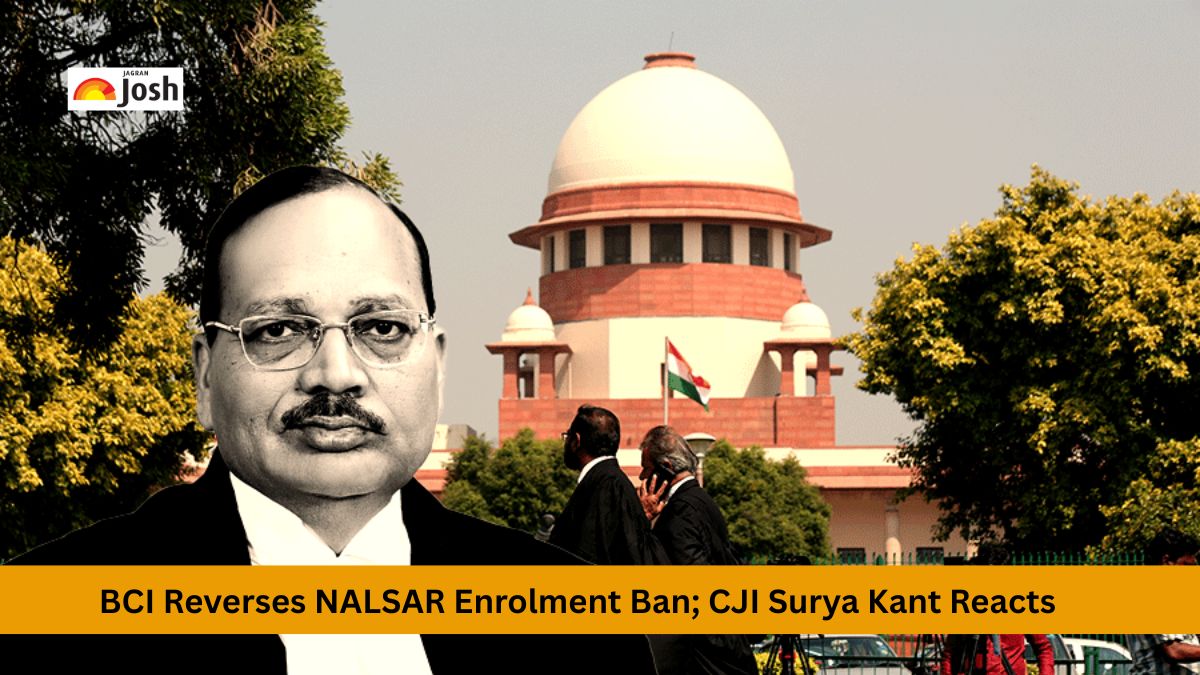
The Bar Council of India, BCI, has lifted the ban on NALSAR University Law School graduates 2026 from being enrolled in the State Council after Chief Justice of India, Surya Kant, questioned its decision. The decision to put a ban came after a campaign was started by the students on the involvement of CJI Kant in the university’s convocation ceremony. BCI had put a ban on students who were involved in the protests but the decision was reversed after saying that the majority of the students were innocent and did not intend to participate in the campaign.
CJI Surya Kant questioned this decision of BCI and said that every student has the right to protest and that BCI should not intervene in such matters as it is between him and the students. The council had asked for reports from the Vice Chancellor of NALSAR University on those involved in the campaign.
BCI Chairman Manan Kumar Mishra announced that the ban has been lifted and the proceedings have been closed considering majority of the students were innocent but the decision was taken after taking into consideration the reactions of members of the Bar, senior advocates, law students and members of public.
What Started the NALSAR Campaign?
An online campaign started following the remarks of CJI on NEET students protests in Delhi. The students were opposing the participation of CJI in convocation 2026 and rather than keeping the ban on those who were actually involved, BCI had put the ban on every graduate of NALSAR. The decision triggered criticism from sections of the legal fraternity.
The matter reached the Supreme Court of India where CJI Kant questioned BCI on why did it intervene in the matter and expressed displeasure. He also mentioned his student days and said that he too was actively involved in student activities.
Students of NALSAR University are now relieved of the professional uncertainty and are now eligible to enrol in State Councils.
This has however raised eyes, questioning the extent of BCI’s involvement and powers over enrollment in state councils and graduates. The situation has also raised questions on decorum within an institute and relationship between law students and judiciary.