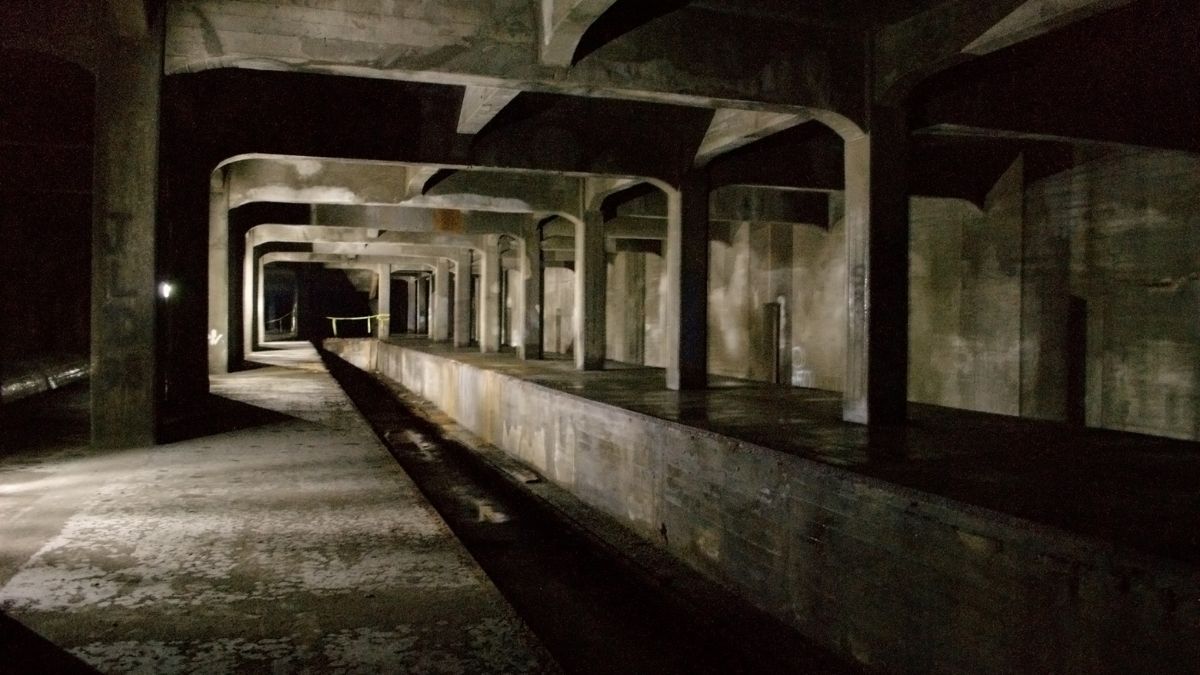
No one can suspect today that once upon a time there used to be a huge subway network beneath the busy Cincinnati Central Parkway. But the construction of the Cincinnati subway in the 1920s and its abandonment soon after its partial completion remains one of the most interesting historical records of American infrastructural development.
The construction of the underground Cincinnati subway began on January 28 1920 but the project was paused abruptly due to the skyrocketing costs after World War I and the Great Depression.
Let’s find out more about how the Cincinnati subway project came into being, failed to carry even a single passenger and became a deserted underground station network.
The Rise and Collapse of the Cincinnati Subway in 1920s
The main aim of this large scale transit project was to solve downtown traffic congestion through repurposing the drained bed of the old Miami and Erie Canal.
Workers even managed to successfully complete over two miles of underground tubes construction of structural platforms and passageways that still mirror a modern metro network.
But the $6 million municipal bond approved by voters in 1916 quickly proved insufficient once the US economy took a huge blow from World War 1.
Related Stories
|
Cincinnati Subway Section
|
Construction Route
|
Original Budget Allocation
|
Final Status
|
|
Section 1
|
Walnut St. to Charles St.
|
$500,000
|
Completed
(No Tracks)
|
|
Section 2
|
Charles St. to Oliver St.
|
$500,000
|
Completed
(No Tracks)
|
|
Section 3
|
Oliver St. to Mohawk St.
|
$550,000
|
Completed
(No Tracks)
|
|
Section 4
|
Mohawk St. to Brighton
|
$500,000
|
Completed
(No Tracks)
|
The funding for the construction of the historical underground subway dried up completely by 1927. No tracks were ever laid and the city never ordered even one single transit car. The newly elected Mayor Murray Seasongood disbanded the Rapid Transit Board in 1928 to completely seal the fate of the Central Parkway tunnels.
What is the Modern Underworld Status of Cincinnati Subway?
The dark tunnels found strange alternative purposes over the following decades once it failed to carry passangers. Local historians note that during the height of the Cold War the city converted portions of the vacant Race Street station into a fully provisioned fallout shelter.
There were emergency bunks, water barrels, and decontamination showers to fully pack the underground tunnels.
The underground abandonment today remains under the strict maintenance of the city's engineering department to ensure structural integrity. Though sealed off securely from urban spelunkers and the general public the pristine concrete platforms stand flash-frozen in time, serving as a silent monument to twentieth century ambition.