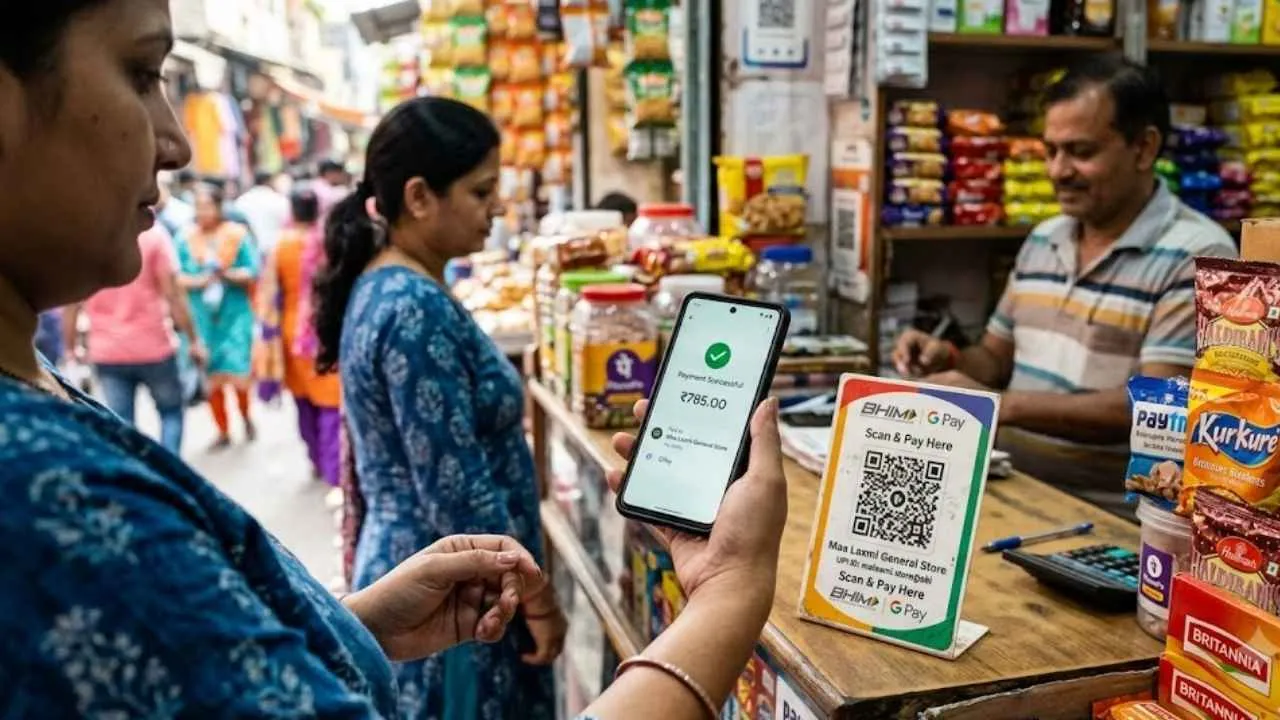
UPI MDR: After a lot of chaos in the financial sector, the proposed 0.4% Merchant Discount Rate (MDR) on selected UPI transactions above Rs 2,000 has now been deferred.
This decision came after trade bodies and merchant associations raised their concerns and did not agree to follow the set date for implementation. After considering the concerns, the government put a hold on the implementation. The new date for MDR implementation is now after the festive season.
Initially, the scheduled date was today, that is, 15 October 2026. The concerns of the trade bodies and merchant associations were simple: additional charges during the festive shopping rush could increase business costs and dampen retail sales.
The government and the National Payments Corporation of India (NPCI) have pushed back the implementation, with January 1, 2027, reportedly under consideration as the new date. Until then, existing applicable payment rules will continue.
The Janury 1, 2027 dates is not an official date given by the NPCI, but is a formal date of extenstion asked by the tarder body and Merchant's association. The community asks for time to figure out how the future of online payments will be tackled along the timeline.
What Will Change After Implementation Of UPI MDR? Here's List Of Things
Now, once the proposed 0.4% MDR framework is implemented and comes into effect, consumers will not take the hit. The selected high-value merchant transactions will then attract charges.
Here are the key changes businesses and payment service providers should know about.
A 0.4% MDR on Select Merchant Transactions
A baseline MDR of 0.4% will apply to specified Person-to-Merchant (P2M) UPI transactions exceeding ₹2,000. These charges are solely intended to cover payment processing costs for eligible transactions. It is a merchant-side fee and will not be charged directly to customers.
Maximum MDR Capped at ₹300
The proposed framework places a cap of ₹300 on the MDR charged per eligible transaction. At transaction values of ₹75,000 and above, the percentage-based calculation would otherwise exceed this limit. The cap is intended to prevent charges from increasing indefinitely with transaction values.
Flat ₹5 Fee for Selected Services
Certain service categories will follow a different fee structure. For eligible transactions exceeding ₹2,000, a flat ₹5 charge will replace the percentage-based MDR model for fuel, railway tickets, telecom services, insurance and agricultural inputs.
Exemption for Small Merchants
Small merchants earning up to ₹1 lakh per month under the specified P2PM framework will be exempt from MDR payments. The exemption is intended to protect smaller businesses from additional payment-processing expenses.
Revenue for Banks and Fintech Platforms
The proposed framework is expected to create a revenue stream for acquiring banks and payment service providers. This could help fund payment infrastructure, system reliability and cybersecurity improvements, supporting the long-term sustainability of digital payment services.
List Of Things That Will Remain Same
|
S. No.
|
Feature
|
What Will Remain the Same?
|
|
1
|
UPI Payments for Consumers
|
UPI payments will remain free for consumers, as the proposed MDR is a business-side charge.
|
|
2
|
MDR Cost Recovery
|
Merchants cannot pass MDR costs to customers through convenience fees or transaction surcharges at checkout.
|
|
3
|
Person-to-Person (P2P) Transfers
|
Sending money to friends and family, splitting bills, and transferring funds between personal bank accounts will remain free of MDR charges, regardless of the amount.
|
|
4
|
Merchant Payments Up to ₹2,000
|
UPI payments of up to ₹2,000 made to merchants will remain exempt from the proposed MDR.
|
|
5
|
Platform Fees and Usage Caps
|
UPI app providers will not impose platform fees or monthly usage caps on users under the stated framework.
|