The Himalayan River system refers to the network of rivers that originates from the glaciers and snow peaks of the Himalayas, flowing through northern India and neighbouring nations.
These rivers are home to various fish, insects, and other water creatures.
Among these Himalayan rivers, there is also one fish which is found and called the 'Tiger of Himalayan Rivers.’
Have you heard about this fish? Explore this article in detail and get to know about this fish.
Which Fish is Called the Tiger of Himalayan Rivers?
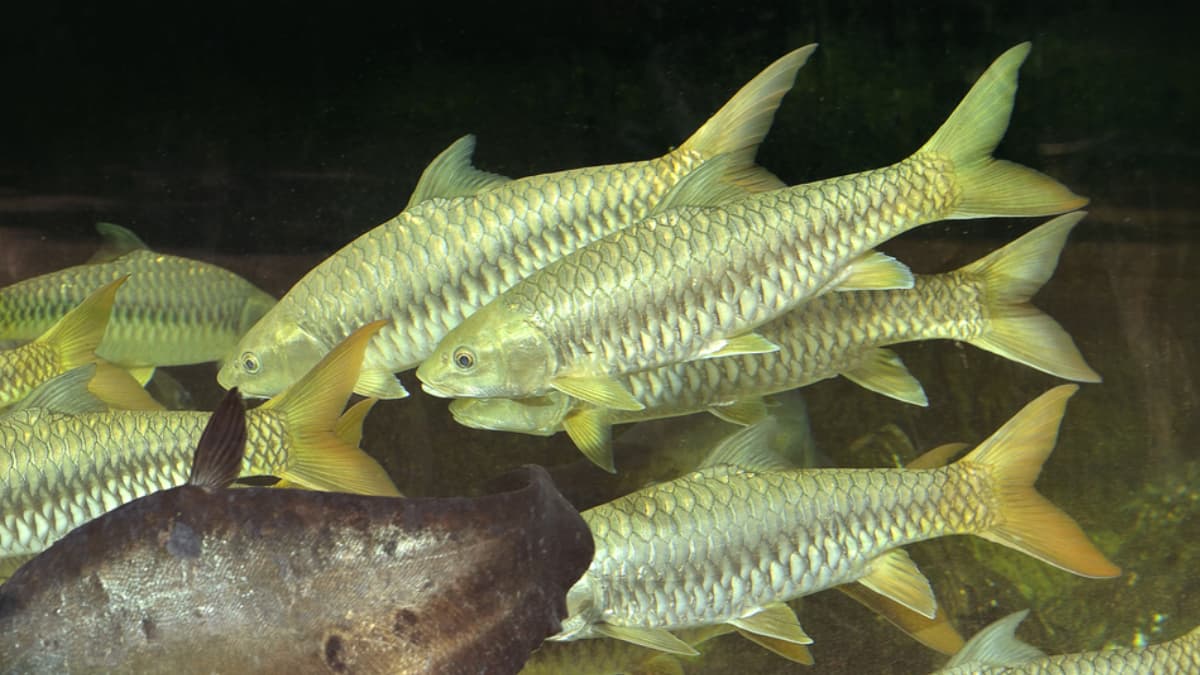
The ‘Golden Mahseer’ is commonly known as the ‘Tiger of Himalayan Rivers'. These fishes play an important role in balancing the river ecosystem.
These fish help in keeping a healthy ecosystem of freshwater, support biodiversity, and serve as indicators of the cleanliness of Himalayan rivers that connect to the Ganges.
Scientific Name of Golden Mahseer
The scientific name of the Golden Mahseer is "Tor putitora." It is a large freshwater fish which belongs to the family Cyprinidae and is native to the rapid Himalayan stream rivers
Why is Golden Mahseer is Called a Tiger of Himalayan Rivers?
The name of this fish, “Golden Mahseer” is translated as 'mahi', which means “fish”, and the ‘seer’ refers to the ”sher”, which is called the "Tiger of Himalayan Rivers", because of its unique characteristics, and a behaviour as a sport fish; the Golden Mahseer is called the Tiger of Himalayan Rivers".
Where does the Golden Mahseer Live?
These fishes prefer to live in cold, clean, and fast-flowing waters. These rivers is commonly found in the rivers flowing in Uttarakhand, Himachal Pradesh and some parts of the northern states.
These fish are mainly found in the Ganga, Kosi, Ramganga, and other small streams.
Physical Features of the Golden Mahseer
Physical features of the golden mahseer are the following:
- It has large golden or silver scales
- It has a strong, muscular body
- It can grow very fast and weigh up to 50 kg
- They are good swimmers, as they act as sporty fish.
Conservation status
Due to the building of various dams, increasing pollution, and natural disasters, the numbers of Mahseer are declining.
As per the ICAR-CICFR Bhimtal, the National Commission on Agriculture, 1976, in its reports stated that “There was general decline in the mahseer fishery due to indiscriminate fishing of brood and juvenile fish and adverse effect of river valley projects."
This fishes is is designated under Threatened / Endangered.'