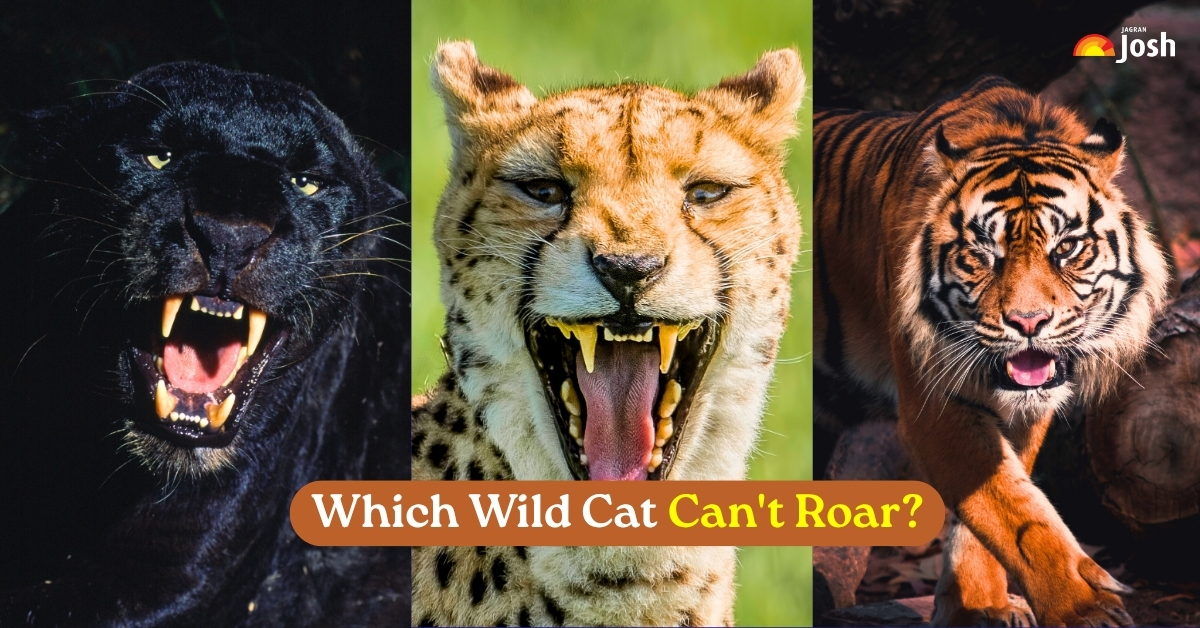
Did you know that both large and small cats are considered members of the animal biological family known as Felidae? These animals are members of the suborder Feliformia, which consists of felids, hyenas, and mongooses. The wild cats are found all over the world in a wide variety of habitats ranging from blazing hot deserts to snowy mountain ranges. While most large cats have loud, deep growls and roars, which they use to claim territory, did you know that there is one type of cat that cannot roar? The answer will totally surprise you! Let’s find out more about this fascinating topic.
Which Is The Only Wild Cat In The World That Can’t Roar?
Source: A-Z Animals
Unlike other big cats in the wild that can roar, the cheetah (Acinonyx jubatus) does not roar. The cheetah makes other sounds such as meowing, purring, and growling and also a chirping sound which resembles that of a bird!
Why Can't Cheetahs Roar?
The answer to how cats produce sounds can be found in their throats. Cats have a special collection of small bones called the hyoid apparatus, which holds the tongue and the larynx.
Cats such as lions, tigers, jaguars, and leopards fall into the Panthera genus. These roaring cats have an elastic ligament made of cartilage in the hyoid bone. As air flows over their vocal folds, the elastic ligament vibrates and creates a loud roar, which can carry up to five miles away.
Cheetahs are part of the Felinae subfamily. Unlike roaring cats, they have a totally rigid hyoid bone. This hard bone produces vibrations while breathing and allows cheetahs to purr all the time. Due to the absence of elasticity in the bone, a cheetah is simply unable to roar.
5 Unique Facts About Cheetahs
Here are five incredible facts about cheetahs that make them unique compared to any other wild cats:
- A cheetah can run from 0 to 60 miles per hour (96 km/h) in just 3 seconds. It is even faster than most sports cars nowadays!
- While other wild cats retract their claws completely into their paws, cheetahs have semi-retractable claws, which always stay open. The claws of cheetahs serve as special spikes for running.
- Black "tear tracks" of a cheetah are located from the inner corners of its eyes to its mouth. Those help to absorb sunlight to keep the eyes of a cheetah safe from the glare while hunting during the day.
- The tail of a cheetah can be as long as 32 inches and constitutes a part of the body of a cheetah. While running, a cheetah uses its heavy tail, similar to a boat rudder to turn quickly at full speed.
- According to data from the IUCN Red List, cheetahs lost more than 90% of their habitat. There are fewer than 6,500 mature cheetahs left in the world now.
Conclusion
Why can cheetahs not roar? We get an intriguing insight into the workings of nature’s engineering when we understand that cheetahs have a solid hyoid bone, giving up on their roaring capabilities in exchange for the ability to purr. Everything in a cheetah’s body is optimised for speed: its semi-retractable claws, streamlined body, and many other physical aspects. Unfortunately, today there are no more than 6,500 cheetahs left in the wild.