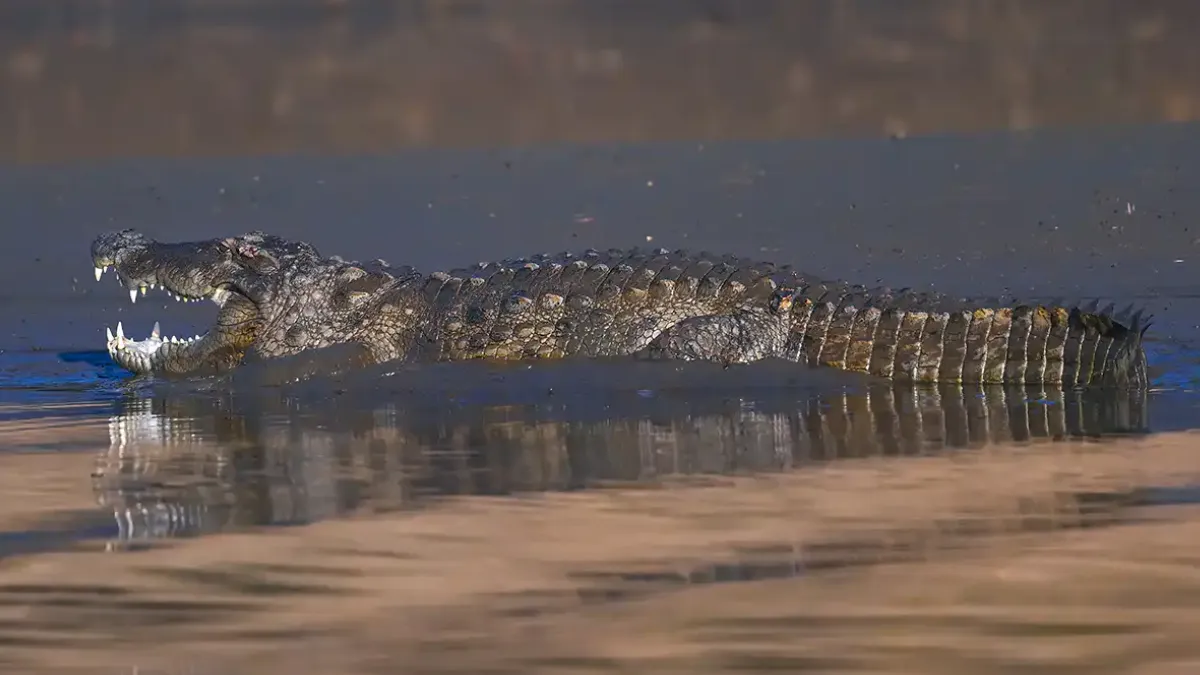
India is known for its big cats like Bengal Tiger, but there are many other species tha plays an important role in ecosystem. In that, there is an aquatic ecosystemsm where Crocodiles plays an important role in ecosystem.
Basically India is home to three species of crocodiles that are the saltwater crocodile (Crocodylus porosus), the freshwater crocodile (Crocodylus palustris), and the gharial (Gavialis gangeticus).
But do you know which state has the most crocodiles in India, including these three species also.
Odisha Has the Most Crocodiles in India. According to the Odisha Economic Survey 2023–24, a total of 1,831 saltwater crocodiles were found in Bhitarkanika and its connected areas during the 2022–23 census.
If you missed out on the reading about the Most Crocodiles In the World, you can read it from here!
Important Facts About Crocodiles in India
|
Fact
|
Details
|
|
State famous for saltwater crocodiles
|
Odisha
|
|
Famous crocodile habitat
|
Bhitarkanika National Park
|
|
Location of Bhitarkanika
|
Kendrapara district, Odisha
|
|
Main crocodile species in India
|
Saltwater crocodile, mugger crocodile and gharial
|
|
Largest living reptile
|
Saltwater crocodile
|
|
Saltwater crocodile habitat
|
Mangroves, estuaries and coastal waters
|
|
Mugger crocodile habitat
|
Rivers, lakes, ponds and reservoirs
|
|
Gharial habitat
|
Mainly freshwater rivers
|
|
Major threat to crocodiles
|
Habitat loss, pollution and human activities
|
|
Conservation measures
|
Habitat protection, breeding programmes and wildlife protection laws
|
Which State Has the Highest Number of Crocodiles in India?
Odisha has the highest number of crocodiles in India with teh largest population of saltwater crocodiles, and the Most Crocodiles are found in the Bhitarkanika National Park, which is located in the Kendrapara district of coastal Odisha, India.
Related Stories
How Many Crocodiles Are There in Bhitarkanika National Park?
The Odisha Economic Survey 2023–24 provides the following crocodile census figures for 2022–23:
|
Crocodile species
|
Location
|
Number recorded
|
|
Saltwater crocodile
|
Bhitarkanika and adjoining areas
|
1,831
|
|
Mugger crocodile
|
Satkosia/Mahanadi river system
|
83
|
|
Mugger crocodile
|
River systems of Similipal Tiger Reserve
|
80
|
|
Mugger crocodile
|
Ghodahada Reservoir, Ganjam
|
81
|
|
Gharial
|
Mahanadi river system
|
7
|
Source: Odisha Economic Survey 2023–24
Why Is Odisha Famous for Crocodiles?
There are several reasons why Odisha is famous for its crocodile population.
1. Bhitarkanika National Park
Bhitarkanika National Park is one of the important habitats for saltwater crocodile because Brahmani and Baitarani rivers flows toward this region along with the Dhamra and Pathsala rivers which forms the estuaries delta before flowing toward the Bay of Bengal. Due to this, these rivers provide the suitable habitat conditions for these reptiles.
This national park is also the India’s second-largest mangrove ecosystem, which is also known as the “Mini-Amazon of India”.
2. Mangrove forests
Mangroves are trees and shrubs that grow in coastal areas, often where freshwater mixes with seawater. They support many kinds of wildlife and provide shelter to crocodiles.
3. Crocodile conservation
Crocodiles were facing serious threats in the past. Conservation programmes and habitat protection have helped support their survival in the region.
4. Natural water bodies
The rivers and creeks of Bhitarkanika provide crocodiles with places to live, hunt and reproduce.
What Are the Three Main Crocodilian Species Found in India?
India is home to three main crocodilian species. They have different physical features and live in different habitats.
|
Species
|
Common name
|
Scientific name
|
Identifying feature
|
Main habitat
|
|
Saltwater crocodile
|
Estuarine crocodile
|
Crocodylus porosus
|
Broad snout and large body
|
Coastal waters, mangroves and estuaries
|
|
Mugger crocodile
|
Marsh crocodile
|
Crocodylus palustris
|
Broad snout; often found in freshwater
|
Rivers, lakes, ponds and reservoirs
|
|
Gharial
|
Gharial
|
Gavialis gangeticus
|
Long, narrow snout
|
Mainly freshwater rivers
|
The Wildlife Institute of India, an autonomous institute under the Ministry of Environment, Forest and Climate Change, provides information about these species and their distribution.
h