India's rivers are the lifeblood of the nation. Ganga, Brahmaputra, Yamuna, Godavari—all of them have flowed through the nation for ages, supplying water to our agricultural produce and urban areas. But there is an irony in the way things are going.
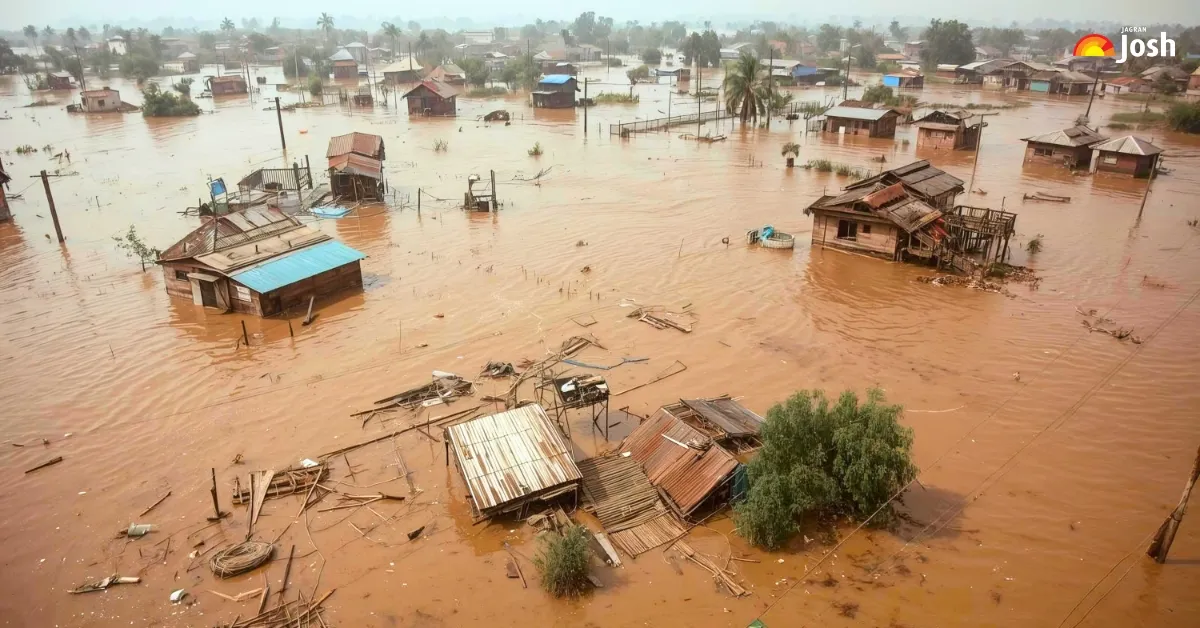
Year after year, we keep hearing about devastating floods that occur somewhere in Assam, Kerala, Bihar, or the Northeast of India.
However, there is an interesting contradiction here. The scientific experts have claimed that 74% of India's rivers have shown reduced instances of flooding.
What does this mean? How is it possible that 74% of the rivers in our country are showing decreased flooding? How is it possible then that so many floods continue to devastate our nation?
Well, things may seem puzzling initially, but there is a deeper story that needs to be told. And the threat does not come from large rivers; it comes from the smaller ones. Let us delve into this matter.
Why Are Large River Floods Shrinking When Climate Change Should Make Them Bigger?
Here's what's shocking researchers: at 74% of gauging stations across India, flood magnitude is actually decreasing. With climate change, floods are supposed to be getting larger and deadlier.
Why? Increased heat means more moisture in the atmosphere. Increased moisture means increased rainfall. Increased rainfall means larger floods. Simple logic. Yet it isn’t happening.
Related Stories
What's really happening?
The Missing Water Story
Let's think about it differently. A river depends on two things:
1. Rainfall
The amount of rain that falls in the monsoon season.
2. Soil Moisture
The water stored in the ground feeds the river.
There is a drastic change in the Western and Central Ganga basin. Reduced rainfall and soil moisture content have decreased the magnitude of the monsoon floods by 17% per decade. It is a drastic reduction as floods become smaller by 17% every decade.
The Real Culprits Behind Shrinking Floods
Scientists point to three main reasons:
| Reason | What It Means | Impact on Rivers |
| Changing precipitation patterns | Rainfall amounts and timing are shifting | Less water entering river systems |
| Land-use changes | More buildings, less forests and wetlands | No natural water storage areas |
| Water extraction | Dams, wells, irrigation draw water out | Rivers receive less water downstream |
A Simple Example
Think of a container that has an opening at the bottom. Even if more water is added, there will be less water in the container because the opening is large enough. This is the case; too much water is being extracted for purposes such as dams and irrigation, and thus the rivers do not flood.
Why This Is Actually Bad News
It seems obvious to say, "Great! With fewer floods, there are fewer catastrophes!" but that is not true at all. The reality is that while large rivers are calming down, the smaller rivers are out of control.
Flash Floods Are Nearly Doubling: Why Small Rivers Are Becoming Killers While Big Rivers Calm Down
And here’s the scary part: flash flood occurrences have risen from 132 in 2020 to 184 in 2022 – that’s a 40 percent rise in just two years. This goes against everything we’ve learned about the large rivers drying up. How could both of these happen? Size does matter.
Big Rivers vs Small Rivers: The Difference
Big River System (Catchment Area greater than 5,000 sq. km)
What happens?
- Widely spread out water
- Natural wetlands and floodplains absorb the water
- There is enough time for the rivers to swell slowly
- Good warning systems are there
- The outcome: Predictable and less destructive floods
Small River System (Catchment Area less than 1,000 sq. km)
What happens?
- Quick runoff of water from hills
- There is no place to absorb or store the water
- Rivers swell within minutes, not hours
- It catches people by complete surprise
- The outcome: Unexpectedly deadly floods
Why Small Rivers Are Becoming Killers
Small catchment areas do not have the capacity to retain or slow down the floodwater because they are smaller than bigger rivers and can easily flood in the event of rainfall.
It is comparable to this:
- Large river: Large container with many pipes entering. Water will take time to fill up.
- Small river: A small container with only one pipe. Fills up instantly.
The Numbers Tell the Story
| Type of Flood | 2020 | 2022 | 2024 | 2026* |
| Total Flash Floods | 132 events | 184 events | 51+ events (HP alone) | Data Compilation Ongoing |
| Big River Floods | Decreasing | Decreasing | Decreasing | Decreasing trend continues |
| Small Stream Floods | Increasing | Increasing rapidly | 51+ documented (HP) | Rising significantly |
| Deaths (All Floods) | ~1,600 annually | ~1,600 annually | 1,878+ deaths | Provisional data |
| Annual Displacement | Variable | Variable | 351,000+ people | Under assessment |
Why This Matters for You
Flash floods in smaller streams claim lives due to the following:
- No time to take precautions – water rises in minutes
- No means of escape – hills confine people
- Washing away of bridges – no passage for crossing
- Cutting off villages from outside help
The floods of 2024 in Kerala claimed the lives of 373 people in Wayanad district. These were mostly in smaller streams where flash floods occur without prior warning.
Simultaneous Floods Across Multiple Basins: The New Flood Pattern Science Just Discovered
Here's an emerging phenomenon: Rivers in different places are flooding at the same time now. It never used to happen. Synchronisation of river floods has gone past the boundaries of the basin, and more than one region is now flooding at the same time. What does this mean?
The Traditional Flood Problem vs The Emerging Problem
Old Problem (Pre-2015)
- A single river basin floods
- Other places were safe
- Emergency teams could shift resources between states
- Unaffected areas could provide aid
Emerging Problem (Post-2023)
- More than one basin floods at a time
- No place left to redirect aid from
- Hospitals fill up in more than one state at a time
Real-World Example from 2024
In 2024, simultaneous floods happened in:
- Kerala (monsoon floods)
- Assam (Brahmaputra flooding)
- Himachal Pradesh (flash floods)
- Uttarakhand (mountain streams)
All at the same time. This created a national emergency because every state needed help simultaneously.
Why This Is Happening Now
1. Connected Weather Systems
Monsoon patterns are changing. Large weather systems now affect multiple regions together.
2. Synchronized Rainfall
When it rains, it often rains in several basins at once instead of one at a time.
3. Climate Variability
The summer monsoon season has become more erratic with prolonged dry periods followed by intense rainfall events.
The Challenge This Creates
Traditional flood management assumes one problem at a time.
| Old Approach | New Reality |
| Focus resources on one state | Multiple states need help equally |
| Move equipment between regions | Can't move help anywhere—all areas affected |
| Call for army from other states | The army is already deployed to multiple disasters |
| Expected coordination | Chaos and overlapping emergencies |
What Happens to People
When multiple regions flood together:
Hospitals
- Emergency wards overflow
- Doctors working 24/7
- Medicine shortages happen
- People die from preventable causes
Roads and Transport
- All highways blocked
- Rescue teams can't reach villages
- Food and water can't get through
- Stranded people have no escape
Government Response
- Resources spread too thin
- Decisions get delayed
- Communication breaks down
- Recovery takes much longer
Conclusion: Understanding India's Changing Rivers
So what did we learn? The Indian rivers are acting strange. Large rivers are flooding less owing to changes in precipitation, extraction of water, and alterations in land use. However, smaller rivers flood much more violently and frequently.
Moreover, floods in several regions occur simultaneously, causing unprecedented disasters. This is complex. It is not climate change. It is climate change together with our usage of water resources, our infrastructure, and the depletion of the natural reservoir of water.
The research is ongoing, and governments are still trying to find solutions. However, it is obvious that new approaches to managing floods have to be found. Old solutions will not work for new challenges. Rivers have a story to tell us. We have to hear it.