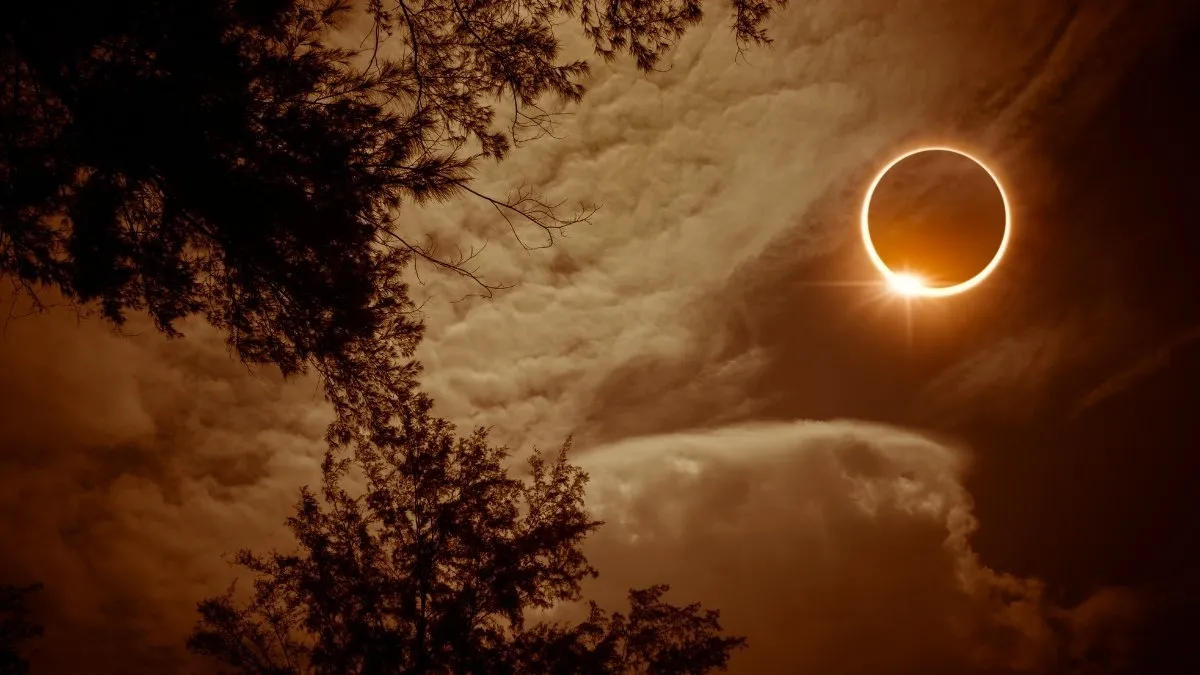
Skywatchers around the globe are tracking the total solar eclipse 2026 path with an anticipation building around the August 12 sky event. NASA confirms that the Moon's shadow will sweep across Greenland, Iceland, and Spain. This would mean a first total eclipse in decades for Europe.
If you are wondering where to see 2026 total solar eclipse locations then the umbral shadow spans from the remote Arctic down into western Europe.
Check the global solar eclipse calendar details below to plan with this skywatching guide for 2026.
What is Total Solar Eclipse 2026 Path and Viewing Regions?
The Moon will completely obscure the Sun along a targeted corridor. The targeted region would stretch across the Northern Hemisphere. The narrow core line gets total darkness but surrounding territories will experience a partial solar eclipse.
| Viewing Location for Solar Eclipse 2026 | Visibility Level | Expected Timing (Local) |
| Northern Russia and Arctic | Totality | Mid-day |
| Greenland and Iceland | Totality | Late Afternoon |
| Northern Spain and Portugal | Totality | Late Evening / Sunset |
| UK, Mainland Europe and North Africa | Partial Eclipse | Evening |
| Eastern US and Canada | Partial Eclipse | Morning to Midday |
| India and South Asia | Not Visible | Below Horizon |
The totality of solar eclipse for those inside the prime zone will last under two and a half minutes. Viewers in Spain will enjoy a rare sight when total solar eclipse strikes right before sunset on 12th August 2026
Will India See the Total Solar Eclipse 2026?
Countries outside the shadow line of complete solar eclipse will miss the main show completely. Astronomical data observers suggest that viewers in India and most of Asia will not witness the sky event because the Sun sets before alignment begins.
Parts of North America will catch a minor partial eclipse instead. Viewers along the US East Coast will see a small portion of the Sun covered around midday.
Safe Viewing Tips for Skywatchers
You must protect your eyes whenever the Sun is not completely covered. Standard sunglasses will not block harmful radiation.
- Use ISO 12312-2 certified eclipse glasses for partial phases.
- Only look directly without filters during the brief moments of 100% totality.
- Never view through unfiltered cameras, binoculars, or telescopes.
The August 2026 celestial event promises an extraordinary spectacle for travellers along its track. Mark your calendar secure certified protective eye wear early and pick your viewing spot carefully.