France’s Higher Education Minister Philippe Baptiste has announced “substantial change” to the country’s online university admissions platform, Parcoursup, before it is replaced in 2028. Following weeks of protests over education and living costs, the French government has promised 15,000 additional higher education seats across 2027 and 2028. Students, however, have demanded 250,000 additional university seats.
French ministers have also pledged up to 4 billion euros ($4.5 billion) in loans to regional authorities for school renovations through 2030. The government has promised smaller classes, more teaching and higher education posts, and increased student grants.
Separately, a state-funded plan worth 1 billion euros ($1.1 billion) will support university campus renovations through 2029.
University Admission Platform ‘Parcoursup’
France’s Parcoursup platform manages university applications and admission decisions for higher education courses. According to data from the Higher Education Ministry, 1.05 million people applied through the platform this year.
Students have criticised the platform for its unclear selection criteria and unequal access to their preferred courses. These concerns have become a major focus of the ongoing protests.
For the 2027 admissions round, higher education institutions will have to publish clearer and more detailed selection criteria. Applicants will also receive explanations for rejected applications, while institutions will be required to explain their decisions if candidates request further information.
The government will set up a committee comprising students and teachers to develop recommendations for a new admissions system. The committee is expected to submit its initial proposals by the end of November. The government may also introduce new legislation if required to implement the proposed changes.
Protests Over Education, Living Costs
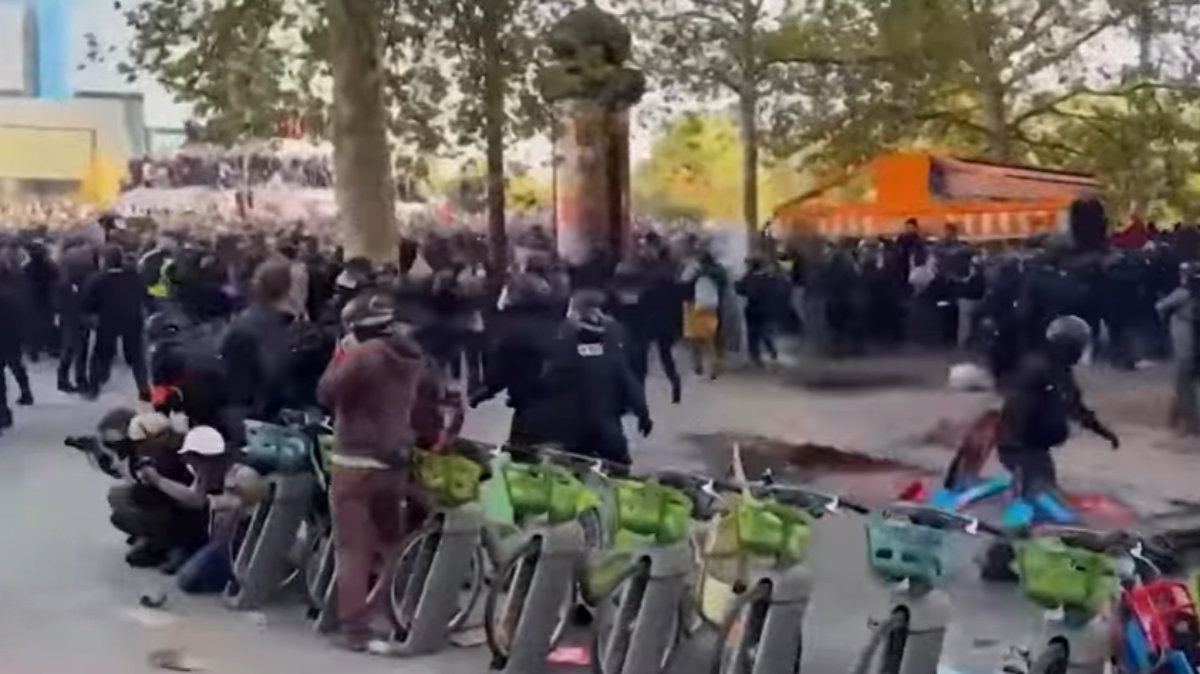
France witnessed protests on October 17 over school funding and rising living costs, which escalated into rioting and looting across the country, according to the Associated Press (AP).
The demonstrations involved fires, shop looting, clashes with police and attacks on public buildings. Protesters briefly stormed Marseille’s City Hall, a historic 17th-century civic building, while Limoges’ 19th-century town hall was set ablaze. The fire caused the building’s roof and clock tower to collapse.
About 2,400 people were arrested in connection with the demonstrations, even as hundreds of thousands of people marched peacefully.
Two high school student groups welcomed some of the government’s concessions but called for protests to continue. Their representatives made the remarks after meeting Prime Minister Sébastien Lecornu earlier on Monday.
“We have managed to address some of the students’ demands,” said Nathanaël Combary of the high school group Renouveau Lycéen. “I emphasize the term ‘some.’”
Other representatives were more critical of the government’s response.
“We have received crumbs compared to what we are asking for,” said Clément Vieillot of the Mouvement Cachan 94 student group.
70,000 Police Officers Deployed
Authorities deployed 70,000 police officers and gendarmes to prevent a repeat of the widespread destruction witnessed the previous weekend. Interior Minister Laurent Nuñez said on Monday that 1,435 people had been arrested nationwide in connection with the latest weekend’s protests.
Earlier on Monday, French President Emmanuel Macron promised “concrete measures” to address students’ demands during a visit to the southern port city of Marseille.
“I have asked the government to address the legitimate demands at the root of this protest movement,” Macron said.
ALSO READ| CBSE Date Sheet 2027 LIVE: Class 10, 12 Timetable PDF Soon, How To Download At cbse.gov.in
ALSO READ| Education Minister Calls For Experiential Learning, Says Education Has Become ‘Marks-Wadi’