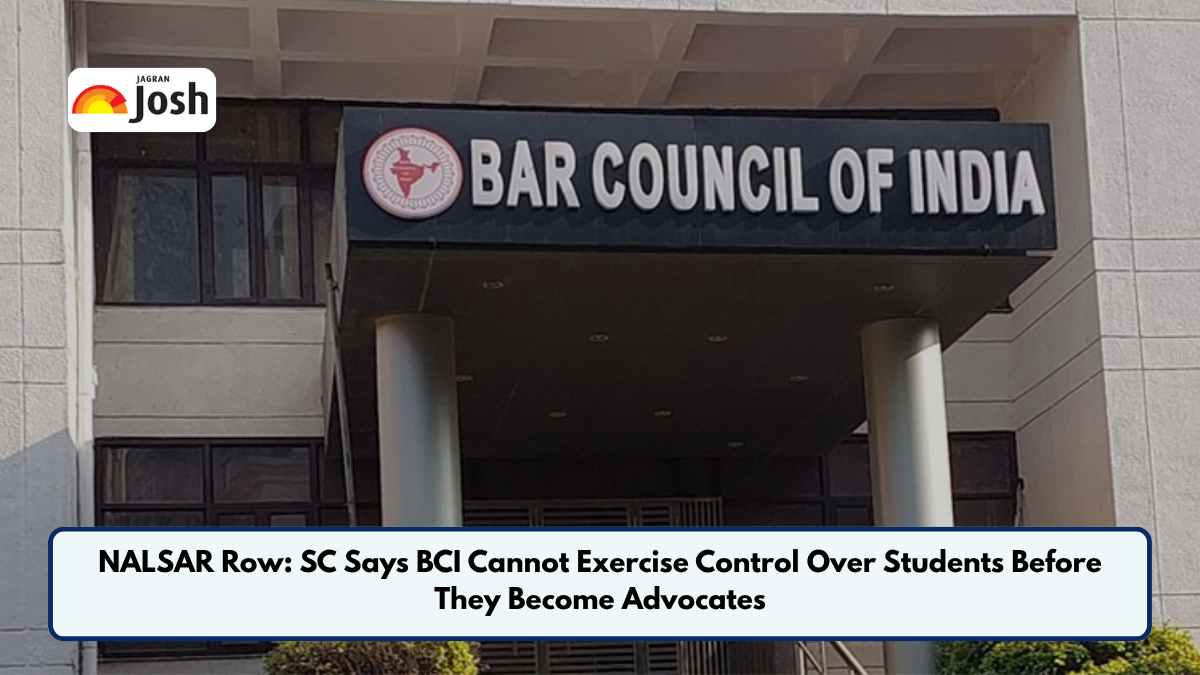
In a latest ruling by the Supreme Court of India on Thursday, September 3, 2026, it has been noted that the Bar Council of India (BCI) does not possess the statutory power to control or regulate the law students. The decision made by a bench comprising Chief Justice (CJI) Surya Kant and Justices Joymalya Bagchi and V Mohana passed the order on the event that came in the light of the controversy involving students at NALSAR University of Law in Hyderabad. It has been conferred that it was for educational institutions to take action against students in accordance with their own regulatory norms.
The controversy was due to the uprising among the students over their objections to the proposed participation of the CJI at the university convocation. In order to tame the situation, the BCI had to take charge of the situation and to mitigate the problem at hand. The row proceeded with BCI issuing two notifications, even though both were withdrawn within hours of their issuance following widespread criticism.
The bench cancelled the BCI’s orders as mentioned on the notifications and further clarified that the BCI could not exercise regulatory control over students before they were certified as advocates and came within the statutory framework governing the legal profession. It was emphasised that the individual institution involved was responsible for regulating the chaos, not the BCI.
What sparked the NALSAR row?
The NALSAR controversy can be traced back to the announcement of the participation of the Chief Justice of India (CJI) Surya Kant in the convocation of academic year 2025-26 at NALSAR University of Law. The opposition arose from students in light of his remarks over the NEET students protest in July in Delhi. In response, the Bar Council of India (BCI) imposed a blanket ban on all NALSAR graduates instead of the protest participants, curbing the convocation conduct. The issue was further raised at the apex court where the CJI questioned the involvement of BCI in the matter.