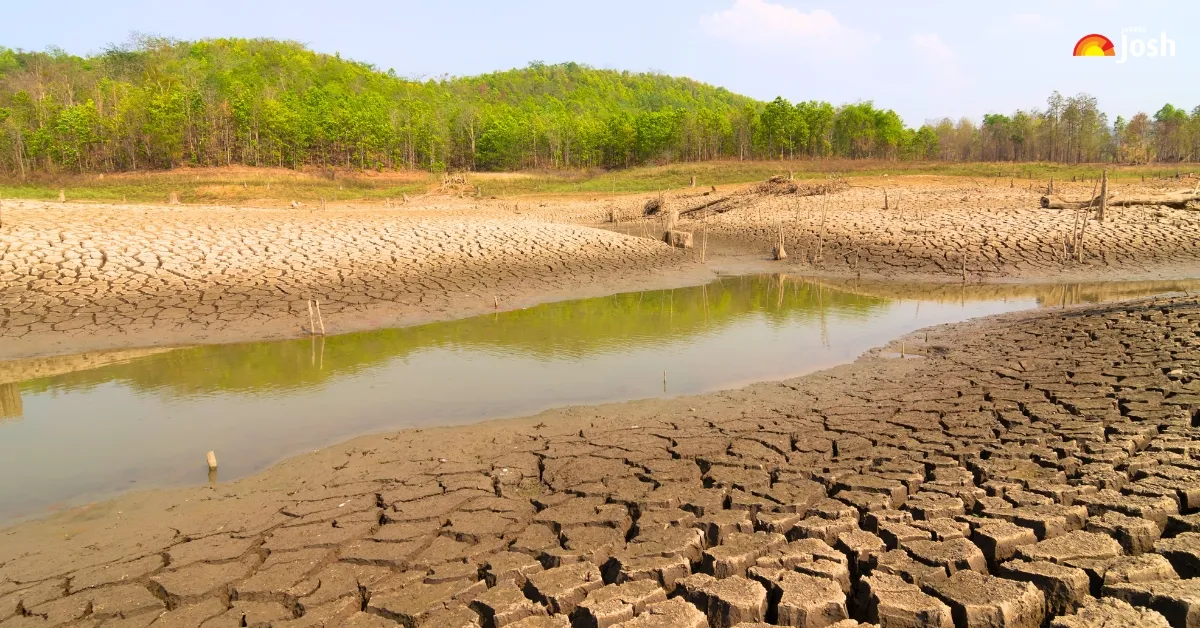
Do you know that although Mawsynram in Meghalaya receives more than 11,800 mm of rain annually, there are areas in India where rain in any form on two consecutive days calls for celebration? It seems unbelievable, but the geography of India is responsible for creating such disparities.
While certain areas of the country do not receive as much precipitation during a whole year as a tropical hill station receives in an intense rain shower in one day.
There comes the interesting part – such areas that used to be a wasteland are now going to become India’s largest green energy centres, thanks to endless sunshine that will help generate electricity for millions of households. Let us look closer at India’s driest states.
Which is the Least Rainy State in India?
Rajasthan holds the distinction of being the state in India with the lowest amount of rainfall. This comes from the statistics provided by the IMD and the Ministry of Earth Sciences of India, which have been collected over many years.
Rajasthan as a whole receives a rainfall of between 300 mm and 550 mm every year; the western regions of Jaisalmer, Barmer, and Bikaner are extremely dry areas. Western Rajasthan receives an annual rainfall of less than 150 mm to 300 mm.
When considering Union Territories along with states, the driest region in the entire nation will be Ladakh, with Leh in Ladakh receiving an annual precipitation of only 100 mm.
The main cause for very little rainfall in the state of Rajasthan is associated with the wind and the mountains. During the monsoon period, moist winds move across India.
But since the Aravalli Mountains run parallel to the monsoon winds blowing from the Arabian Sea, they allow the moist clouds to pass through rather than blocking them and causing them to produce rain.
In addition, the monsoon winds blowing from the Bay of Bengal lose almost all their moisture before reaching Western Rajasthan.
Related Stories
List of 7 Low Rainfall States in India
To know about the variation in rainfall in the dry areas of the country, the following information regarding the IMD’s rainfall data for several years is provided:
| State / Union Territory | Average Annual Rainfall (Approx.) | Primary Reason for Low Rainfall |
| Rajasthan | 300 mm – 550 mm | The Aravalli Range lies parallel to monsoon winds, preventing cloud condensation. |
| Ladakh (UT) | 80 mm – 100 mm | High-altitude cold desert located in the rain-shadow zone of the Himalayas. |
| Gujarat (Kutch & Saurashtra) | 400 mm – 600 mm | Proximity to arid desert zones and weak monsoon wind condensation over flat terrain. |
| Haryana | 450 mm – 600 mm | Inland position far from sea coasts; relies heavily on retreating or fading monsoons. |
| Punjab | 500 mm – 650 mm | South-western districts lie close to the Thar desert margin, receiving dry continental winds. |
| Andhra Pradesh (Rayalaseema) | 670 mm – 700 mm | The interior Rayalaseema region falls in the rain-shadow area of the Western Ghats. |
| Karnataka (North Interior) | 700 mm – 750 mm | Blocked from southwest monsoon rains by the tall peaks of the Western Ghats. |
Rajasthan: The Driest State in India
Rajasthan holds the top position on the list of driest Indian states. It occupies a massive geographical area, but a huge portion of it is covered by the Thar Desert.
What Makes Rajasthan So Dry?
There are two major atmospheric conditions that lead to the formation of the arid climate in Rajasthan:
- The Parallel Arrangement of the Aravalli Range: When the southwestern monsoon through the Arabian Sea enters India, it comes face-to-face with the Aravalli range.
- Since the mountains have a parallel arrangement to the direction of the wind, they are unable to block moisture-laden clouds.
- The clouds just sail over the mountains towards the north of India without cooling to form rain.
- The Loss of Moisture Due to the Eastern Branch of the Monsoon: The eastern branch of the monsoon moves all the way through the Gangetic plains to reach western Rajasthan.
Ladakh: The High-Altitude Cold Desert
Even though Ladakh is not a State but a Union Territory, it cannot be ignored when talking about dry regions in India. The Leh district, along with Kargil, receives some of the lowest rainfall figures recorded on Earth.
What Makes Ladakh So Dry?
- The Himalayan Rain Shadow Effect: The Great Himalayan Range becomes an obstacle for any cloud trying to make its way from the Indian plainlands towards the north. Thus, they release all their water content on the south slope while leaving Ladakh without rain.
- Freezing Temperatures and High Altitudes: Being located more than 3,000 meters above sea level, Ladakh gets freezing temperatures due to low humidity levels in the air. Precipitation received by the area falls in the form of snow during the winter.