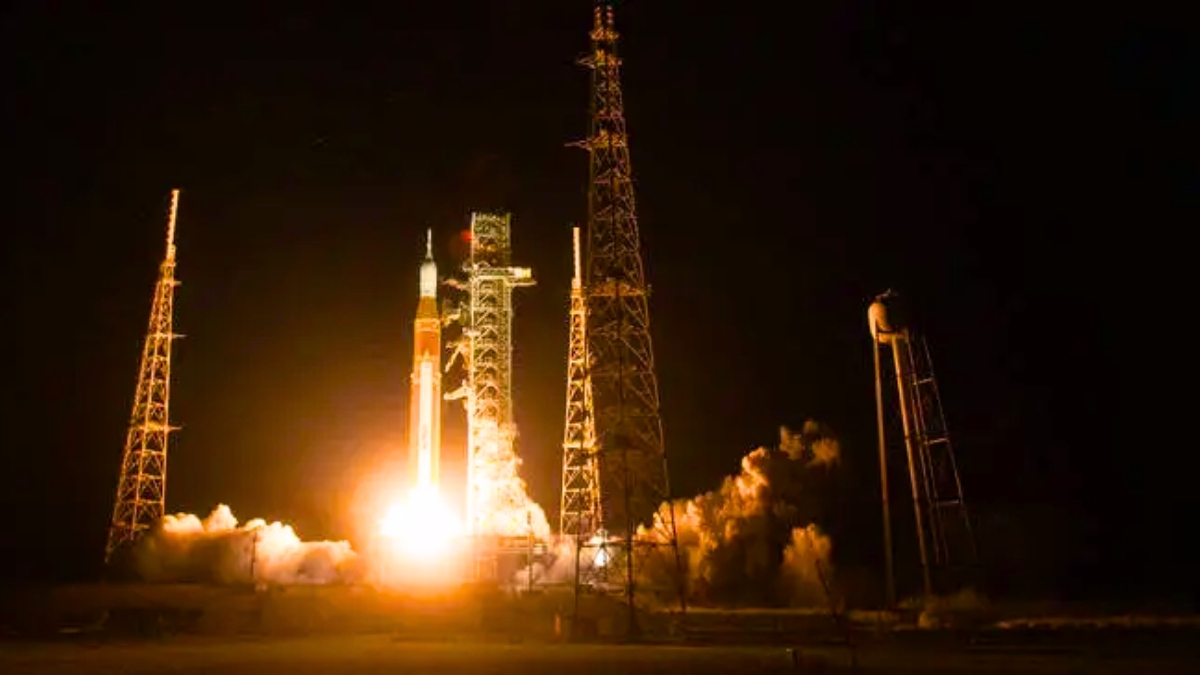
NASA is preparing for a historic return to the Lunar South Pole through the Artemis III Mission which is scheduled for 2027(expected). It is the first human mission to explore the region near the lunar South Pole after Apollo 17 (1972). Artemis III aims to send astronauts to the Moon’s South Pole, a region believed to contain water ice and valuable scientific resources.
Artemis III Mission is also to test advanced technologies, strengthen international cooperation in space exploration, and lay the foundation for a sustained human presence on the Moon. The mission is considered as the most ambitious space mission of the 21st century and a crucial step towards the future crewed missions to Mars.
What Is NASA’s Artemis III Mission?
NASA Artemis III is expected to be the first crewed Moon landing mission of the Artemis program and the first human lunar landing. The mission aims to land astronauts near the Moon’s South Pole, test new technologies, and pave the way for long-term human presence on the lunar surface and future missions to Mars.
Artemis III mission following the uncrewed test flight of Artemis I (2022) an uncrewed Moon-orbiting mission and the crewed lunar flyby of Artemis II (2026), was the first crewed flight beyond low Earth orbit since Apollo.
Artemis III is going to be the one of the big one beacuse for the first time NASA will debut the private commercial spacecraft such as SpaceX’s Starship and Blue Origin’s Blue Moon in its deep-space crewed exploration architecture. The mission was designed to actually return astronauts to the lunar surface.
Artemis III Mission Timeline and Key Dates
Artemis III's mission is to get humans safely to the Moon and back and thus requires a meticulously timed, multi-stage launch campaign. The roadmap to the lunar surface involves several crucial milestones:
-
System Testing and Integration (2025–2026): Testing through the Space Launch System (SLS) at core stage. The Orion capsule, and the commercial Human Landing Systems (HLS).
Artemis II Launch (2026): A crewed test flight carries four astronauts around the Moon and straight back, ensuring all life-support systems are completely reliable.
Propellant Depot Launches (2026): SpaceX is the commercial partner and it will launch a series of Starship tanker flights into orbit to set up a vital fuel depot for the lunar lander.
Artemis III Launch Window (Targeted 2027): The colossal Space Launch System (SLS) rocket lifts off from the Kennedy Space Center by launching the crew on their historic multi-week journey.
Who are the Astronauts Selected for Artemis III ?
NASA hasn't yet revealed the final four-person crew line-up for the Artemis III mission. NASA has announced that the name of the Astronauts will be released by the 9th of June, 2026.
The crew will be chosen from NASA’s exceptionally talented and diverse astronaut corps. NASA has explicitly stated that the Artemis III mission will land the first woman and the first person of colour on the Moon.
The four-member crew will travel together inside the Orion spacecraft. Once in lunar orbit, two astronauts will transfer over to the lunar landing vehicle to head down to the surface, while the remaining two stay behind to look after things from orbit.
Artemis III Mission : Spacecraft and Technology
The Artemis III mission relies on an advanced and interconnected web of cutting-edge technology and commercial partnerships:
-
The Space Launch System (SLS): It is a NASA's flagship super-heavy-lift rocket, capable of generating a staggering 9.5 million pounds of thrust to break free of Earth's gravity.
-
The Orion Spacecraft: The command module of Orion Spacecraft built to keep the crew safe from intense radiation and extreme speeds of deep-space travel.
-
Starship Human Landing System (HLS): It is built by SpaceX, this heavily modified version of Starship will meet Orion in lunar orbit, ferry the surface crew down to the South Pole, and launch them back up to orbit when their work is done.
-
Axiom Next-Gen Spacesuits: It is developed by Axiom Space. These brand-new suits offer incredible flexibility, better protection against abrasive lunar dust, and top-tier thermal systems to handle the biting cold of the South Pole.
Why is NASA Planning to Land at the Moon’s South Pole?
The Apollo years landed near the Moon's equator in 1972. Artemis III will break the record by landing on the LunarSouth Pole for the first time. The South Pole is home to deep, permanently shadowed craters that haven't seen a single ray of sunlight for billions of years. Satellite data strongly suggests these pitch-black pockets contain massive reserves of water ice.
Water is absolute gold dust when it comes to deep-space exploration. If we can harvest it, it can be purified into drinking water, split to create breathable oxygen, or processed into liquid hydrogen and liquid oxygen to manufacture rocket fuel on-site which makes South Pole the perfect spot for a permanent lunar base, allowing astronauts to ‘live off the land’ instead of relying on costly resupply missions from Earth.
How Artemis III Will Shape the Future of Moon and Mars Exploration
Artemis III is building a gateway to the future. The data and experience gathered during this mission will prove the technologies needed for a permanent lunar setup, including the Lunar Gateway, a small space station orbiting the Moon and the Artemis Base Camp on the surface itself.
Learning to manage a crewed base a quarter of a million miles away will teach space agencies how to handle the immense logistics of a mission to Mars, which lies millions of miles further out. If we can master survival on the Moon, the rest of the solar system opens up to us.
Artemis I vs Artemis II vs Artemis III: What Are the Key Differences?
NASA's Artemis program is designed to return humans to the Moon and prepare for future missions to Mars. While Artemis I, Artemis II, and Artemis III are all part of the same lunar exploration campaign, each mission has a distinct purpose. Read here the key distinctions between the all three missions below :
|
Feature
|
Artemis I
|
Artemis II
|
Artemis III
|
|
Mission Type
|
Uncrewed test mission
|
Crewed lunar flyby mission
|
Crewed Moon landing mission
|
|
Launch Date
|
November 2022
|
Planned for 2026
|
Planned for 2027
|
|
Crew Onboard
|
No crew
|
Four astronauts
|
Four astronauts
|
|
Moon Landing
|
No
|
No
|
Yes
|
|
Primary Goal
|
Test Orion and SLS systems
|
Send astronauts around the Moon
|
Land astronauts on the Moon
|
|
Destination
|
Lunar orbit
|
Moon flyby
|
Moon's South Pole
|
|
Mission Duration
|
25 days
|
About 10 days
|
Several days on the lunar surface
|
|
Historic Achievement
|
First Artemis mission
|
First crewed lunar mission since Apollo era
|
First human Moon landing since 1972
|
|
Scientific Focus
|
Spacecraft performance testing
|
Deep-space crew operations
|
Lunar exploration and sample collection
|
|
Role in Artemis Program
|
Test
|
Fly
|
Land
|
NASA's Artemis series to land humans in the Lunar South Pole. India also made history by becoming the first country to safely land a spacecraft under the Chandrayaan-3 mission in that exact polar region. The invaluable data ISRO gathered about the lunar soil and topography is directly helping NASA map out safer, better landing zones for the future Artemis crew.
FAQ’s
Q1: When Will Artemis III Launch?
Ans: NASA is officially aiming for a launch window in 2027. This date hinges on the success of the crewed Artemis II test flight and the final technical readiness of the commercial landing systems.
Q2: Where Will Artemis III Land on the Moon?
Ans: The Artemis III mission is set to land near the Moon’s South Pole. NASA has narrowed down the search to a few candidate landing sites, such as the Shackleton Connecting Ridge.
Q3: Differences Artemis III vs Apollo 11
Ans: Apollo 11 was a brief 21-hour political and technical demonstration on the flat, smooth equatorial plains during the cold war period. Artemis III is designed for the long haul. Artemis III will place a diverse crew into the rugged, icy terrain of the South Pole for a whole week to establish a permanent human presence.