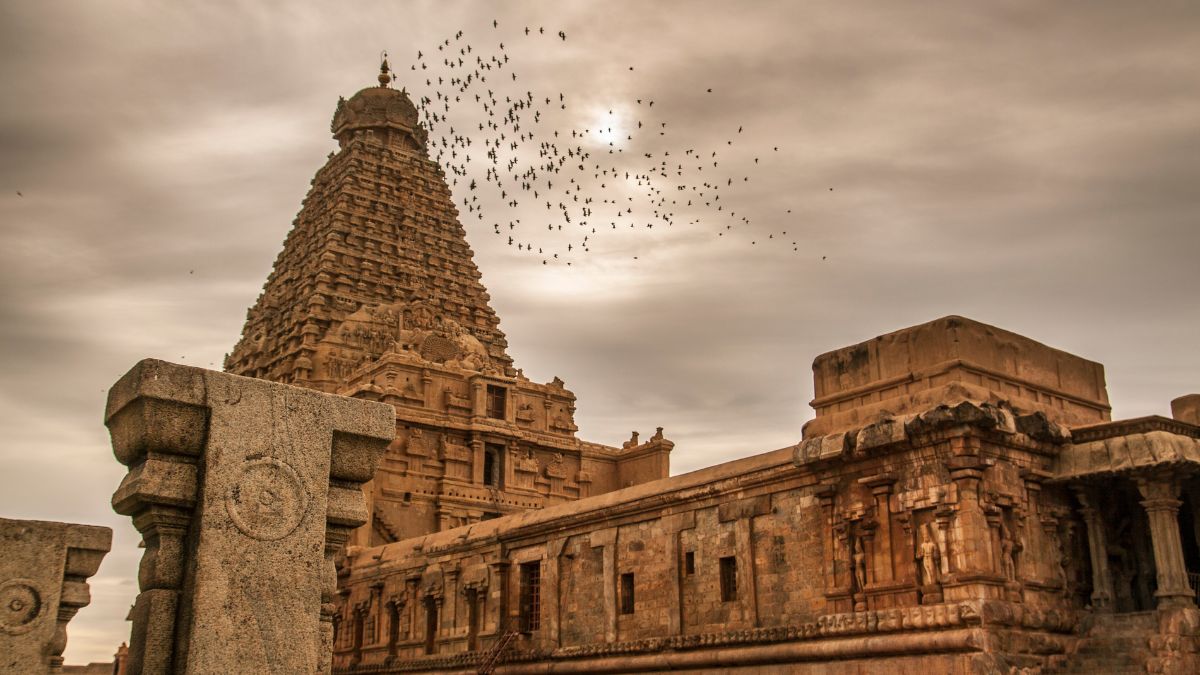
India houses some of the oldest religious sites in the world, many of which have stood as symbols of faith, culture and architectural brilliance for centuries. Some of these ancient temples still survive to this day but not all of them are active places of worship. Some have become monuments of history, others have been lost in time.
But a handful of temples have preserved their religious traditions over the centuries. The Brihadeeswarar Temple in Tamil Nadu is one of the most remarkable living temples in India. It was built over a thousand years ago and still opens its doors to devotees and performs daily rituals, just like it did when it was built.
Brihadeeswarar Temple: 1000 Years of Non-Stop Worship
The temple of Brihadeeswarar was constructed in 1010 CE by the Chola ruler Rajaraja Chola I. Over a thousand years later, the temple is still a working place of worship and one of the finest examples of South Indian architecture.
Known for its huge size and majestic look, the temple is a dedication to Lord Shiva and is often called the “Big Temple”. It is one of the oldest continuously functioning temples in India where daily prayers, rituals and festivals continue to take place. The temple’s survival for over 1,000 years highlights not only its religious importance but also the engineering and artistic achievements of the Chola dynasty.
Related Stories
Where Is Brihadeeswarar Temple Situated?
The temple is in Thanjavur, an ancient city in Tamil Nadu with a great tradition of culture and art. Thanjavur is located on the fertile Kaveri River basin and was the capital of the powerful Chola Empire.
Today the temple is among the most visited landmarks in Tamil Nadu, attracting pilgrims, history enthusiasts, architecture students and tourists from all over the world.
Why Brihadeeswarar Temple Is Famous?
Brihadeeswarar Temple is famous for many reasons. It is regarded as one of the best examples of Dravidian architecture and epitomises the peak of Chola artistic achievement. The giant size, the elaborate sculptures and engineering of the temple still astonish historians and architects.
The temple is also noted for its towering vimana, elaborate sculptures, ancient inscriptions and religious importance. Over a thousand years after its construction, it remains one of India’s most important spiritual and cultural landmarks.
Dravidian Architecture
Brihadeeswarar Temple is considered one of the best examples of Dravidian architecture. It is characterised by its pyramid-shaped towers (vimanas), elaborate carvings, open courtyards and huge temple complexes. The temple is a perfect example of the architectural excellence of Chola architecture and has influenced temple construction throughout South India.
The Towering Vimana
The temple's vimana rises to a height of some 66 metres (216 feet) and is one of the tallest temple towers in India. This structure which is more than a 1000 years old is an engineering wonder and dominates the skyline of Thanjavur.
Built Entirely of Granite
The most amazing aspect of Brihadeeswarar Temple is that it was constructed almost entirely from granite even if the stone was not easily accessible near Thanjavur. Historians speculate that the Chola Empire’s engineering prowess is reflected in the fact that huge blocks were ferried from distant places.
The Giant Nandi Statue
The temple houses one of the largest Nandi statues in India. The huge sculpture, cut from a single stone, faces the sanctum and draws large number of devotees and tourists.
Architectural Significance of the Temple
The Brihadeeswarar Temple is a masterpiece of architecture. The structure is mostly made of granite and displays impressive engineering skills for the time, when there was little to no technology available (11th century). The temple complex has large courtyards, elaborate carvings, huge halls and beautiful sculptures. Among its most extraordinary features is the soaring vimana over the sanctum sanctorum. It stands at a height of approximately 66 metres and is one of the tallest temple towers in India. The temple walls also have hundreds of inscriptions that give valuable information about administration, religion, donations and social life during the Chola period.
UNESCO World Heritage Status
The Brihadeeswarar Temple is part of the Great Living Chola Temples, a UNESCO World Heritage Site. The temple was recognised by UNESCO for its outstanding architecture, historical value and its continued function as an active religious site. Unlike many ancient monuments that are mere tourist attractions, Brihadeeswarar Temple still functions as an active centre of worship. The very fact that it was added to the UNESCO list increased its reputation as one of the most important cultural heritage sites in the world.
The Role of the Chola Empire
The Chola Empire was one of the most powerful dynasties in the history of India. Under the Cholas, their control spread across South India and parts of Southeast Asia. Brihadeeswarar Temple was constructed on the orders of Rajaraja Chola I as a token of devotion, strength and architectural mastery. The temple was a symbol of the wealth of the empire, and of the skill of its craftsmen, architects and engineers. Today, the monument is one of the greatest surviving legacies of the Chola civilisation.
Religious Importance of the Temple
The temple is dedicated to Lord Shiva and is visited by thousands of devotees every year. Daily worship and special prayers and religious ceremonies are performed according to traditions that have been followed for generations. The temple also draws large crowds of pilgrims during major Hindu festivals such as Maha Shivaratri. The ongoing practice of these rituals makes the temple a rare example of an ancient monument still closely linked to contemporary religious life.
Major Festivals Celebrated at Brihadeeswarar Temple
There are many festivals celebrated in the temple throughout the year. Maha Shivaratri is one of the most important festivals and draws pilgrims from all over India. Special temple processions, cultural performances and religious ceremonies dedicated to Lord Shiva are also held on other annual celebrations. Such occasions help to keep alive the spiritual legacy of the temple and preserve centuries-old traditions.
Interesting Facts About Brihadeeswarar Temple
The Temple Is More Than 1,000 Years Old
The temple was completed in 1010 CE and has been active for over a thousand years, making it one of the oldest functioning temples in India.
It Was Built by Rajaraja Chola I
It was commissioned by one of the greatest rulers of the Chola dynasty and is his most famous legacy.
The Temple Is Known as the Big Temple
Known locally as “Peruvudaiyar Kovil”, it was named for its sheer size and towering architecture.
It Contains One of India’s Largest Nandi Statues
The temple has a huge Nandi carved out of a single stone. It is one of the largest monolithic Nandi sculptures in India.
The Temple Is Built Mostly of Granite
There are no granite quarries nearby, but thousands of tonnes of granite went into its construction.
It Is a UNESCO World Heritage Site
One of the Great Living Chola Temples, it is a cultural treasure recognised by UNESCO.