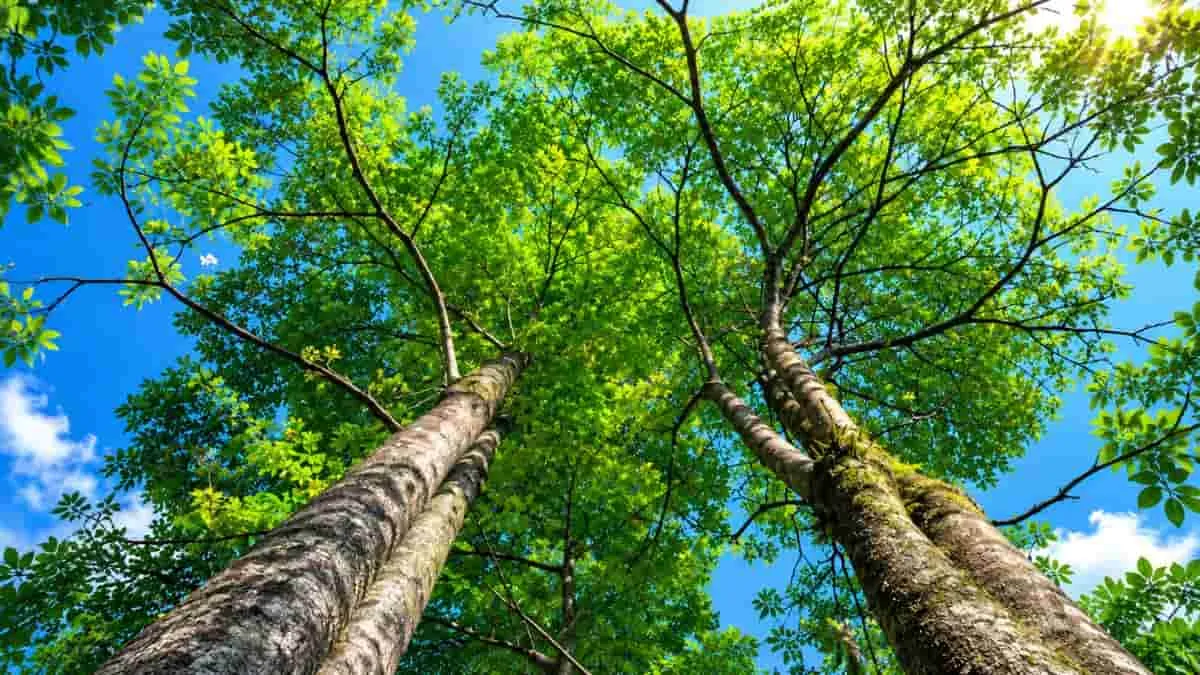
Have you ever heard of an oil that is called “Liquid Gold”? It is Agarwood Oil. Agarwood oil is obtained from the agarwood tree, mainly from the resin-rich wood of trees belonging to the Aquilaria genus. One of the important species found in India is Aquilaria malaccensis.
Agarwood is a highly valuable natural product and is especially important in the North-Eastern states of India.
Quick GK Facts About Agarwood
|
Aspects
|
Detail
|
|
Which tree is associated with Liquid Gold?
|
Agarwood tree
|
|
Scientific name
|
Aquilaria malaccensis
|
|
Common name
|
Agarwood / Agar tree
|
|
Oil obtained from
|
Resin-rich agarwood
|
|
Agarwood oil is also called
|
Oud or Oudh oil
|
|
Major Indian region
|
North-East India
|
|
Important states
|
Assam, Tripura and other North-Eastern states
|
|
Why is it valuable?
|
Rare resin and highly valuable aromatic oil
|
|
International trade regulation
|
CITES
|
Which Tree Oil is Known as Liquid Gold?
The oil made from agarwood is called “Liquid Gold.”
It is a product of the valuable resinous wood of Agarwood (Aquilaria malaccensis). In North-East India, the tree is of special significance in Assam and Tripura.
The wood is rich in resin and is scarce, thus agarwood and its oil is valuable and have been likened to gold.
Related Stories
What is the Agarwood Tree?
The agarwood tree is a tropical evergreen tree. It is scientifically known as Aquilaria malaccensis.
It is naturally occurring in India primarily in North-Eastern and parts of West Bengal. Agar tree or Agarwood and Malayan Eaglewood are the common names of Aquilaria malaccensis given by Indian Council of Forestry Research and Education (ICFRE).
Tree grows to a fairly large size. It is typically about 18-20 metres high, but can reach heights of some 40 metres, according to ICFRE.
Why is Agarwood Called “Liquid Gold”?
Agarwood is called “Liquid Gold” because it is very rare and highly valuable, and most expensive.
This valuable material is created in the tree of agarwood when a resin is produced within the wood of the tree. This occurs as a natural defense reaction; it is related to fungal infection.
According to the Ministry of Development of North Eastern Region, the tree gets infected with fungus and secretes resin in the heartwood of the tree which then forms agarwood. The resin is a very valuable natural product in the world.
The Indian Council of Forestry Research and Education also says that Agarwood is one of the world's most costly woods.
Did You Know?
The word Agar is used in several Indian languages. ICFRE lists names such as Agar in Hindi, Attar in Urdu, Aguru in Sanskrit, Telugu and Kannada, and Agor in Bengali.
How Is Agarwood Oil Made?
Agarwood oil is the resinous wood of the agarwood tree that has been extracted.
The wood is treated to extract the resin and the aromatic oil is extracted from the wood. Oud or Oudh oil is also called this.
The Government of India's National Portal has recognised Agar oil from North Tripura as one of the valuable products of Agar wood trees.
Where Is Agarwood Found in India?
Agarwood is especially important in North-East India. Important states associated with agarwood include:
-
Assam
-
Tripura
-
Meghalaya
-
Manipur
-
Nagaland
-
Mizoram
-
Arunachal Pradesh
What Is Agarwood Used For?
Agarwood has been utilised for a long time in various regions of Asia.
It has significant uses, such as the following:
-
Incense
-
Traditional practices
-
Aromatic oil
-
Religious practices
-
Traditional medicine
-
Carving in wood and other traditional products
Interesting Facts on Agarwood.
One of the most interesting facts about Agarwood is:
-
The resin is not always formed in the agarwood tree.
According to Rain Forest Research Institute at ICFRE, only about 10 per cent of trees are infected in nature and natural growth of agarwood takes more than 15 years. In view of this, researchers have been able to induce artificial production of the agarwood.
Agarwood and India
Agarwood is particularly significant for the economic development of the northern part of the North-East region of India.
Numerous farmers and individuals engaged in processing and trading depend on agarwood. The Government of India has also been actively encouraging the agarwood industry and more legal and sustainable trade in agarwood.
Aquilaria malaccensis has recently been studied in detail in India by the Botanical Survey of India (BSI).
Under CITES, the species is controlled internationally and its conservation is promoted by controlling its international trade.