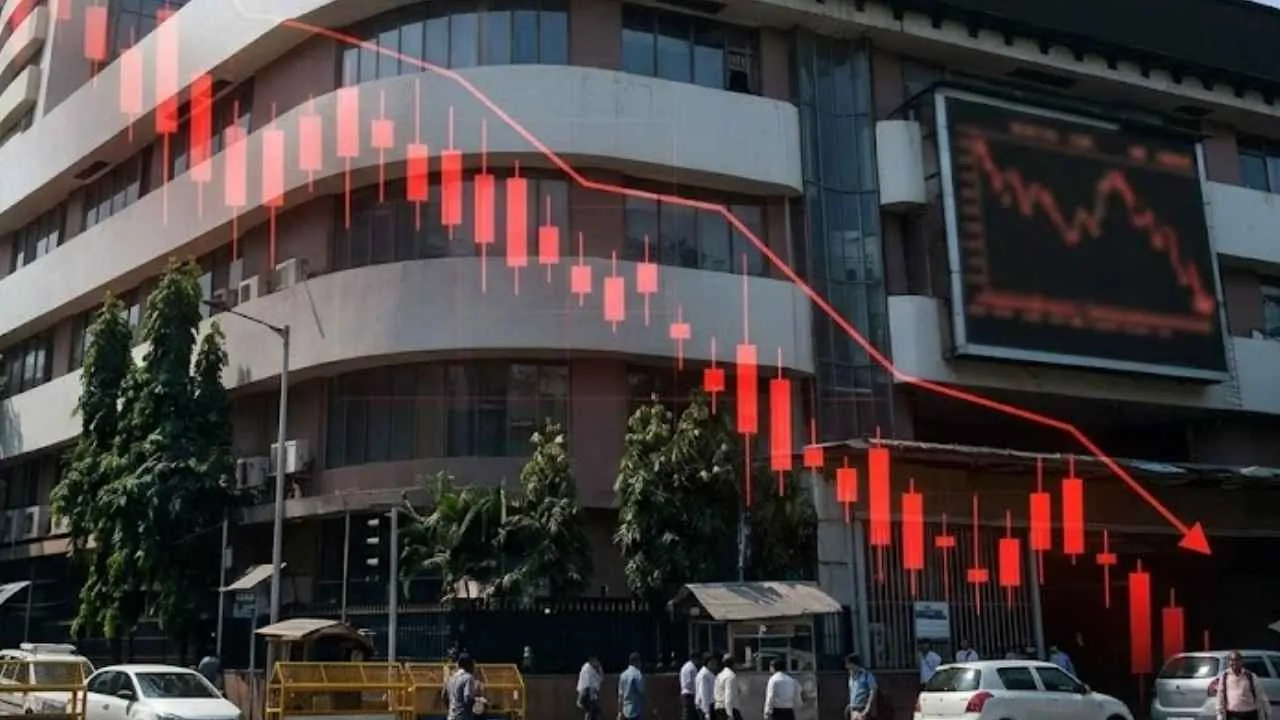
Indian Stock Market Today, October 19, 2026: The stock markets around the world are facing a blanket-point period, where small falls and small rises in the benchmarks are noticeable.
The Indian stock market is also going through the same rise-and-crash situations. While last week the indices tried recovering, this week the day started on a sour note.
Today, the Indian stock market fell deep into the red, bringing its two-day winning streak to an abrupt end. The major reasons, according to experts, are rising crude oil prices, weak global cues and disappointing corporate earnings, which weighed on investor sentiment.
On October 19, the BSE Sensex plunged over 920 points, touching an intraday low of 73,771, while the NSE Nifty 50 shed around 275 points, slipping below the 22,900 mark.
As a highlight, nearly ₹4 lakh crore in investor wealth was wiped out in the selloff. With geopolitical tensions rising, global technology stocks under pressure and foreign investors continuing to pull out funds, Dalal Street found itself facing a challenging Monday.
Read From Recent Stock Market Update: Stock Market Today: Over Rs 20 Lakh Crore Wiped Out In 30 Days — What Does A Market Crash Mean? Its Impact Explained
What Are Top Key Reasons Behind The Stock Market Today Falling?
Rising Crude Oil Prices and Geopolitical Tensions
One of the biggest reasons behind Monday’s market decline was the sharp rise in international crude oil prices.
Rising crude oil prices dealt another blow to investor sentiment on Monday. As a surprise, Brent crude hovered around 108–109 per barrel amid supply concerns and Middle East tensions.
For India, which imports over 80% of its crude oil needs, expensive oil is a costly affair, threatening the rupee, inflation and corporate profitability. It can also raise transportation and production costs for businesses, potentially affecting corporate profitability.
Reports of attacks on oil tankers and uncertainty surrounding the Strait of Hormuz added to investor anxiety.
Also Read: What Happens When Crude Oil Prices Rise? How It Affects Inflation and RBI Decisions in India
Related Stories
Weak Global Cues and AI Stock Selloff
Global markets offered little comfort to Indian investors as Wall Street’s technology selloff rattled sentiment. The Nasdaq Composite fell 2.19%, while the S&P 500 declined 1.22%, and South Korea’s Kospi slipped over 3%. These losses prompted investors to reassess risk across global equity markets.
The AI valuation jitters travelled across markets, putting Indian IT stocks under pressure as concerns over US technology spending clouded growth prospects.
Weakness in international markets also weighed on Indian equities. Selling pressure on Wall Street intensified concerns about valuations and funding requirements in the artificial intelligence sector. Since domestic IT companies depend significantly on international clients, particularly in the US, concerns about technology spending and market valuations can influence their performance.
Weak Bank Earnings and Foreign Investor Outflows
-
Heavy Selling in Banking Stocks: Domestic factors added to the market’s losses, particularly selling in heavyweight private banking stocks. Axis Bank shares fell around 5%, while HDFC Bank declined nearly 3%, putting pressure on banking stocks and benchmark indices.
Concerns Over Q2 Earnings: Concerns surrounding September-quarter earnings and whether banks could meet market expectations contributed to the negative sentiment.
Foreign Investor Outflows: Foreign Portfolio Investors (FPIs) also continued selling Indian equities. According to the figures provided, their net outflows reached approximately ₹52,100 crore in October. Sustained foreign selling can weigh on share prices and weaken investor confidence, particularly when global uncertainty is already elevated.