Student teachers enrolled in recognised teacher education programmes will be required to help five to eight non-literate learners achieve literacy and certification under new guidelines released by the Centre. The initiative links their community-based teaching work to academic credits, making adult literacy a part of teacher education.
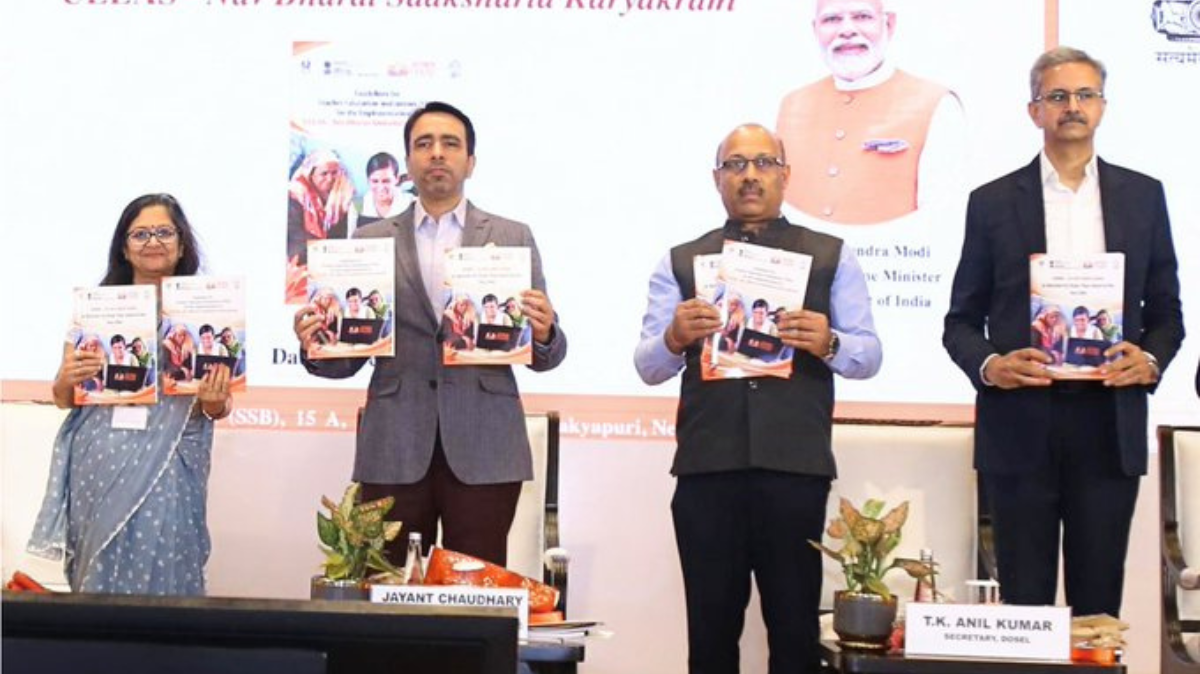
Union Minister of State for Education Jayant Chaudhary launched the Guidelines for Teacher Education Institutions (TEIs) under ULLAS – Nav Bharat Saaksharta Karyakram at an event in New Delhi on October 28.
The guidelines aim to strengthen the participation of future teachers in adult education and support the government’s goal of expanding literacy and lifelong learning across the country.
Which Student Teachers Will Be Covered?
The guidelines cover student teachers enrolled in programmes recognised by the National Council for Teacher Education (NCTE). These include Bachelor of Education (BEd), Bachelor of Physical Education (BPEd), Master of Education (MEd), Master of Physical Education (MPEd) and other recognised programmes.
Under the framework, each student teacher will be required to facilitate literacy and certification for five to eight non-literate learners. Academic credits will be linked to the successful certification of these learners.
The Department of School Education and Literacy developed the guidelines after consultations with stakeholders. They also outline the responsibilities of various educational bodies and authorities to support implementation.
What Is the ULLAS Programme?
ULLAS, or Understanding of Lifelong Learning for All in Society, operates under the New India Literacy Programme. It targets people aged 15 years and above who missed out on formal schooling.
The programme follows both online and offline learning modes and relies on volunteers to support adult learners. Volunteers can include students, teachers, university participants, community members, homemakers, Anganwadi workers and Accredited Social Health Activists (ASHAs), among others.
What Will the New Guidelines Change?
The guidelines strengthen the role of teacher education institutions in coordinating adult literacy activities. They define responsibilities for bodies including NCTE, the National Council of Educational Research and Training (NCERT), State Councils of Educational Research and Training (SCERTs), District Institutes of Education and Training (DIETs), and State Literacy Mission Authorities.
By linking student teachers’ literacy work with academic credits, the framework seeks to encourage their participation in community education while helping adults gain essential literacy skills.
The initiative is aligned with the National Education Policy (NEP) 2020 and the broader objective of making India a fully literate society.
ALSO READ| CBSE Date Sheet 2027 LIVE: Class 10, 12 Timetable PDF Soon, How To Download At cbse.gov.in
ALSO READ| HPBOSE Class 10th Merit List 2026 Released at hpbose.org, Check Final Merit List Link Here