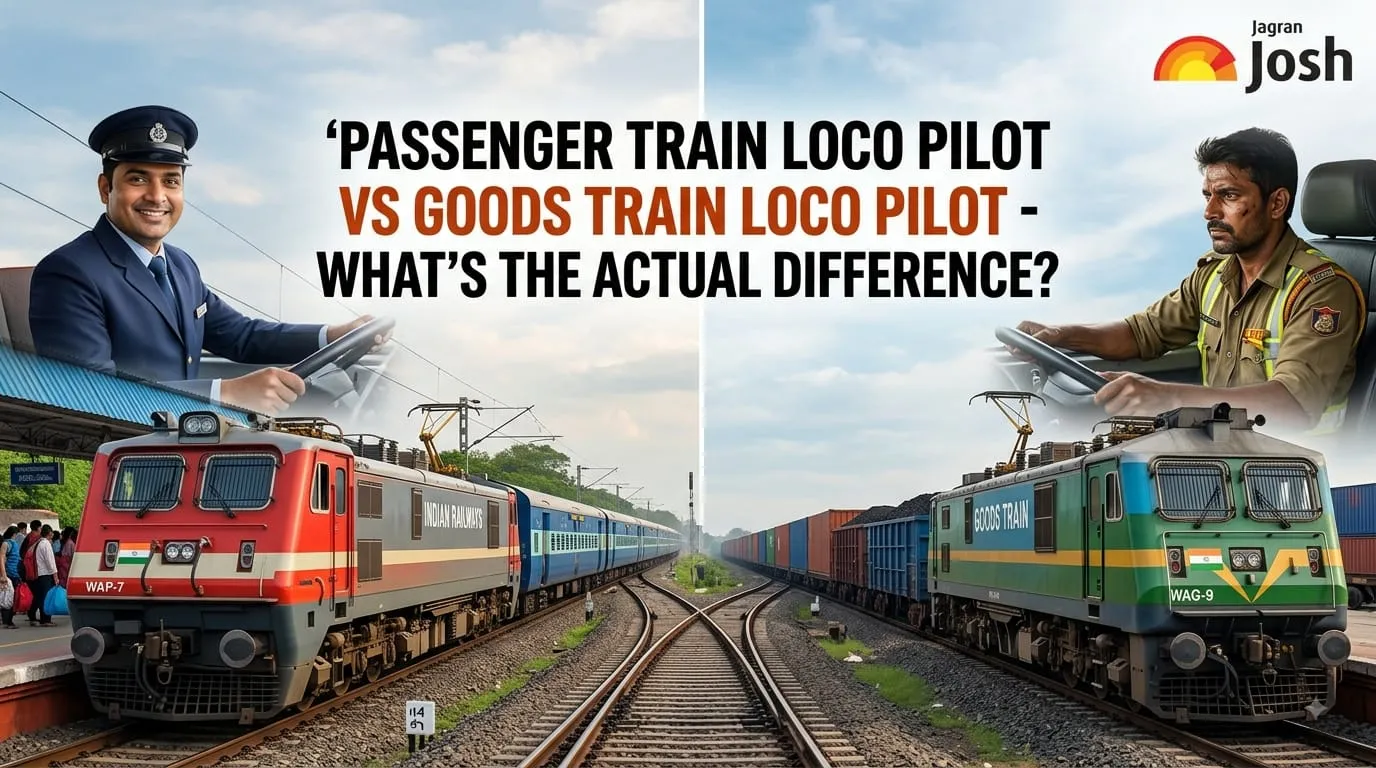
Passenger Train Loco Pilot vs Goods Train Loco Pilot: Have you ever wondered who drives the trains you travel in, and how that job is different from the one driving goods trains? Both roles fall under the post of Loco Pilot in Indian Railways, but they are not the same. A Passenger Loco Pilot handles trains carrying people, while a Goods Loco Pilot operates freight trains carrying cargo. The two jobs differ in duty hours, routes, responsibilities, and even promotion paths. Many railway exam aspirants get confused between these two roles. Check this article to know the key differences between a Passenger Loco Pilot and a Goods Loco Pilot in a simple way.
Who is a Loco Pilot?
A Loco Pilot is a trained railway employee responsible for driving a locomotive safely from one station to another. This role was earlier known as a train driver. Loco Pilots must follow strict safety rules, signals, and speed limits while operating the train. Based on the type of train they handle, Loco Pilots are broadly divided into two categories: Passenger Loco Pilot and Goods Loco Pilot. Both require the same basic qualification and training at the start, but their day-to-day work differs a lot once they are posted. Understanding this difference helps candidates choose the right path during their railway career.
Related Stories
Who is a Passenger Loco Pilot?
A Passenger Loco Pilot drives trains that carry passengers, such as Express trains, Mail trains, Superfast trains, and local EMU/MEMU trains. Their main duty is to ensure a safe and comfortable journey for travellers. Since passenger trains run on fixed schedules, Passenger Loco Pilots must follow strict timetables and maintain punctuality. They also need to be extra alert, as any delay or error can affect thousands of passengers at once. This role often involves faster trains, more halts, and closer coordination with station staff and guards to manage passenger safety and timely arrivals.
Who is a Goods Loco Pilot?
A Goods Loco Pilot drives freight trains that carry goods like coal, cement, food grains, containers, and other cargo. Unlike passenger trains, goods trains do not follow a fixed passenger timetable, so Goods Loco Pilots often get priority only after passenger trains pass. Their trips can be longer and less predictable in timing, sometimes involving extended hours on the track. Goods trains are usually heavier and slower, requiring careful handling on gradients and curves. Since there are no passengers on board, the focus shifts more towards safe cargo transport, proper coupling of wagons, and following freight-specific operating procedures.
Key Differences between Passenger Loco Pilot and Goods Loco Pilot
Check the key differences between Passenger Loco Pilot and Goods Loco Pilot below:
|
Basis
|
Passenger Loco Pilot
|
Goods Loco Pilot
|
|
Train Type
|
Express, Mail, Superfast, EMU/ MEMU
|
Freight Train Carrying Goods
|
|
Schedule
|
Fixed Time-table
|
No Fixed Time-table
|
|
Speed
|
Generally Faster Train
|
Slower, Heavier Train
|
|
Working Hours
|
More predictable working hours
|
Longer, often irregular hours
|
|
Main Focus
|
Passengers safety and comfort
|
Safe cargo irregular hours
|
|
Halts
|
More Frequent station halts
|
Fewer halts, longer stretches
|
|
Priority on Track
|
Usually given priority
|
Often given way to passenger trains
|
Career Progression and Promotion Path
In Indian Railways, most Loco Pilots begin their career as Goods Loco Pilots. After gaining experience and completing a required service period, they become eligible for promotion to Passenger Loco Pilot. From there, further promotions can lead to roles like Mail/Express Loco Pilot and eventually Senior Loco Pilot. So, driving goods trains is usually the starting point, while handling passenger trains is often seen as a step up in seniority and responsibility. This structured path rewards experience, with more complex and time-sensitive duties assigned as a Loco Pilot moves up the ladder.