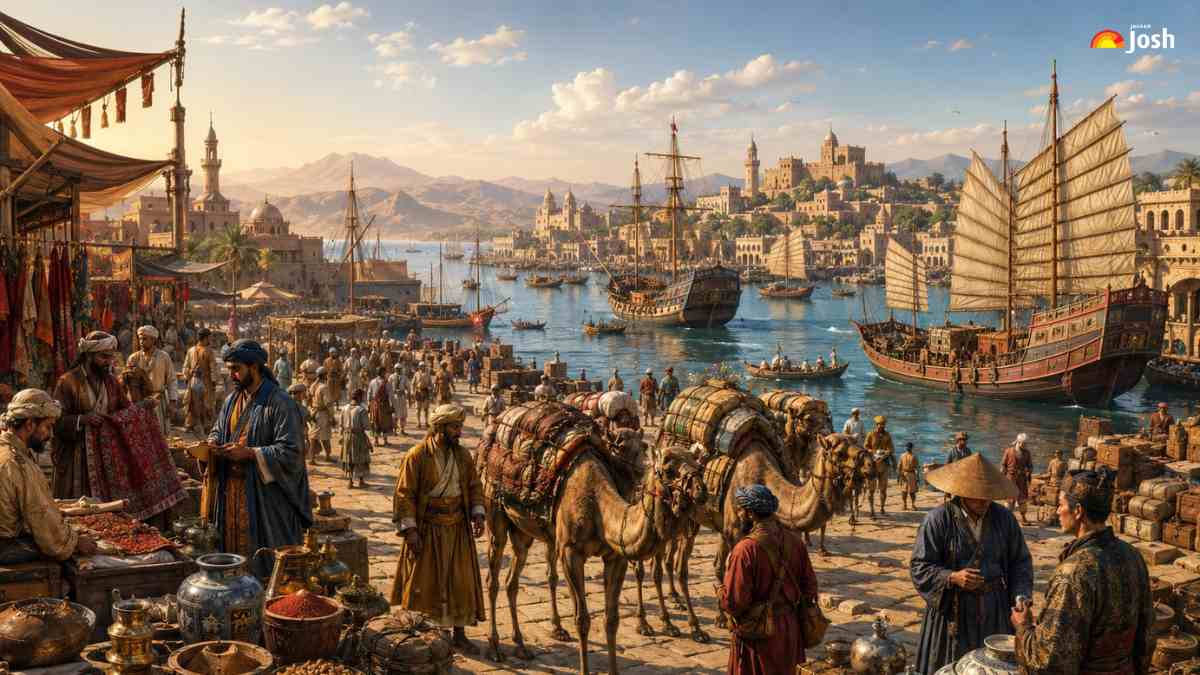
For thousands of years, trade routes have helped to define humanity and created our complex civilizations by allowing the flow of product, ideas, cultures, technologies and religions from one location in the World to another. By trading between these different cultures and societies, the ability to obtain goods that were not available locally allowed for a large increase in both the economy and the cultural exchange between the two regions.
Additionally, the establishment of trade routes enabled the construction of large empires, provided motivation for exploration and resulted in many technological advancements that had an impact on many civilizations throughout history.
Trading has always existed in humanity throughout time from the earliest days when caravan routes were established across the desert to the vast maritime route systems that covered oceans, which all form the basis of a global market and play a pivotal role in modern day international trade.
List of Top 10 Most Important Trade Routes in World History
Trade routes have been essential to the development of various societies throughout history by linking the farthest corners of the globe through both commercial and cultural exchange opportunities. This table lists the world's ten most significant historical trade routes and their importance:
Related Stories
|
No.
|
Trade Route
|
Period (Approx.)
|
Major Countries/Regions Connected
|
Key Goods Traded
|
|
1
|
Silk Road
|
130 BCE- 1453 CE
|
China, India, Persia (Iran), Central Asia, Turkey, Italy
|
Silk, tea, porcelain, spices, precious metals
|
|
2
|
Spice Route
|
2000 BCE - 1800s CE
|
India, Indonesia, Sri Lanka, Arabia, Egypt, European states
|
Pepper, cinnamon, cloves, nutmeg, cardamom
|
|
3
|
Incense Route
|
1000 BCE - 200 CE
|
Yemen, Oman, Saudi Arabia, Jordan, Egypt, Mediterranean regions
|
Frankincense, myrrh, perfumes, aromatic resins
|
|
4
|
Amber Road
|
1500 BCE- 500 CE
|
Baltic regions, Poland, Germany, Austria, Italy
|
Amber, metals, textiles, ceramics
|
|
5
|
Trans-Saharan Trade Route
|
500 CE - 1600 CE
|
Morocco, Algeria, Tunisia, Mali, Niger, Ghana
|
Gold, salt, ivory
|
|
6
|
Indian Ocean Trade Network
|
300 BCE - 1500 CE
|
China, India, Indonesia, Arabia, East African states
|
Spices, textiles, porcelain, gold, ivory
|
|
7
|
Tea Horse Road
|
7th Century - 20th Century
|
China, Tibet, Nepal, India
|
Tea, horses, salt, medicinal herbs
|
|
8
|
Mediterranean Trade Routes
|
1200 BCE - 1500 CE
|
Egypt, Greece, Italy, Turkey, Phoenicia (Lebanon), North Africa
|
Grain, wine, olive oil, metals, glassware
|
|
9
|
Volga Trade Route
|
8th - 13th Century CE
|
Sweden, Russia, Ukraine, Kazakhstan, Persia (Iran)
|
Furs, honey, wax, silver
|
|
10
|
Atlantic Triangular Trade Route
|
16th - 19th Century CE
|
Britain, France, Spain, Portugal, West African states, American colonies
|
Sugar, tobacco, cotton, manufactured goods
|
Top 10 Most Important Trade Routes in World History
Here are the top 10 most important trade routes in world history, explained in detail with reference to their connectivity across regions and the major products that were exchanged.
1. Silk Route
History’s largest trade route linking China through Central Asia, the Middle East and Europe is the Silk Road. It was a trade route for both silk and luxury goods, but also involved the transfer of religions, scientific, technological knowledge, and works of art.
Religious traditions such as Buddhism and techniques like papermaking or gunpowder with reference to the transfer of knowledge were exchanged through this network between the East and West.
2. Spice Route
The Spice Route linked spice-producing areas in Asia with the Middle East and Europe. The spices pepper, cinnamon, and cloves had value because they helped to preserve food and were used for medicinal purposes, so they generated lots of money to support exploration of new maritime routes and eventually helped to launch colonial expansion into new areas by the Europeans.
3. Incense Route
A major trade route connecting Arabia with Mediterranean societies, called the Incense Route, offered valuable commodities such as frankincense and myrrh. These were important for use in religious ceremonies but also had medicinal value or were used for fragrances. Therefore, kingdoms in Arabia became increasingly wealthy as a result of this commerce leading to significant and profitable trading areas between Europe, Africa and the Middle East.
4. Amber Road
The amber road linked the Baltic to southern Europe, allowing the trade in amber, or “northern gold”, between the two regions. The ancient people placed a high value on amber for use in both jewellery and ornaments. The amber road facilitated economic relationships between early European cultures that eventually led to the growth of long distance trading networks centuries before the Roman Empire.
5. Trans-Saharan Trading Route
The trans-saharan trading route connected North Africa and West Africa across the expansive Sahara Desert. Camel caravans carried gold, salt, ivory, and many other precious materials. This trading route also assisted in creating the powerful empires of Mali and Songhai as well as the spread of Islam, in the form of sharing of education and cultural exchange throughout this region of Africa.
6. Indian Ocean Trading Network
The Indian Ocean trading network was pre-modernity’s largest maritime trading network, linking East Africa, Arabia, India, Southeast Asia and China. Merchants traded spices, textiles, gold and porcelain while promoting the spread of religion, languages and technology. Thus, this network established a highly sophisticated commercial market place long before European colonisation.
7. The Tea Horse Road
The Tea Horse Road was a trade route between Southwestern China and Tibet, using difficult terrain in the mountains to connect both areas through trade. The Chinese traded tea for strong horses needed by the Chinese Army, while also reinforcing political and economic ties between the two areas as well as facilitating cultural interactions between the two regions, despite very difficult geographical obstacles.
8. Mediterranean Trade Route
Ancient civilizations such as Egypt, Greece, Phoenicia and Rome traded grain, wine, olive oil, and metals through the Mediterranean Sea, which served as an important commercial highway. Trade stimulated the economic growth of the cities along these trade routes, which in turn led to the exchange of ideas, technology and cultural practices that helped shape the foundations of what we now consider to be "Western Civilization".
9. Volga Trade Route
The Volga Trade Route linked Northern Europe to the Islamic World from Northern Europe to Eastern European Rivers. Viking traders traded furs, honey and wax while importing silver and luxury items. As a result, the Volga Trade Route created opportunities for economic growth on the route as well as opportunities for cultural exchange between Viking societies and the more powerful Middle Eastern civilizations at the time.
10. Atlantic Triangular Trade Route
The Atlantic Triangular Trade Route, linking Europe, Africa, and the Americas from the 16th to the 19th century, facilitated the movement of manufactured goods, raw materials, and agricultural products between these three continents and was an integral part of the transatlantic slave trade, contributing greatly to the global economy's development as well as setting the groundwork for what we know as international commerce today.
Important Questions for Competitive Exams About World Trade Routes
A collection of frequently asked World Trade Routes related questions that are significant for competitive examinations because they aid in understanding the historical background of these trade routes for UPSC, SSC and other state PSCs.
|
No.
|
Question
|
Answer
|
Exam Relevance
|
|
1
|
Which ancient trade route connected China with Europe and facilitated the exchange of silk, paper, and gunpowder?
|
Silk Road
|
UPSC Prelims, SSC CGL, State PSCs
|
|
2
|
Which trade route was primarily responsible for the movement of spices such as pepper, cinnamon, and cloves to Europe?
|
Spice Route
|
UPSC, CDS, NDA, SSC
|
|
3
|
Name the trade route that connected North Africa with West Africa across the Sahara Desert.
|
Trans-Saharan Trade Route
|
UPSC, State PCS, UGC NET
|
|
4
|
Which African empires benefited greatly from the Trans-Saharan Trade Route?
|
Ghana, Mali, and Songhai Empires
|
UPSC Mains, SSC, State PSCs
|
|
5
|
What were the major commodities traded along the Incense Route?
|
Frankincense, Myrrh, Perfumes, and Aromatic Resins
|
UPSC, History Optional, State PSCs
|
|
6
|
Which maritime trade network connected East Africa, Arabia, India, Southeast Asia, and China before European dominance?
|
Indian Ocean Trade Network
|
UPSC Prelims and Mains, CDS
|
|
7
|
Why is the Tea Horse Road historically significant in China-Tibet relations?
|
It facilitated the exchange of tea for horses and strengthened political, economic, and cultural ties between China and Tibet.
|
UPSC, State PSCs, UGC NET
|
|
8
|
Which trade route was extensively used by Viking merchants to connect Northern Europe with the Islamic world?
|
Volga Trade Route
|
UPSC, SSC, State PSCs
|
|
9
|
What was the economic significance of the Atlantic Triangular Trade Route?
|
It connected Europe, Africa, and America, promoting global trade and contributing to the rise of the modern world economy.
|
UPSC Mains, CDS, CAPF, State PSCs
|
|
10
|
How did the Silk Road contribute to cultural and religious diffusion across Asia and Europe?
|
It enabled the spread of Buddhism, Christianity, Islam, technologies, and cultural practices across continents.
|
UPSC Mains, History Optional, UGC NET
|
Conclusion
Trade routes in history were much more than just commercial highways; they connected nations and people, created opportunities for cultural exchange and knowledge transfer, and promoted economic prosperity.
The impact created by these routes shaped the development of empires, societies and the way that nations interact with one another globally. Therefore, the past influence that trade routes had on globalization and international trade will continue to be felt into the future..