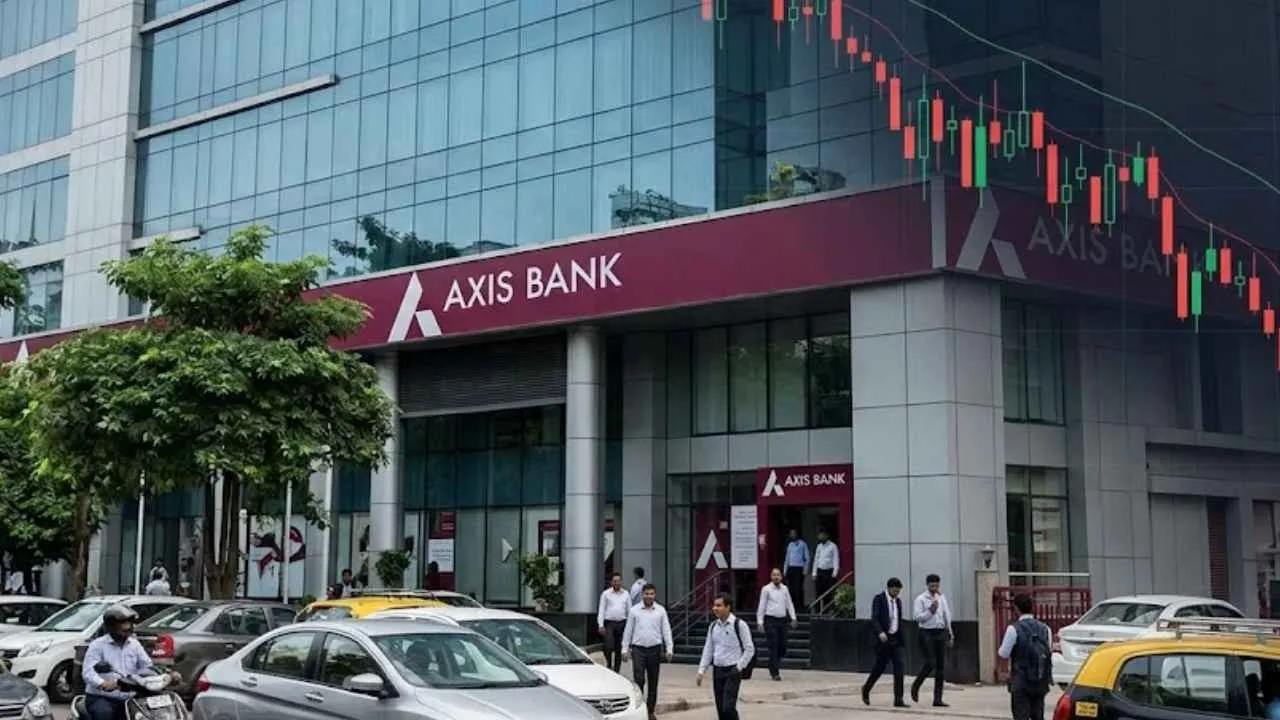
Axis Bank Share Prices, Q2 Results: In its recent announcement, Axis Bank reported a massive profit increase of 37.6% year-on-year (YoY), with its standalone net profit rising to ₹7,003 crore for the second quarter of financial year 2026-27 (Q2 FY27). This profit growth was further supported by lower provisions and growth in lending.
But, contrary to this, the bank's shares declined following the earnings announcement. As a curious mind, my and your first question should be: Why?
This falling share price trend reflects and hints at investor concerns over profitability expectations, operating expenses and pressure on core margins. The Q2 results offer insights into the bank's financial performance and the broader Indian banking sector.
Here is a five-year comparison of net profit, net interest income (NII) and asset quality to help you learn how the lender has evolved and what its performance could indicate about India's economic growth.
Axis Bank Q2 Results FY27: Financial Highlights
Axis Bank's Q2 FY27 results highlight strong annual profit growth, rising net interest income and improving asset quality. A slight sequential decline in net profit and pressure on interest margins remain important indicators of the bank's financial performance.
Related Stories
- - Net Profit: Axis Bank's standalone net profit rose 37.6% year-on-year (YoY) to ₹7,003 crore in Q2 FY27, compared with ₹5,089.64 crore in Q2 FY26. However, it declined 1.56% quarter-on-quarter from ₹7,114 crore in Q1 FY27.
- - Net Interest Income (NII): The bank's NII increased 12% YoY and 5% quarter-on-quarter to ₹15,371 crore, reflecting continued growth in its core lending business.
- - Net Interest Margin (NIM): NIM stood at 3.36%, declining 10 basis points quarter-on-quarter. Excluding the impact of foreign currency non-resident (FCNR) deposits, the bank's core NIM remained stable at 3.47%.
- - Loan Growth: The bank's advances increased 23% YoY, supported by lending to corporate and micro, small and medium enterprises (MSMEs).
- - Deposit Growth: Total deposits grew 21% YoY, highlighting the bank's efforts to strengthen its deposit base alongside credit expansion.
- - Asset Quality: Gross non-performing assets (GNPA) declined to 1.16%, while net non-performing assets (NNPA) fell to 0.35%, indicating an improvement in the bank's asset quality.
- - Provisions: Provisions declined 52% YoY to ₹1,694 crore, supporting the increase in net profit.
What Does Axis Bank's Five-Year Financial Performance Look Like? From FY22 to FY26
Axis Bank's five-year financial performance highlights changes in profitability, lending income and asset quality. The following compares key financial indicators from FY22 to FY26, illustrating the bank's financial trends.
|
Financial Metric
|
FY22
|
FY23
|
FY24
|
FY25
|
FY26
|
|
Net Profit (₹ crore)
|
13,025
|
9,580
|
24,861
|
26,500
|
28,100
|
|
Net Interest Income (₹ crore)
|
33,132
|
42,946
|
49,891
|
54,200
|
58,600
|
|
Gross NPA (%)
|
2.82%
|
2.02%
|
1.43%
|
1.25%
|
1.18%
|
|
Net NPA (%)
|
0.73%
|
0.39%
|
0.31%
|
0.28%
|
0.32%
|
|
Return on Assets (%)
|
1.20%
|
0.78%
|
1.77%
|
1.80%
|
1.82%
|
|
Deposit Growth (%)
|
16%
|
15%
|
13%
|
16%
|
18%
|
What Do Axis Bank Five-Year Trends Reveal?
Over the past five years, Axis Bank has grown and maintained its outlook on profit. Axis Bank's five-year performance shows improved asset quality. It also shows growth in its banking business.
-Improved Asset Quality: Axis Bank's Gross Non-Performing Assets (GNPA) declined from 2.82% in FY22 to 1.18% in FY26, indicating a reduction in bad loans.
- Growth in Net Interest Income: Net Interest Income (NII) increased over the five-year period, reflecting growth in the bank's lending business.
- Profitability Challenges: Higher income does not always lead to higher profits, as operating expenses and funding costs also affect earnings.
- Importance of Deposits: Customer deposits help banks fund loans. Strong deposit growth is essential for managing funding needs and maintaining financial stability.
What Do Axis Bank's Results Mean For India's Economy?
Axis Bank's performance provides us with a useful snapshot of credit demand, household borrowing and business financing in India. Gross NPAs declined from 2.82% in FY22 to 1.18% in FY26, indicating a lower proportion of loans classified as non-performing.
Other figures also suggest that growth in corporate and MSME advances may indicate stronger demand for working capital and investment funding.
Axis Bank's five-year performance shows improvement in loan quality and growth in its banking business. However, loan growth alone does not establish that corporate capital expenditure is accelerating across the economy.
|
Financial Indicator
|
What It Means
|
|
Gross NPAs
|
Fell from 2.82% in FY22 to 1.18% in FY26, indicating an improvement in loan quality.
|
|
Net Interest Income (NII)
|
Increased over five years, reflecting growth in the bank's lending business.
|
|
Profitability
|
Higher income does not always mean higher profits because operating costs and other expenses also affect earnings.
|
|
Deposit Growth
|
Banks need sufficient deposits to provide loans to customers and businesses.
|
|
Financial Stability
|
Balancing loan growth with deposit growth helps banks manage funding needs and maintain stability.
|
Axis Bank Share Price Today
|
Trading Metric
|
Details
|
|
Share Price (19 October 2026, 1:40 PM)
|
₹1,235.10
|
|
Previous Closing Price
|
₹1,290.00
|
|
Price Change
|
-₹54.90
|
|
Percentage Change
|
-4.26%
|
|
Opening Price
|
₹1,264.90
|
|
Day's High
|
₹1,264.90
|
|
Day's Low
|
₹1,225.30
|
|
52-Week High
|
₹1,418.30
|
|
52-Week Low
|
₹1,150.30
|
Also Read: Wipro Q2 Results: Know How Share Prices Are Determined and Company Value is Calculated