It is the time for all of us to go back in history and reflect. The largest democratic nation, India, got its independence in 1947, and has been celebrating freedom for 79 long years. But have we forgotten the people behind this shining and historic freedom? As we celebrate independence, let’s have a Throwback and talk about the most-seen and the utmost important symbol, the Indian national flag.
As soon as a patriotic festival arrives in India, the entire country gets covered in the tricolour. Saffron, white, and green, with a blue Ashoka Chakra in between. We know about who wrote the national anthem, but have you ever thought about who designed our national flag?
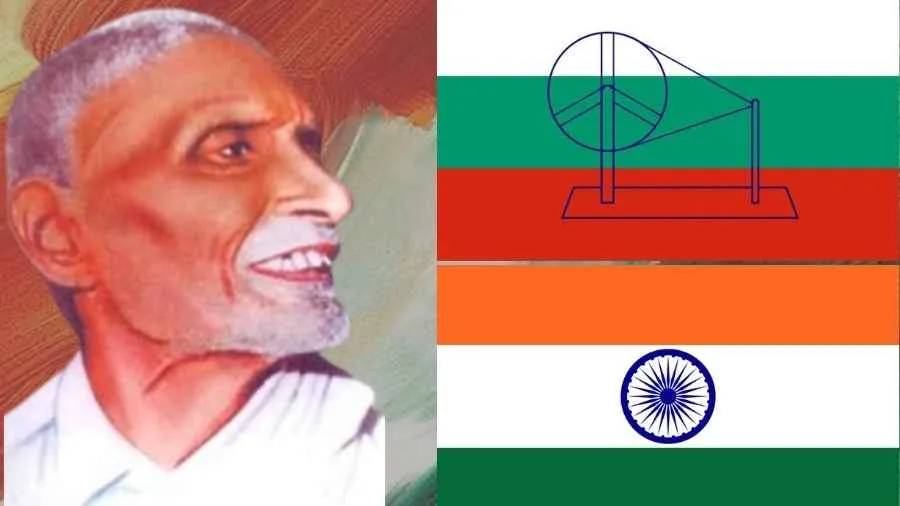
The not so famous designer was Pingali Venkayya, an Indian freedom fighter and visionary from Andhra Pradesh.
Who was Pingali Venkayya?
Pingali Venkayya was born in 1876 and raised in Andhra Pradesh. He was not an ordinary man, as history says. He has a record of serving in the British Indian military during the Second Boer War in South Africa. He went ahead with a bold voice. His Excellency grabbed the attention of the Father of the Nation, Mahatma Gandhi as well.
Not only did he design and redesign our significant national flag, he also published a book in 1916, A National Flag for India. The book features 24 different designs, as reported by the Ministry of External Affairs. It has 24 to 30 diverse flags, with descriptions and insights behind the ideas.
Related Stories
The Main Idea of Pingali Venkayya Behind Indian National Flag
The National flag of India is not a one-day imagination or mere artistry. It is the result of years of thought, visualisations, suggestions, and deep ideological reflection. As it appears to be just three bands of colour and a wheel actually carries deep faith, meaning and historical significance.
- At the base, the flag represents the soul of India. The saffron band reflects courage and sacrifice, reminding citizens of the spirit needed to protect and serve the nation.
- The white band stands for peace and truth. It is to guide the country towards harmony and ethical governance.
- The green band symbolises faith, fertility, growth, highlighting India’s connection with its land and future prosperity.
- The Ashoka Chakra at the center represents dharma and constant movement. It reminds us that a nation must always move forward and never move backward. So the tricolor is not just a flag, it is a live idea of unity, values and national identity.
What was Mahatma Gandhi’s Idea of The Tricolor?
The idea of the Indian National Flag was deeply influenced by the vision of Mahatma Gandhi. He believed that the national flag should represent unity, inclusivity, and self reliance. This is also a vision about what India is actually made of, Unity in Diversity.
Pingali Venkayya presented a design in 1921, consisting of two colours only. The red for Hindus and green for Muslims. However, the father of the nation, Mahatma Gandhi, felt that this was not enough to represent the diversity of India.
So, he presented an idea of adding a white band to include all other communities and to symbolize peace and truth.
Mahatma Gandhi also proposed placing a charkha (spinning wheel) at the centre of the flag. For him, the charkha was not just a symbol, but an idea, it represented self-reliance (Swadeshi), economic independence, and the dignity of labour.
This vision of Mahatma Gandhi transformed the flag from a simple design into a powerful symbol of unity, equality, and national purpose.