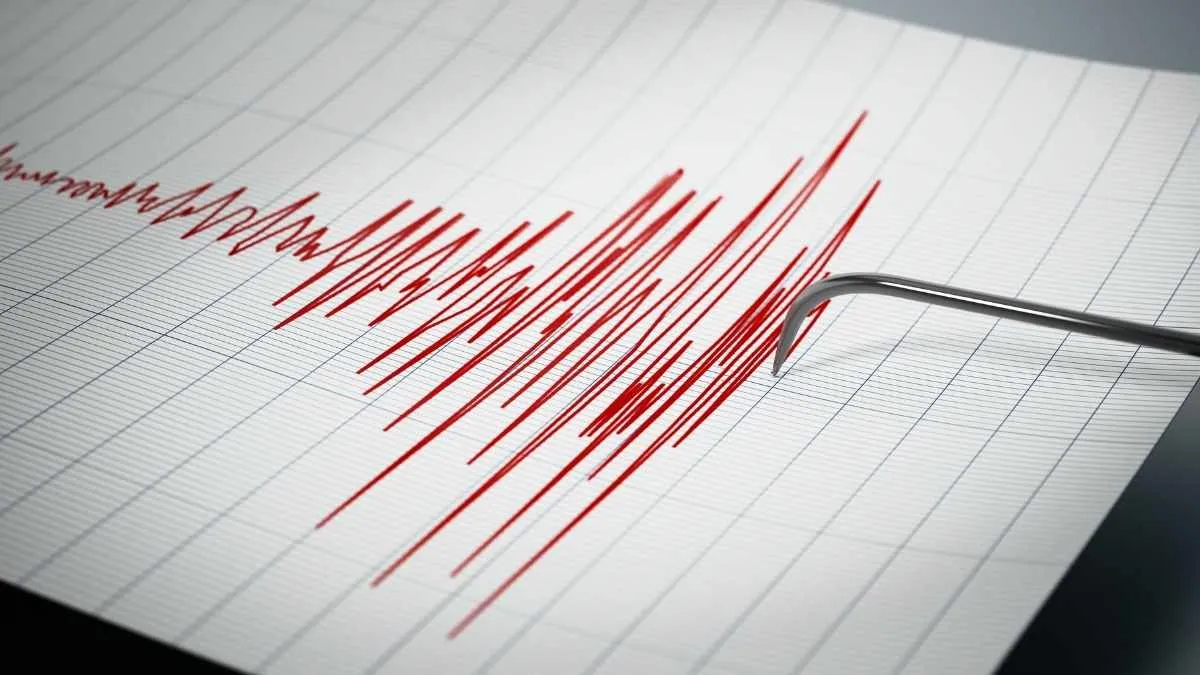
Japan’s Meteorological Agency accidentally triggered an automated emergency alarm predicting a massive magnitude 9.9 earthquake today. The alert warned people across northern and central Japan to prepare for extreme tremor.
Officials cancelled the alarm eight minutes later. They explained that computer systems misread signal data from an actual magnitude 6.9 tremor near Russia's Kamchatka Peninsula.
The US Geological Survey further confirmed that the real earthquake occurred deep underground in the ocean and caused no damage or tsunami danger in Japan.
Why Japan’s 9.9 Earthquake Today Became a False Alert?
The automatic system sent out the scary 9.9 magnitude earthquake warning today at 12:40 pm local time. The Japan's earthquake alert told millions of people that violent tremors were coming.
The real source was an earthquake tremor centered 123 km off the coast of Vilyuchinsk, Russia, deep below the seafloor.
Related Stories
Timeline of Japan’s Mega Earthquake Alert Correction
-
Computer Error: Automated software miscalculated the strength of the wave signals during the first few seconds of detection.
Quick Correction: Human forecasters reviewed the live data and called off the false alarm by 12:48 p.m.
Official Statement: Agency leaders apologised during a news broadcast and promised to fix the software glitch.
How Powerful Would a 9.9 Magnitude Earthquake Really Be?
Scientists measure earthquakes using a scale where every full point jump means thirty-two times more energy gets released.
That means a hypothetical 9.9 earthquake today would release about thirty-two thousand times more energy than the 6.9 tremor that hit Kamchatka today.
|
Feature
|
Strongest Recorded Earthquake
(in Chile, 1960)
|
Hypothetical 9.9 Megaquake
|
|
Magnitude Rating
|
9.5 Mw
|
9.9 Mw
|
|
Cracked Fault Line Length
|
Around 1,000 kilometers
|
Over 3,000 kilometers
|
|
Ground Shaking Time
|
10 to 11 minutes
|
15 to 20 minutes or more
|
|
Tsunami Danger
|
Waves crossed the ocean
|
Giant waves across all global oceans
|
Earthquakes that are of magnitude 9.9 have never been recorded in history. The occurrence of such an earthquake requires that a single tectonic plate should crack along a line that is much longer than almost all the ocean trenches on Earth.
Check Out - List of Japan's Major Earthquakes: Complete Timeline of the Past 15 Years
What Should You Do When an Earthquake Strikes?
Despite the false alarm of today, automatic alarms provide crucial time for the communities to respond. This makes it possible for fast trains to slow down, gas pipelines to be closed, and people to be safely evacuated before the waves strike the shore.
-
Drop, Cover and Hold on: Immediately seek refuge under sturdy tables and desks for safety of your head and neck.
-
Keep Away from Falling Things: Stay away from windows made of glass, heavy bookshelves, and hanging lights.
-
Go to Higher Grounds: In case you live in coastal areas, when you feel violent shaking for more than 20 seconds, move inland to avoid any tsunami waves.