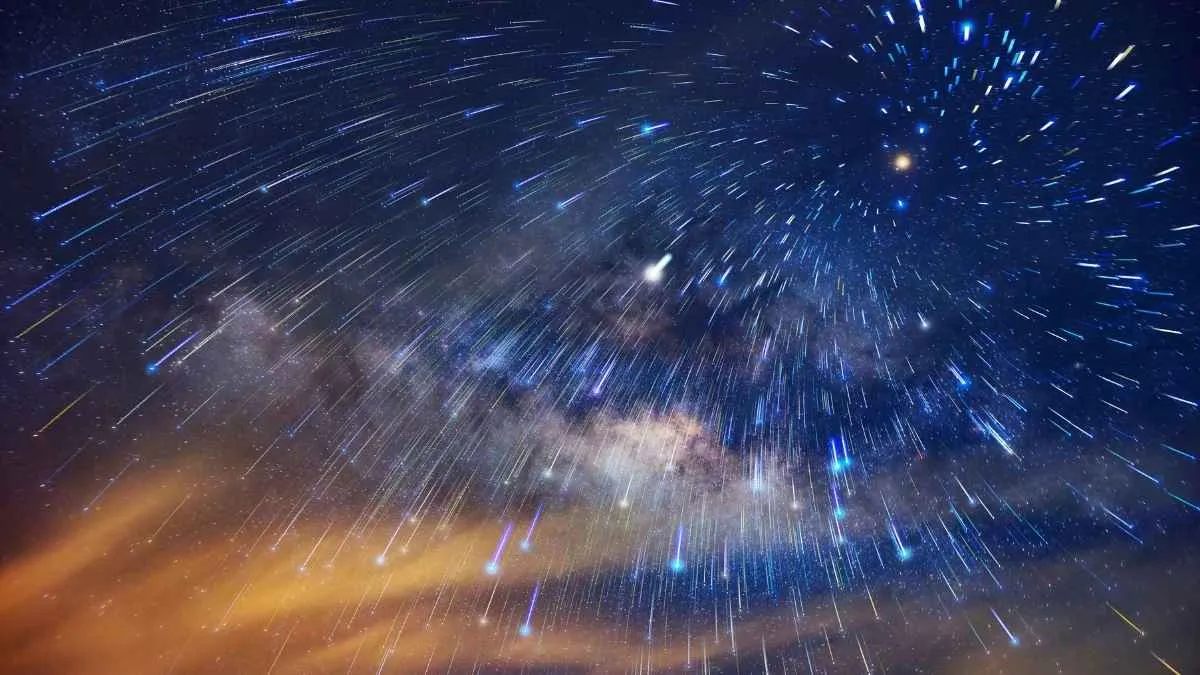
The Orionids meteor shower reaches at its peak during the period between October 21 and October 22. And it provides the chance for people around the world to see fragements of the Halley's Comet burning in the Earth's atmosphere.
According to EarthSky and American Meteor Society, the Orionids meteor shower's peak activity will occur at about 18:00 UTC on October 21. The number of meteors per hour is expected to be up to 10-20 under favorable conditions.
The icy bits move through the atmosphere at a speed of 70 kilometers per second and create bright light trails visible for several seconds.
Hereon you will find out more information about how to watch the Orniods meteor shower in October 2026 based on its peak times and visibility zone.
Orionids Meteor Shower 2026 Peak Timing and Global Viewing Windows
It is important to know the exact times of a meteor shower in order to increase the probability of seeing them. The activity period for this meteor shower is from October 2 to November 7; however, the peak time falls in late October.
Related Stories
| Region by Peak Visibility | Orionids Meteor Shower Peak Local Viewing Window | Expected Rates |
| North America | 2:00 AM – 5:30 AM (Oct 22) | 15–20 meteors/hr |
| Europe and Africa | 1:00 AM – 5:00 AM (Oct 22) | 12–18 meteors/hr |
| Asia-Pacific | 3:30 AM – Dawn (Oct 22) | 10–15 meteors/hr |
Will the Orionid Meteor Shower Be Visible in India?
Yes, Orionids are clearly visible all over India at the time of morning hours on October 22nd. As per observational information, constellation Orion is said to rise by 10:00 P.M. local time and reach a high position above horizon before dawn in India.
Where to See Orionid Meteor Shower in India?
The ideal viewing period in India occurs between 2:00 AM and 5:15 AM IST, just after the Moon sets and prior to the onset of morning twilight.
- Delhi-NCR: 2:22 AM – 5:07 AM IST
- Mumbai: 2:48 AM – 5:21 AM IST
- Kolkata: 1:41 AM – 4:20 AM IST
- Bengaluru: 2:33 AM – 4:59 AM IST
How to See the Orionids Meteor Shower Tonight?
Choosing a suitable place plays an important role for having a clear view of the meteor shower display. Telescopes or other equipment for the study of stars are not needed because of the ability of the human eye to see wide angles and catch fast moving objects.
- Get out of the city to avoid light pollution by going to places in the country, state parks, or areas approved as dark sky sites.
- Try to look up into the sky in the east direction towards the constellation Orion the Hunter; however, shooting stars may show up in any area above you.
- Give some time to let your eyes adapt to the darkness for at least 20 minutes.
Science Behind Halley's Comet Fragments
The Orionids are one of the two meteor showers occurring each year, which are caused by the Halley’s Comet; the other is the Eta Aquariids in May. The solar energy vaporizes the icy layers of the Halley's Comet as it approaches the sun, resulting in billions of dust particles.
Scientists observe that these particles have traveled along the same orbits for centuries.
As Earth comes across this orbital track every autumn, the high-speed impact results in blazing fireballs. However, space expeditions to reach the Halley's Comet are planned for the 2060s, while observing the Orionids provides us with the chance to see some of its material already.