Draconid and Orionid Meteor Showers Peak in October 2026: Here’s How and Where to Watch
The October sky presents a double treat with the Draconid and Orionid meteor showers. Clear skies, minimal moon interference for the Draconids, and fragments from famous comets make October 2026 an ideal window for stargazers worldwide.
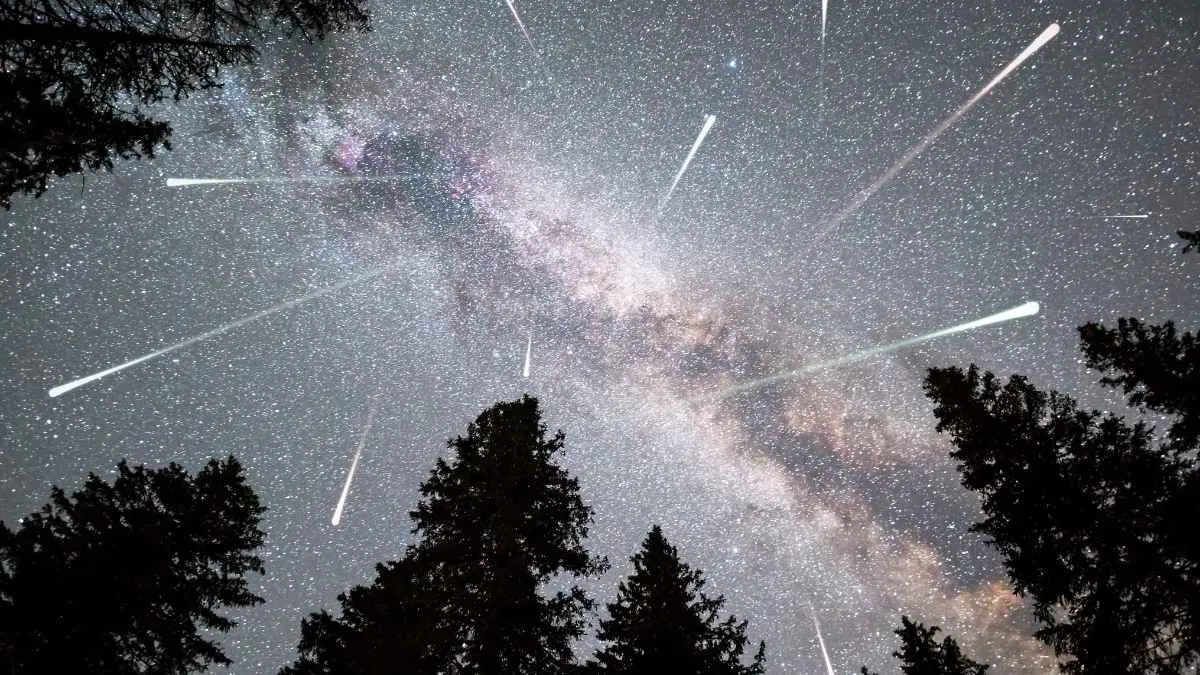
Stargazers across the world are in for a rare double celestial event treat in October. The Draconid meteor shower and Orionid meteor showers will light up the night sky in october 2026.
The Draconids lead the display by peaking on the night of October 8 and 9 under near total darkness due to a 1% illuminated Moon phase. Just a few days later, the Orionids meteor shower take place on October 21st and 22nd.
According to NASA and astronomy websites, it is possible to see the displays during these days. Meaning, there are great opportunities for observing meteor showers all over the world this October.
When is Draconid Meteor Shower 2026 Peak Visibility?
The Draconid 2026 meteor shower will be visible between October 6 to 10th. But it provides an impressive peak display on October 8 evening until early morning of October 9.
While other celestial events can only be observed during late nights, this meteor shower is most visible right after dusk, due to the position of the radiant point.
The shooting star shower is happening due to the comet 21P/Giacobini-Zinner that revolves around the Sun every 6.6 years. Earth passes through this trail after burning up dust particles at a slow 20 km/s to create long lingering trails.
| Attribute | Details about Draconid Meteor Shower 2026 |
| Peak Window | Evening of October 8 to morning of October 9 |
| Parent Body | Comet 21P/Giacobini-Zinner |
| Average Rate | 5 to 10 meteors per hour |
| Moon Illumination | ~1% (New Moon phase on October 10) |
| Best Viewing Direction | Face Northwest toward Draco constellation |
As per International Meteor Organisation the Draconids may generate unexpected explosions. Although under normal circumstances there will be a continuous stream of meteors flying at a slow pace.
What is Orionid Meteor Shower 2026 Peak Time?
The Orionid meteor shower will continue from October 2 to November 7. And the peak of Orionid occurs on October 21 and 22.
The Orionids meteor shower occur due to particles of Halley’s Comet which result in fast meteors that enter Earth’s atmosphere with speeds of about 66 km/s.
The expected shooting star rate is 10 to 20 meteors per hour for observers under dark skies. The radiant is located near Orion in the eastern part of the sky after midnight.
However, a waxing gibbous Moon will hinder visibility of faint trails and therefore, the best time for observations would be the morning hours, when the Moon sets around 3 a.m.
Where to Watch Meteor Showers in October 2026?
Location dictates which shower will offer the best visual spectacle:
-
Northern Hemisphere (North America, Europe, Asia): Best for the Draconids. Look toward the head of Draco near the stars Eltanin and Rastaban immediately after nightfall.
-
Southern Hemisphere (South America, Southern Africa, Australia): Excellent for the Orionids. Because the radiant near Orion rises higher overhead near the Equator and Southern latitudes. Pre-dawn observers in Australia and South America will see higher meteor counts per hour.
-
Top Local Spots: High-altitude regions, rural dark-sky parks, and suburban ridges far from light pollution provide ideal visibility worldwide.
Best Viewing Tips for October Shooting Stars
Viewing a meteor shower requires simple preparation rather than optical gear:
-
Shift from urban lights to countryside and higher landscapes for viewing.
-
Let the eyes get accustomed to darkness within 15 to 20 minutes. Refrain from using phone screens.
-
The temperature falls quickly during October nights; bring along extra blankets.
-
Radiants tell us about the place of origin but not where shooting stars will be seen.

Harshita Singh is an education and general knowledge journalist with over 5 years of experience in educational writing. Specializing in US affairs and GK, Harshita has a track record of breaking down intricate geopolitical and historical subjects into clear, digestible insights for learners. Her strong background in text analysis, coupled with a Bachelor of Arts (Hons) in English from the University of Delhi, helps her produce authoritative, thoroughly researched content that empowers readers to engage confidently with global current affairs. For inquiries or academic insights, you can reach out to her directly at harshita.singh@jagrannewmedia.com.


-1791272988528_t.webp)