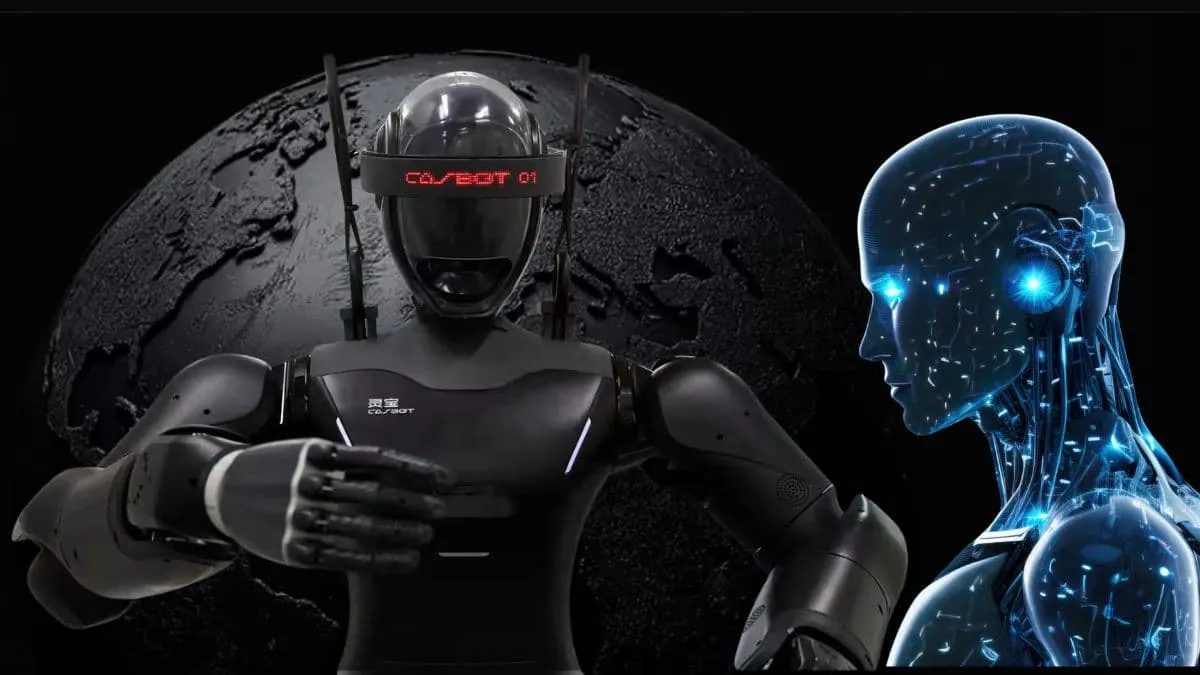
Humanoid robots are a type of robot that is designed to look like a human and do work like we humans do.
These humanoid robots can walk, use their hands to do work, see objects, analyse the work with a camera that is installed in their body, and perform different tasks.
In 2026, humanoid robots are becoming an essential part of technology worldwide, and many countries such as China, the United States, Japan, South Korea, India, and several European countries are adopting humanoid robots to develop better and smarter work using this latest robotic technology.
Here in this article, let’s explore what humanoid robots are, list the top countries leading in humanoid robot technology, how these robots are used, why many countries are investing in humanoid robot technology, and what the future of humanoid robots is.
What Are Humanoid Robots?
A humanoid robot is a robot made with a human-like body structure. Just like we humans have one head, two hands, and two legs, similar to the human body structure, these humanoid robots also have a head, two arms, and two legs.
Usually, a normal machine can do only a single task at one time, but humanoid robots can do different tasks.
To do such tasks, humanoid robots are enabled with artificial intelligence, and with the help of AI, these humanoid robots can understand their surroundings and perform tasks.
Related Stories
Top Countries in Humanoid Robot Technology
|
Rank
|
Country/Region
|
Main Strength
|
|
1
|
China
|
Manufacturing, logistics and large-scale robotics
|
|
2
|
United States
|
AI, robot intelligence and advanced automation
|
|
3
|
Germany
|
Industrial and intelligent robotics
|
|
4
|
Japan
|
Social robots, precision and telepresence
|
|
5
|
South Korea
|
Mobility, healthcare and service robots
|
|
6
|
France
|
Medical, service and advanced robotics
|
|
7
|
Italy & Spain
|
Hospitality and assistance robots
|
|
8
|
United Kingdom
|
Robotics research and development
|
Where Are Humanoid Robots Being Used?
Humanoid robots can be useful in many areas. Here are a few sectors given below where humanoid robots are used:
-
Factories: For assembling and moving materials inside the factories.
Warehouses: Here, these robots are used for picking and carrying materials and goods.
Hospitals: In hospitals, these robots can also be used as assistance and for rehabilitation purposes.
Hotels: In hotels, these robots are also used for customer service.
In Malls: To help customers buy products in the malls.
Education: These robots can also help in education for research and learning purposes for students.
At Home: These robots are also used to work at home as household assistance.
Why Are Countries Investing in Humanoid Robots?
Today, many countries are now investing in the development of humanoid robots, and the main reasons behind investing in humanoid robots are the following:
-
Labour Shortage: In some countries, there is a very great shortage of skilled workers and human labour. So, due to the labour shortage, many countries are adopting these humanoid robots.
-
Safety: In many works, there is a very high chance of life-threatening risk, so, for making the task easier and for safety, many countries are adopting humanoid robots.
-
AI Development: Today, every task, whether in a mobile, laptop or any electric appliance, has AI built within the machine. Same in human robots also, AI is enable, and they perform task using AI. So, due to the faster development and growth in AI, many countries are investing in humanoid robots.
-
Flexible Work: Humanoid robots can do a different job, different task for a longer period of time without any break.
What Is the Future of Humanoid Robots?
Humanoid robots are still developing, but their use is expected to increase. In the coming years, they may become more common in factories, warehouses, hospitals, hotels and homes.
However, robots still face challenges such as high cost, battery life, safety, reliability and the ability to perform complex tasks.
The humanoid robot race is no longer only about making a robot that can walk like a person. The bigger goal is to create robots that can understand, learn and safely work with people. The countries that combine strong AI, manufacturing and robotics research are likely to play an important role in this new technology.