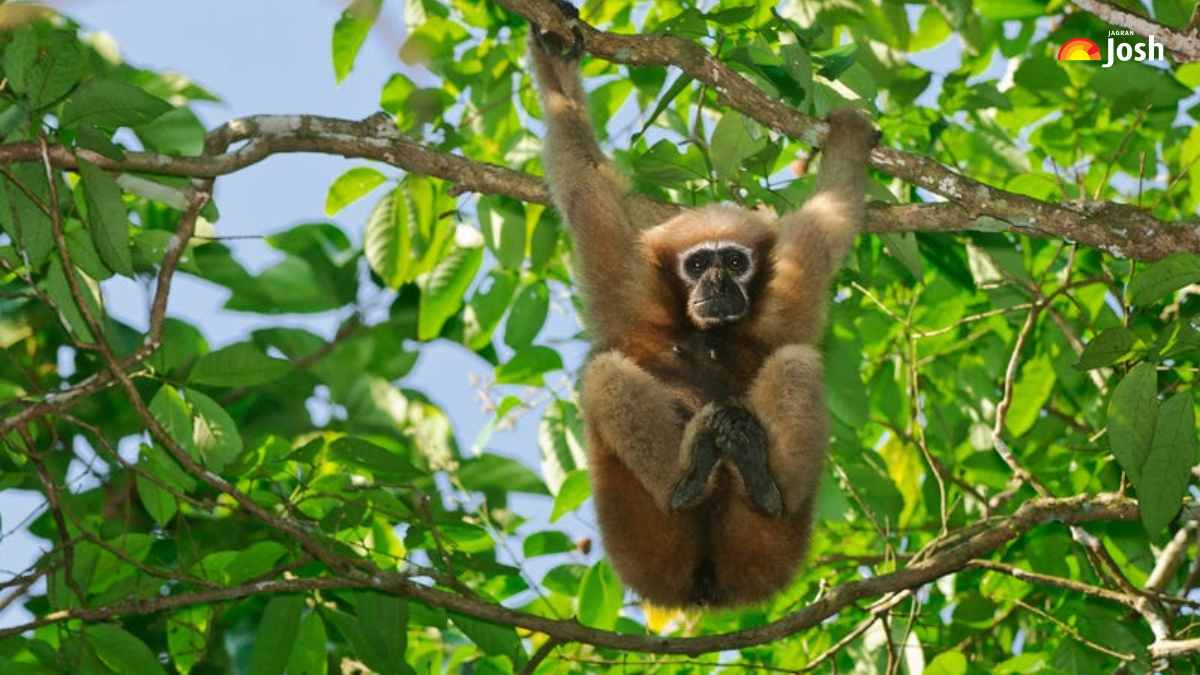
India is home to an array of different animals, especially many different species of primates living throughout the country, with an obvious concentration within forests and mountainous regions. Among these many varieties of primate, there is also a small number of an uncommon group of primate species known as apes, with a smaller number of species existing when compared with both monkeys and lemurs globally.
Apes are relatively smarter than any other types of primates found on earth. Apes do not possess tails, and they share a common ancestor with humans. The number of types of apes that exist within India primarily found in dense, mature forests is very rare because the ecological and geographical elements that are required to support apes are extremely uncommon in India. Apes are conventionally found naturally in dense mature forests, within stable climates,or limited human disturbance.
Protecting ape species found in India is critical to protecting the animals that make up India's biodiversity, and understanding the ecosytem of northeastern India where primates currently live is critical to protecting those ecosystems.
Which is the Only Ape Found in India?
There is only one species of ape found in India the Hoolock gibbon, a very small, tree-dwelling primate from the Family Hylobatidae that is naturally found only in the Northeastern states of India like Assam, Arunachal Pradesh, Meghalaya and Nagaland. Unlike what we generally think of as apes, this species does not have a tail and uses brachiation swinging from one tree limb to another as its primary method of moving from one tree to another in the forest, which is the Hoolock gibbon's habitat.
The Hoolock gibbon is limited in its geographic distribution because it relies primarily on dense, tropical or subtropical forest environments for food, shelter and safety. Geographic barriers like rivers and hills and fragmentation of its natural habitat due to past history continue to restrict the Hoolock gibbon's range to these four northeastern states of India.
There is a critical need for conservation of the Hoolock gibbon, as continued loss of its habitat due to deforestation and human encroachment are placing this species' continued existence in the wild at risk today. Therefore, it is imperative that conservation measures such as habitat restoration be implemented in order to provide the Hoolock gibbon with the opportunity for long-term survival in India.
Related Stories
Why is Hoolock Gibbon Only Found in India?
Here are the 6 reasons why Hoolock Gibbon Only Found in India:
1. Habitat Requirement
The Hoolock gibbons can be found in densely populated evergreen and semi-evergreen forests that have substantial canopy coverage. Food items such as leaves and fruit will be available as well as safe living areas for the gibbons to travel on trees between patches of food.
Areas with these characteristics are found primarily in north-eastern India which limits the extent to which this gibbon species occurs, and is a significant location for biodiversity, providing vital habitats for the entire ecosystem.
2. Geographic Isolation
The geographic isolation of the north-eastern region of India from the rest of Asia is due to natural barriers such as rivers, mountains, and valleys. These barriers have kept gibbons from moving to other populations.
Over time, the isolation of gibbons in north-eastern India has reduced the amount of gene flow amongst them, which has restricted their populations to the forests of north-eastern India, especially those located in the Indo-Myanmar region, which is a hot spot for biodiversity as a whole.
3. Limited Dispersal
The gibbons are exclusively arboreal, which prevents them from crossing open areas, rivers, and human settlements, thus greatly limits their ability to disperse from their existing habitats which consist of continuous tree canopy forests in north-eastern India and within neighbouring habitats.
4. Evolutionary Adaptation
Gibbons have existed for millions of years and have become adapted to living in the forests of Southeast Asia and Northeast India and as such are considered highly specialized species due to their extremely slender build, long limbs and vocalizations all being specifically adapted to being able to survive in dense plantation forests.
This combination of fact makes Wreathed Gibbons highly specialized mammals with only slight ability to survive in open areas, or in different types of forests than these currently exist.
5. Habitat Fragmentation
Most forests not in Northeast India have been severely altered through industrial agriculture, road building and urbanization resulting in the breaking of natural canopy corridors which are needed for the migration of gibbons.
The result is that many of these gibbons now exist in small populations that because their habitat has been fragmented and restricted to very small areas in a highly protected forest system in Northeast India are unable to expand and reproduce and as such, make survival very difficult. Therefore, it is a world wildlife conservation problem.
6. Conservation Sensitivity
Hoolock Gibbons are recognized as a Critically Endangered Species by the IUCN because they are threatened by hunting and habitat loss and therefore require conservation measures designed to improve the connectivity of forest corridors, reduce deforestation, and increase local community engagement in protecting both gibbons and the forests where they live.
In order to maintain these populations over time, strict legal protections for forests must be put in place to help conserve the forests of North East India that are rich in biodiversity.