India is a socialist, Secular, & Democratic Republic, and it is the largest Democracy in the world. After the nation came into existence on 15th of August 1947, since then free & fair elections have been held since then.
The Constitution of India have given the authority to conduct free & fair elections in India to the Election Commission of India. It is a permanent Constitutional Body, and the Election Commission of India was established in accordance with the Constitution on 25th January 1950.
It handles the election for the Lok Sabha, Rajya Sabha, State Legislative Assemblies, and the position for the President and Vice- President of India.
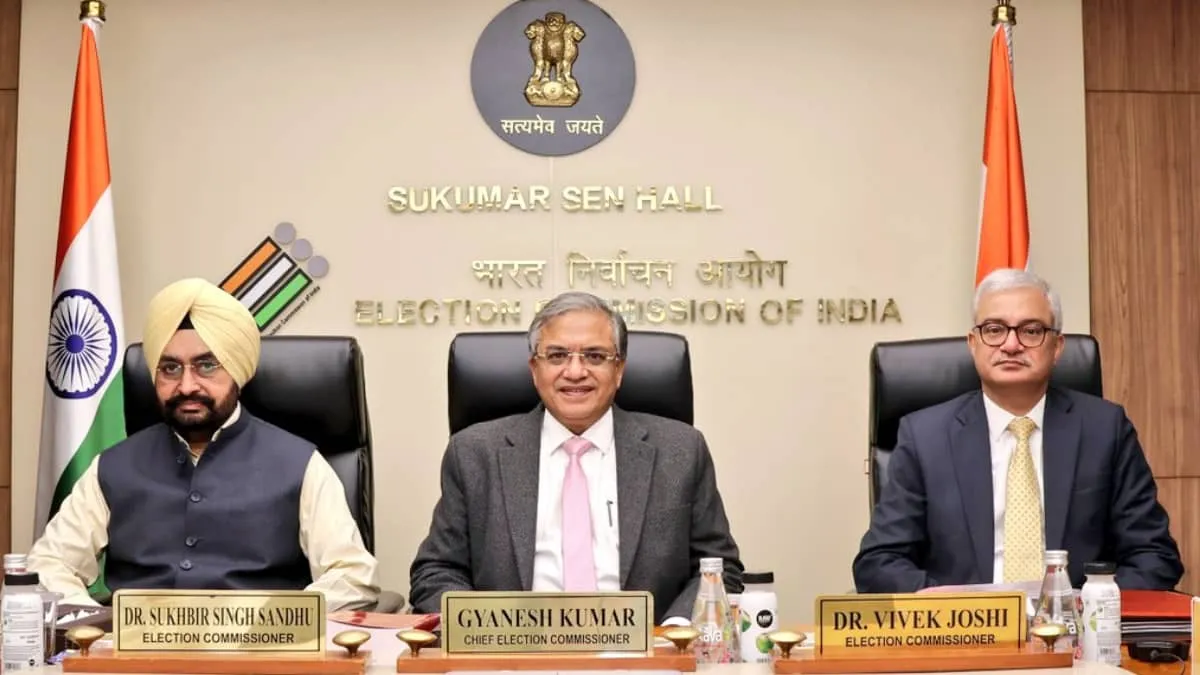
Here, there are three main persons: one is Chief Election Commissioner, and other two are Election Commissioner.
But do you know, what are procedure for the appointment of CEC & EC, what are their qualoification, how they are removed, their duties, and the significance of the ECE & EC in India.
So, explore this article in detail, and know the complete details of the appointment of CEC and EC in India.
What Is the Election Commission of India?
The Election Commission of India is an authority established under Article 324 of the Constitution of India. The Election Commission of India is responsible for overseeing, directing and controlling elections covered by its role.
The Commission now works with three members: one Chief Election Commissioner and two Election Commissioners. All three take part in decisions.
Who are the current Chief Election Commissioner and Election Commissioners of India?
The current Chief Election Commissioner of India is Shri Gyanesh Kumar, who take over the charge as the 26th Chief Election Commissioner of India on 19th February 2025.
He is a 1988 Batch Kerala Cadre Officer of the Indian Administrative Service. He has also worked as a Sub Collector of Adoor for the Government of Kerala; MD of Kerala State Development Corporation for SC/ST; Municipal Commissioner of Corporation of Cochin; MD of Kerala State Cooperative Bank; District Collector of Ernakulam; Secretary of Goshree lslands Development Authority; MD of Trivandrum Airport Development Society and Resident Commissioner of Kerala House in New Delhi.
The current Election Commissioner of India is:
1. Dr. Sukhbir Singh Sandhu, who joined as Election Commissioner in the Election Commission of India on 15th March, 2024.
2. Dr. Vivek Joshi, who joined as Election Commissioner in the Election Commission of India on 19th February, 2025.
How Are the CEC and Election Commissioners Appointed?
The way they are appointed is explained in the 2023 Act. It includes a Search Committee, a Selection Committee and the President of India.
Step-by-step appointment process
1. Finding candidates: People who are considered are checked against the rules and requirements set by the 2023 Act.
2. The Search Committee creates a list: A Search Committee led by the Union Minister of Law and Justice or the Minister of State in charge of the Ministry creates a list of five people to think about.
3. The Selection Committee looks at the list. And se their qualifications
4. Sending a recommendation to the President: The Selection Committee picks a person. Sends a suggestion to the President.
5. The President makes the appointment: The President formally names the Chief Election Commissioner or an Election Commissioner.
The 2023 Act started in 2024. This law provides a way to choose people and set their working conditions.
Who are the members of the Selection Committee?
Under Section 7 of the 2023 Act, the Selection Committee consists of:
|
Member
|
Role
|
|
Chairperson
|
|
|
Union Cabinet Minister nominated by the Prime Minister
|
Member
|
|
Leader of Opposition in the Lok Sabha
|
Member
|
If no Leader of Opposition in the Lok Sabha is recognised the leader of the opposition party in that House will join as a member as the Act says.
Important: The Chief Justice of India is not a member of the Selection Committee under the 2023 Act. The committees composition is different from the arrangement proposed by the Supreme Court in its 2023 judgment, which was in force before Parliament passed the law.
What Are the Qualifications for CEC and Election Commissioners?
The 2023 Act says what people need to be able to work. A person must meet the requirements:
1. Government service background: The person must have worked in a job that's the same as a Secretary to the Government of India.
2. Integrity: The person must have a reputation for being honest.
3. Election-related experience: The person must. Have experience in running elections.
These rules are meant to make sure that the people who join the Commission have experience, in government and know how to handle elections.
Is there an age limit for appointments of CEC & EC in India?
The Act says that a Chief Election Commissioner or an Election Commissioner holds office for six years or until the person reaches the age of 65 years whichever comes first. Therefore the effective tenure depends on the person’s age when appointed.
The Act also says that a person who has held office as Chief Election Commissioner or an Election Commissioner cannot be reappointed to that office.
What Is the Tenure and Salary of the CEC and ECs?
The tenure and service conditions of the CEC and ECs are regulated by the 2023 Act.
|
Particular
|
Provision
|
|
Tenure
|
Six years or until 65 years of age, whichever is earlier
|
|
Reappointment
|
Not eligible for reappointment
|
|
Salary
|
Equivalent to the salary of the Cabinet Secretary
|
|
Service conditions
|
Governed by the 2023 Act and applicable rules
|
|
Appointment authority
|
President of India
|
The current law is important. The 2023 Act says the salary should match that of the Cabinet Secretary. Older ECI notes may talk about a service‑condition framework so when using older notes consider which law applies and when it starts.
How Can the Chief Election Commissioner Be Removed?
The Constitution gives protection to the CEC so that the CEC can stay independent of the Election Commission.
Under Article 324(5) the CEC can only be removed in the way and for the same reasons as a judge of the Supreme Court of India.
The reasons are proved misbehaviour or incapacity. The removal process makes Parliament follow the set procedure used for removing a Supreme Court judge.
Removal of an Election Commissioner
The removal procedure for an EC is not the same as the removal procedure for the CEC.
An Election Commissioner can only be removed from office if the Chief Election Commissioner recommends removal. The Constitution does not give the Election Commissioners the same removal protection that the CEC has.
|
Position
|
Removal procedure
|
|
Chief Election Commissioner
|
Same manner and grounds as a Supreme Court judge
|
|
Other Election Commissioner
|
Removal by the President only on the CEC's recommendation
|
This difference is an important constitutional distinction. It is also relevant to discussions about the independence of the Election Commission.
What Are the Duties and Powers of the CEC and ECs?
The Election Commissions powers come mainly from Article 324 of the Constitution and from election laws such as the Representation of the People Acts.
The CEC leads the Commission. The ECs join the CEC in making decisions. The CEC cannot automatically override every decision of the Commissioners.
The Commission's main responsibilities include the following.
1. Conducting elections
The Commission supervises elections to:
-
The Lok Sabha.
-
The Rajya Sabha.
-
The offices of the President and Vice-President of India.
Elections to Panchayats and Municipalities are handled by the respective State Election Commissions, not by the Election Commission of India.
2. Preparing and revising electoral rolls
The Commission oversees the electoral‑roll process under the applicable laws. The Commission works through election officials to keep voter lists accurate to register electors and to carry out revisions.
Accurate electoral rolls are essential because they help eligible citizens exercise their right to vote.
3. Announcing the election schedule
The Commission announces the election programme, including dates for nominations, polling and counting in line with the relevant laws and procedures.
The Commission also coordinates election arrangements with the authorities involved.
4. Enforcing election rules
The Commission issues instructions and checks that election laws and other instructions are followed including the Model Code of Conduct while elections are held.
The Model Code of Conduct is meant to promote campaigning and to stop the misuse of official positions or government resources for electoral advantage.
5. Supervising polling and counting
The Commission oversees arrangements that keep polling and counting orderly. These arrangements include sending election observers giving directions to election officials and dealing with reported violations through the procedures available.
6. Recognising political parties and allotting symbols
Under the election laws and rules the Commission recognises political parties and gives them election symbols.
Symbols help voters identify candidates and political parties on ballot papers or electronic voting machines.
7. Advising on disqualification matters
The Commission has constitutional and statutory roles in certain disqualification cases. For example under Article 103 the President decides on questions about disqualification of Members of Parliament under Article 102 after getting the opinion of the Election Commission and acting according to that opinion.
The Commissions role varies according to the provision and the type of disqualification involved.
Why Is the Appointment of the CEC and ECs Important?
The appointment process matters because the Election Commission supervises elections that decide who represents people in Parliament and State Legislatures.
The independence, experience and impartial functioning of the Election Commission are important for reasons.
1. Protecting fair elections: An independent Election Commission helps keep elections in line with the law instead of the interests of a political party.
2. Maintaining trust: Voters trust the electoral process more when election rules are applied fairly and complaints are handled correctly.
3. Ensuring continuity, in election management: Experienced commissioners help manage election arrangements that involve many voters, polling stations, election officials and candidates.
4. Supporting democracy: Elections let citizens pick their representatives. The Election Commission helps keep this process fair and trustworthy.
5. Promoting accountability: A clear legal framework for appointments, tenure and removal helps define the responsibilities of the people who lead the Election Commission.
However the existence of an appointment procedure does not by itself guarantee independence. Transparency, impartial decision‑making, accountability and public confidence are also essential.
What Changed Under the 2023 Act?
Before the law the Constitution did not contain a detailed statutory procedure for appointing the Chief Election Commissioner and Election Commissioners. In March 2023 the Supreme Court ruled that appointments would be made through a committee comprising the Prime Minister, the Leader of the Opposition in the Lok Sabha and the Chief Justice of India until Parliament enacted a law on the subject.
Parliament subsequently enacted the Chief Election Commissioner and Other Election Commissioners (Appointment, Conditions of Service and Term of Office) Act, 2023. The Act came into force in 2024. Established the present statutory appointment framework.
The key changes and provisions include:
-
A defined Search Committee and Selection Committee.
-
Eligibility requirements relating to administrative rank, integrity and election‑management experience.
-
A tenure and service conditions.
-
Statutory provisions governing the transaction of business by the Commission.
The change is significant because it placed the appointment procedure within a specific law enacted by Parliament.
CEC and EC: What Is the Difference?
|
Basis
|
Chief Election Commissioner
|
Election Commissioner
|
|
Position
|
Heads the Election Commission
|
Serves as a member of the Commission
|
|
Appointment
|
Appointed by the President
|
Appointed by the President
|
|
Decision-making
|
Participates in collective decisions
|
Participates in collective decisions
|
|
Tenure
|
Six years or until 65, whichever is earlier
|
Six years or until 65, whichever is earlier
|
|
Removal protection
|
Same manner and grounds as a Supreme Court judge
|
Cannot be removed except, on the CECs recommendation
|
Although the Chief Election Commissioner heads the institution the Election Commission is a multi‑member body. The Commissioners participate in decision‑making. The Commissions business is conducted under the applicable constitutional and statutory framework.
Conclusion
The appointment of the Chief Election Commissioner and Election Commissioners is a part of Indias electoral framework. Article 324 establishes the foundation while the 2023 Act sets out the statutory appointment process and service conditions. Together these provisions help define how the Election Commission is constituted and how its members perform their responsibilities in Indias democracy.