Lok Sabha Seats State Wise 2026: Full List of All 543 Constituencies
Lok Sabha, the lower house of parliament has 543 elected seats spread across 28 states and 8 union territories, with Uttar Pradesh holding the most seats at 80. Check the state wise Lok Sabha seats here.
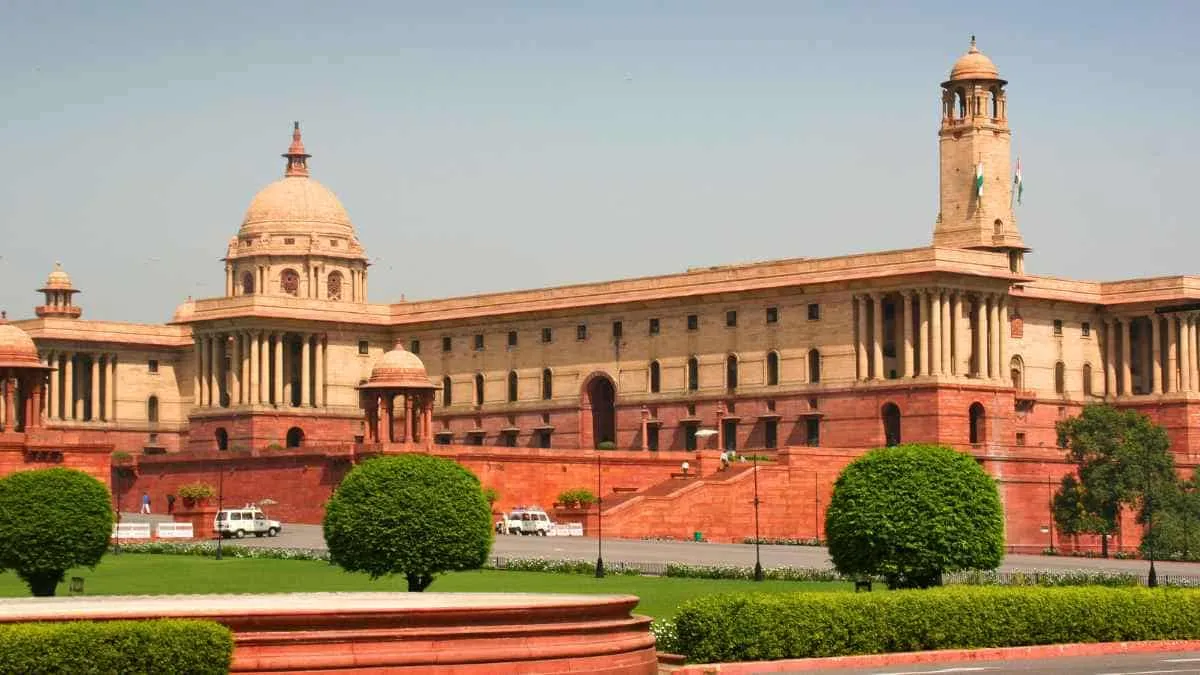
The Lok Sabha, also known as the House of the People, is the lower house of the Parliament of India. It represents the people of the country through elected Members of Parliament (MPs).
Currently, the Lok Sabha has 543 elected seats, representing 28 states and 8 Union Territories of India. Uttar Pradesh has the highest number of Lok Sabha seats, with 80, followed by Maharashtra with 48 and West Bengal with 42.
The allocation of Lok Sabha seats among states is primarily based on population. However, the number of seats allocated to each state has remained frozen under constitutional provisions linked to the 1971 Census.
In April 2026, the government introduced proposals to increase the strength of the Lok Sabha to 850 members. However, the constitutional amendment required for this change failed to pass in the Lok Sabha.
Let us look at the complete state-wise and union territory-wise distribution of Lok Sabha seats in India.
Lok Sabha Seats State Wise and UT Wise List 2026
The Lok Sabha seats were allocated to both states & union territories based on the population, and the most Lok Sabha seats are held by Uttar Pradesh at 80, followed by Maharashtra at 48 and West Bengal at 40.
State-Wise Lok Sabha Seats (28 States)
| S. No. | State | Lok Sabha Seats |
|---|---|---|
| 1 | Uttar Pradesh | 80 |
| 2 | Maharashtra | 48 |
| 3 | West Bengal | 42 |
| 4 | Bihar | 40 |
| 5 | Tamil Nadu | 39 |
| 6 | Madhya Pradesh | 29 |
| 7 | Karnataka | 28 |
| 8 | Gujarat | 26 |
| 9 | Rajasthan | 25 |
| 10 | Andhra Pradesh | 25 |
| 11 | Odisha | 21 |
| 12 | Kerala | 20 |
| 13 | Telangana | 17 |
| 14 | Assam | 14 |
| 15 | Jharkhand | 14 |
| 16 | Punjab | 13 |
| 17 | Chhattisgarh | 11 |
| 18 | Haryana | 10 |
| 19 | Uttarakhand | 5 |
| 20 | Himachal Pradesh | 4 |
| 21 | Arunachal Pradesh | 2 |
| 22 | Goa | 2 |
| 23 | Manipur | 2 |
| 24 | Meghalaya | 2 |
| 25 | Tripura | 2 |
| 26 | Mizoram | 1 |
| 27 | Nagaland | 1 |
| 28 | Sikkim | 1 |
| Total (28 States) | 524 |
Union Territory-Wise Lok Sabha Seats (8 UTs)
| S. No. | Union Territory | Lok Sabha Seats |
|---|---|---|
| 1 | Delhi (NCT) | 7 |
| 2 | Jammu and Kashmir | 5 |
| 3 | Dadra and Nagar Haveli and Daman and Diu | 2 |
| 4 | Andaman and Nicobar Islands | 1 |
| 5 | Chandigarh | 1 |
| 6 | Ladakh | 1 |
| 7 | Lakshadweep | 1 |
| 8 | Puducherry | 1 |
| Total (8 UTs) | 19 |
The 8 Union Territories account for 19 seats among themselves; Delhi has the highest number of seats at 7, Jammu and Kashmir has 5 seats, Chandigarh, Puducherry, Lakshadweep, Ladakh, and Andaman and Nicobar Islands have 1 seat each.
Total Lok Sabha Seats in India
| Category | Number of Seats |
|---|---|
| 28 States | 524 |
| 8 Union Territories | 19 |
| Total Elected Lok Sabha Seats | 543 |
Did You Know?
The Delimitation Bill, 2026 was introduced on 16th April 2026, proposing to increase the number of seats in Lok Sabha to 850, with 815 coming from states and 35 from Union Territories. However, it failed to attain the required two-third majority in the Lok Sabha on 17th April, 2026.
The proposals aimed to increase the maximum strength of the Lok Sabha to 850 members, comprising:
| Category | Proposed Maximum Seats |
|---|---|
| States | 815 |
| Union Territories | 35 |
| Total | 850 |
However, the Constitution (131st Amendment) Bill failed to secure the required special majority in the Lok Sabha on April 17, 2026. Consequently, the related delimitation proposals were not proceeded with.
The government subsequently decided to introduce fresh legislation, including the Constitution (132nd Amendment) Bill, 2026, and the Delimitation (Second) Bill, 2026.
The revised proposal provides for a uniform 50% increase in the number of seats allocated to each state and Union Territory. The proposed maximum strength is 850 members, including 815 from states and 35 from Union Territories.
Important: These are proposed changes, not the current Lok Sabha seat distribution. The existing 543-seat arrangement remains in force as of November 28, 2026.
Why have Lok Sabha seat numbers stayed the same since 1976?
The number of seats in Lok Sabha remained same after a constitutional amendment in 1976 locked the number of seats as the 1971 Census level.
Check out some more interesting articles from the general knowledge section to boost your knowledge of national and international topics. Stay connected with Jagran Josh for more topics like this.

Prabhat Mishra is a Subject Matter Expert and digital journalist with an extensive background in the competitive exam landscape and over 4 years of experience in education, national and international news, and current affairs. Over his tenure with top knowledge platforms like Mentorship India, IAS BABA, IAS SARTHI, and now Jagran Josh, he has a deep understanding of government exams like UPSC and State PCS, including UP and Bihar, as he has already qualified for the UPPCS 2022 Mains and Bihar 68th Mains. With his core expertise in history, polity, geography & current affairs, he specialises in creating well-researched, aspirant-centric content and simplifying complex topics for competitive examinations.